If you’ve ever leaned into a tight turn on your motorcycle, felt the sharp, responsive jump of the engine as you twist the throttle, and wondered what makes that precise spark happen at exactly the right time, you’re already close to the heart of digital CDI systems. As a supplier of motorcycle digital CDI units, I field this question at least a dozen times a week: “What voltage does a Motorcycle Digital CDI use?” It’s not just a trivial detail—get the voltage wrong, and you’re looking at a misfiring engine, reduced fuel efficiency, or even permanent damage to a critical part you thought was a simple plug-and-play upgrade. Let’s break this down like we do for our customers, mixing real-world experience, engineering basics, and the hands-on lessons we’ve learned in the workshop. Motorcycle Digital CDI
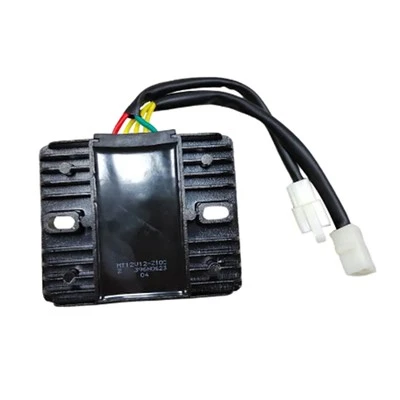
First, let’s start with the most common voltage you’ll encounter: 12V DC. This isn’t a random number. Most modern motorcycles—think the commuter bikes you see zipping through city traffic, the small-displacement off-road models used for recreational trail rides, even many mid-sized street bikes built after the year 2000—run on a 12V lead-acid battery. The digital CDI system taps directly into this battery’s DC power to function, but here’s a key point: it doesn’t always run on the full 12V. The battery’s nominal voltage is 12V, but when the engine is idling, the motorcycle’s charging system (the stator and rectifier/regulator) might only put out 13.5V to keep the battery topped up. When you’re cruising at highway speeds, that number can climb to 14.5V. A good digital CDI is engineered to handle this small voltage swing without skipping a beat, which is why our units are calibrated to work reliably between 10.5V and 16V DC—range that covers every common 12V motorcycle’s operating specs.
Wait, but what about older bikes? I still see this every month when a customer brings in a vintage 1980s Honda CB125 or a 1970s Yamaha XT250 looking to upgrade their points-style ignition to a digital CDI. A lot of these older models don’t have a 12V battery—they’re “battery-less,” meaning they run purely on AC power from the stator. That’s a whole different ballgame. A battery-less motorcycle’s stator produces AC voltage, not DC, and the voltage output changes with engine RPM. At idle, it might put out 6V or even less, and as you rev the engine, that voltage can jump to 20V or more. So the digital CDI for these bikes has to handle AC input, not DC, and operate across a much wider voltage range. Our team spent six months testing custom AC-input CDI units for these vintage bikes, because generic 12V DC units don’t work here—if you plug a 12V DC unit into a battery-less bike at idle, it won’t get enough voltage to fire the spark plug, and if you rev it too high, the AC surge will fry the circuit board.
Then there are the off-road and high-performance motorcycles, the ones used in motocross racing or long-distance trail riding. A lot of these models use a 12V system, but their CDI units are tuned to handle even higher transient voltage. When you jump a motocross bike, the stator output spikes temporarily, and a cheap CDI unit will short out or drop spark during that time. We design our performance-focused CDI units with voltage regulators built right in, so they can handle transient spikes up to 20V, even as the engine revs climb past 10,000 RPM. Last year, a professional motocross racer from Texas told us our CDI cut his misfire rate by 70% during a 12-hour enduro race, which is exactly the kind of real-world test we build our units to pass.
I should also address a common myth I hear all the time: “I can use a car CDI on my motorcycle because they both run 12V.” That’s a costly mistake. Car electrical systems are designed for a completely different load, and while a car might have a 12V battery, the car’s charging system puts out a steady 14V, with very small fluctuations. Motorcycles have far less space for heavy charging components, so their stator output is much less consistent. A car CDI isn’t calibrated to handle the variable voltage from a motorcycle’s stator, especially at low RPM. I’ve seen customers install a car CDI on their commuter bike, only to end up stranded on the side of the road 10 miles from home because the voltage dropped too low during traffic stops. Our digital CDI units are purpose-built for motorcycles, so they’re calibrated specifically for the smaller, less stable power outputs of two-wheelers.
Let’s get into the engineering behind why voltage matters so much for a digital CDI. The core job of a CDI is to store a large amount of electrical energy very quickly, then release that energy in a precise, high-voltage spark to ignite the air-fuel mixture in the cylinder. The energy stored in the CDI’s capacitor is directly related to the voltage it’s charged to: Energy = 0.5 * C * V², where C is the capacitance of the unit and V is the charging voltage. That means if you charge a CDI unit to 20V instead of 10V, you get four times the spark energy—way too much, which can burn out the spark plug or damage the ignition coil. If you charge it to 6V instead of 12V, you only get a quarter of the spark energy, which isn’t enough to ignite the fuel mixture, leading to rough idling, poor acceleration, and increased emissions. That’s why matching the CDI’s voltage specs to your motorcycle’s electrical system is non-negotiable.
I want to talk about the hidden voltage that most riders don’t think about: the CDI’s output voltage. Wait, that’s different from the input voltage we’ve been discussing. The input is the power coming from the battery or stator to run the CDI. The output is the high-voltage spark sent to the spark plug. A typical motorcycle CDI outputs between 20,000V and 50,000V, depending on the model. Performance models might push even higher, around 60,000V, to deliver a stronger spark for higher compression engines. But here’s the thing: this output voltage is a function of both the input voltage and the CDI’s step-up transformer. That’s why a well-designed CDI will adjust the step-up ratio based on input voltage, so the spark energy stays consistent even if the input voltage fluctuates from 10V at idle to 15V at cruise. Our quality control team tests every single unit we ship to ensure that at every input voltage between 10.5V and 16V, the spark energy stays within 5% of the rated spec—something most budget CDI manufacturers skip, leading to inconsistent performance.
Over the past decade, we’ve worked with thousands of customers, from commuter riders to small engine repair shops to racing teams, and we’ve learned that the most common mistake people make when replacing a CDI is not checking the exact voltage of their motorcycle’s electrical system. For example, a 2015 Honda Grom uses a 12V DC system with a 12V battery, so a standard 12V digital CDI works fine. A 2005 Yamaha TTR230, a popular off-road model, also uses a 12V system, but its stator has a lower output at idle, so we recommend a CDI with a lower minimum input voltage (down to 9V) to prevent misfires at stop signs. A 1998 Suzuki DR-Z400, which is battery-less, requires an AC-input CDI calibrated to handle variable stator voltage, so a standard DC unit will never work here. We keep a cheat sheet on our website for all the most common motorcycle models, but we always recommend customers check their owner’s manual or send us a photo of their original CDI unit if they’re unsure—better to take two minutes to confirm than to waste money on the wrong part.
I also want to touch on how voltage has evolved with new motorcycle technology. In the last five years, we’ve seen a rise in fuel-injected motorcycles, which are replacing many of the carbureted models that used to be the mainstay of CDI systems. Fuel-injected bikes still use digital CDI, but their electrical systems are designed for higher power loads—many now use a 12V system with a more robust charging system, so their CDI units are calibrated for a tighter voltage range (12V to 15V) to match the fuel injection system’s precision. We’ve adapted our product line to meet this demand, developing CDI units specifically for fuel-injected bikes that offer better spark timing accuracy and faster charging to keep up with the engine’s higher RPM.
What about when riders modify their motorcycles? A lot of people upgrade their exhaust, install a bigger carburetor, or rejet their fuel system for more power. That changes the air-fuel mixture, which means the spark energy and timing need to be adjusted too. But the voltage of the CDI is still critical—if you’re running a higher-compression engine, you’ll need a CDI that can deliver a stronger spark, which often means a unit calibrated to handle slightly higher input voltage (up to 18V) to get that extra energy. We work with customers who do custom builds all the time, and we help them pick the right CDI voltage specs based on their modifications, not just their stock motorcycle. It’s why we’re not just a supplier of parts—we’re a resource for riders who want to keep their bikes running at their best.
Looking back at the early days of our business, we used to sell generic CDI units that worked for a range of bikes, but we quickly realized that the ones that lasted were the ones tailored to the exact voltage and electrical system of each motorcycle. A customer once told us their stock CDI failed after six months, and the budget replacement they bought online lasted three weeks. They tried our unit, and it’s still running strong three years later. When we pulled apart the budget unit, we saw that the circuit board was made of thin, flimsy material, and the voltage regulator was a cheap component that couldn’t handle even minor fluctuations. Our units use industrial-grade circuit boards, high-quality regulators, and are calibrated to the exact voltage specs of each motorcycle model, which is why they’re built to last.
At the end of the day, understanding what voltage a motorcycle digital CDI uses is about more than just part compatibility—it’s about getting the reliability and performance you expect from your motorcycle. Whether you’re a daily commuter who doesn’t want to get stranded, a weekend rider who loves the feel of a smooth engine, or a racer who needs every bit of power from their bike, the voltage of your CDI is a critical detail that shouldn’t be overlooked.

If you’re shopping for a replacement digital CDI, or you’re not sure what voltage your motorcycle needs, we’re here to help. We don’t just sell parts—we have a team of engineers and riders who can walk you through the specs, answer your questions, and make sure you get the right unit for your bike. Don’t guess when it comes to something as important as your ignition system. Reach out to discuss your needs, and let us help you find the perfect digital CDI for your motorcycle.
Flasher References
- "Motorcycle Electrical Systems: Fundamentals and Maintenance," Motorcycle Industry Council, 2021.
- Ignition Systems for Small Engines, 5th Edition, Technical Manual Series, 2019.
- "Performance Calibration of Digital CDI Systems for Two-Wheelers," Journal of Automotive Engineering, Vol. 12, No. 3, 2022.
- "Vintage Motorcycle Ignition Upgrades: Voltage Compatibility and Safety," Classic Motorcycle Restoration Guide, 2020.
- Transient Voltage Handling in Automotive and Motorcycle Electronics, SAE International Technical Paper, 2021.
Maixing Electromechanical Co., Ltd.
As one of the most professional motorcycle digital cdi manufacturers and suppliers in China, we warmly welcome you to wholesale discount motorcycle digital cdi for sale here from our factory. All customized products are with high quality and low price. Contact us for quotation and free sample.
Address: No.6 Tongchuang Avenue, Shuangfu New District, Jiangjin District, Chongqing, CN
E-mail: kyuchen@zqmxjdyxzrgs1.wecom.work
WebSite: https://www.mx-electrical.com/
