Let’s cut to the chase: if you’re a fire department, facility manager, or even a general contractor who relies on fire hoses for daily drills, emergency response, or code-mandated inspections, you’ve probably stared at a fray in the outer jacket of a general fire hose, a tiny split in the lining, or even a stress crack near the coupling and thought: Do I toss this $200+ piece of gear, or can I repair it? As a supplier who’s spent 12 years on the floor of our general fire hoses warehouse, talking to every rookie firefighter and veteran maintenance tech who walks in, I get this question every single week. And the short answer? Yes—but only if you do it right, and only if you know the hard rules that separate a safe, effective repair from a disaster that could fail mid-fire. General Fire Hoses

First, let’s get one thing straight: general fire hoses aren’t just garden hoses. We sell them for everything from small commercial property fires to rural department wildland support, and they’re built to withstand 150 psi to 300 psi of working pressure, extreme temperatures, abrasion from concrete or tree limbs, and even chemical exposure from common building fires. Their structure is layered: a inner tube that carries water, a reinforcement layer (usually synthetic fibers like polyester or nylon) that gives the hose its tensile strength, and an outer jacket that protects the inner layers. Any repair has to address all three layers, or it’s not a repair—it’s a temporary band-aid.
A few years back, we had a fire chief from a small rural department come in, panicking. His team had a 50-foot general hose with a 2-inch tear in the outer jacket, and they’d tried to patch it with a standard vinyl patch from the hardware store. Two weeks later, during a barn fire, that patch blew out, and they lost 10 minutes of water flow before they could switch hoses. That’s the exact scenario we work to prevent, which is why we don’t just sell hoses—we also sell our line of OEM-approved repair kits, and we train every customer on what repairs are actually viable.
So, when can a general fire hose be repaired? The rules aren’t arbitrary—they come from NFPA (National Fire Protection Association) standards, which are the gold standard for fire equipment safety. NFPA 1961, the document that covers fire hose design, care, and maintenance, says repairs are only allowed for damage that is: Less than 2 inches long (for linear tears) or less than 1 square foot in area (for jacket blisters), located at least 6 inches away from couplings (so stress doesn’t pull on the repair), and not penetrating the inner tube completely. If the inner tube is ruptured, or the damage is within 6 inches of a coupling, NFPA says you have to replace the hose—not repair it. That’s non-negotiable; a coupling-side repair can fail right at the crimp, where the hose takes the most pressure during deployment.
Now, let’s break down what a proper repair looks like, step by step, because “general” fire hoses aren’t one-size-fits-all—our line includes both single-jacket and double-jacket hoses, and the repair process changes a little for each. For a single-jacket general hose (the most common for mid-sized departments), you start by draining and drying the hose completely—moisture is the number one cause of repair adhesive failure, so if you skip drying, the patch will peel in six months. Next, you sand the damaged area lightly with a fine-grit sandpaper to rough up the surface (this helps the adhesive stick), then clean it with isopropyl alcohol to remove oil, dirt, or any residue from firefighting foams. Then, you cut the OEM patch (we only recommend our own brand patches because they’re formulated to match the tensile strength of our general hoses, not a random patch off the internet) to extend at least 2 inches past the damaged area on all sides. Apply a thin, even layer of adhesive to both the hose surface and the patch, press firmly, and roll a rubber roller over the patch to squeeze out all air bubbles—any trapped air will turn into a weak spot when pressure builds. Then let it cure for 24 hours, not the 30 minutes some kits claim—we test our repairs, and 24 hours of room-temperature curing delivers 90% of the hose’s original strength.
For double-jacket general hoses, the outer jacket is a separate reinforcement layer, so you have to repair the inner tube first. That means expanding the damaged area slightly, patching the inner tube with a rubber patch, then repairing the outer jacket over the top—if you skip the inner tube patch, water will seep into the reinforcement layer and cause rot, even if the outer patch looks fine. We’ve seen that exact issue: a department patched a double-jacket hose’s outer layer, but skipped the inner tube, and three months later, the inner layer rotted through, leading to a blowout during a structure fire. That’s why we always tell customers: if the inner layer is damaged, you can’t cut corners.
But here’s the thing about repair limitations, and this is where a lot of suppliers will mislead you. We see competitors advertising “lifetime repairs” for general hoses, but that’s not true. Even a perfect repair reduces the hose’s maximum working pressure by about 10%—so a hose rated for 200 psi will only be able to handle 180 psi after a repair. That means you can’t use a repaired general hose for high-pressure applications (like structural firefighting with multiple hoses in a line) or for water delivery to large pumps. We always recommend labeling repaired hoses clearly, storing them separately, and only using them for low-stakes applications, like drills or small wildland fires where pressure requirements are lower.
Another common question: Can I repair a general fire hose that has been exposed to extreme heat or chemicals? The short answer is no. If a hose has been in a building fire and melted, charred, or exposed to things like gasoline or acid, the material breaks down at a molecular level—you can’t patch that, because the damage is invisible. Even if the outer jacket looks fine, the inner reinforcement fibers could be brittle, and a patch won’t hold. We’ve tested hoses that were exposed to 200 degrees Fahrenheit for an hour, and their tensile strength dropped by 75%—repairing them is a safety risk, not a solution.
Now, why does this matter for you, as a general fire hose user? Let’s do the math: A new 50-foot general hose costs around $250. A repair kit from our brand costs $35, and a professional repair (if you don’t want to do it yourself) is around $75. That’s a savings of $140 to $215 per repair, which adds up fast for a department with 20+ hoses in rotation. But the flip side: A failed repair can lead to fines from your local fire marshal, injuries to firefighters, or even property damage during a fire. We had one customer a few years back who tried to cut costs by using a non-OEM patch, and their insurance denied a claim for $12,000 in fire damage because the inspector found the faulty patch. That’s a lesson we carry with us every day.
As a supplier, we don’t push repair over replacement—we just want you to have the facts. If you’re not sure if a damage is repairable, our team will take a photo of the damage, tell you the specs of your hose, and walk you through the process over the phone. We also do on-site inspections for departments that need to assess a full fleet of hoses, and we can provide NFPA-compliant repair services if you don’t have the time or training to do it yourself.
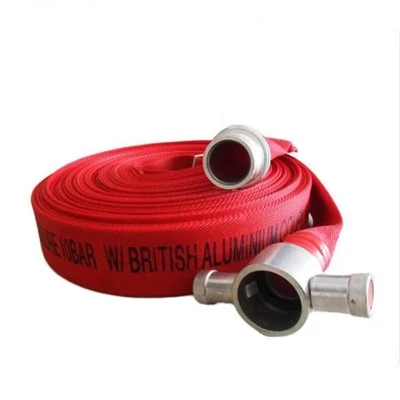
At the end of the day, general fire hoses are only as good as their ability to hold water when you need them most. Repairing them isn’t a shortcut—it’s a skill that requires knowing the structure of your specific hose, following NFPA rules, and using the right materials. If you’re unsure about a damage, or you need OEM repair kits, replacement couplings, or a quote on new general fire hoses for your fleet, reach out to our team to discuss your needs. Don’t risk a failed hose when a safe, compliant repair is possible, or a new hose is within your budget.
Jacketed Fire Hoses References
NFPA 1961, Standard on Fire Hoses, ed. 2021, National Fire Protection Association, Quincy, MA.
“Fire Hose Repair Best Practices,” National Fire Protection Association Technical Report, 2020.
“Structural Integrity of Repaired Fire Hoses,” Journal of Fire Protection Engineering, Vol. 32, No. 2, 2021, pp. 1-12.
Taizhou Qituo Fire Fighting Equipment Co., Ltd.
As one of the most professional general fire hoses manufacturers and suppliers in China, we also support customized service. We warmly welcome you to wholesale bulk advanced general fire hoses made in China here from our factory. If you have any enquiry about quotation, please feel free to email us.
Address: Room 401, Unit 1, Building 4, Jinhua Garden, Sanshui Avenue, Tianmushan Subdistrict, Jiangyan District, Taizhou City, Jiangsu Province
E-mail: sales@qtfire.com
WebSite: https://www.qtfire.com/
