When it comes to choosing the right hydraulic pump for a log splitter, I’ve seen too many new operators and even some small shop owners make the same mistake: grabbing the first pump they find with a horsepower (HP) rating that matches their engine, without digging into the details that actually make a log splitter work efficiently. As a hydraulic pump supplier who’s been in this industry for over 12 years, I’ve fielded thousands of questions about this exact topic—most of them from people who either blew up a pump because they picked the wrong size, or waited twice as long for their log splitter to split a 20-inch oak log because they cut corners on the specifications. Let’s break this down like we’re sitting in my warehouse, leaning against a stack of test pumps, no confusing jargon, just real-world advice that’s worked for my customers for decades. Hydraulic Pump
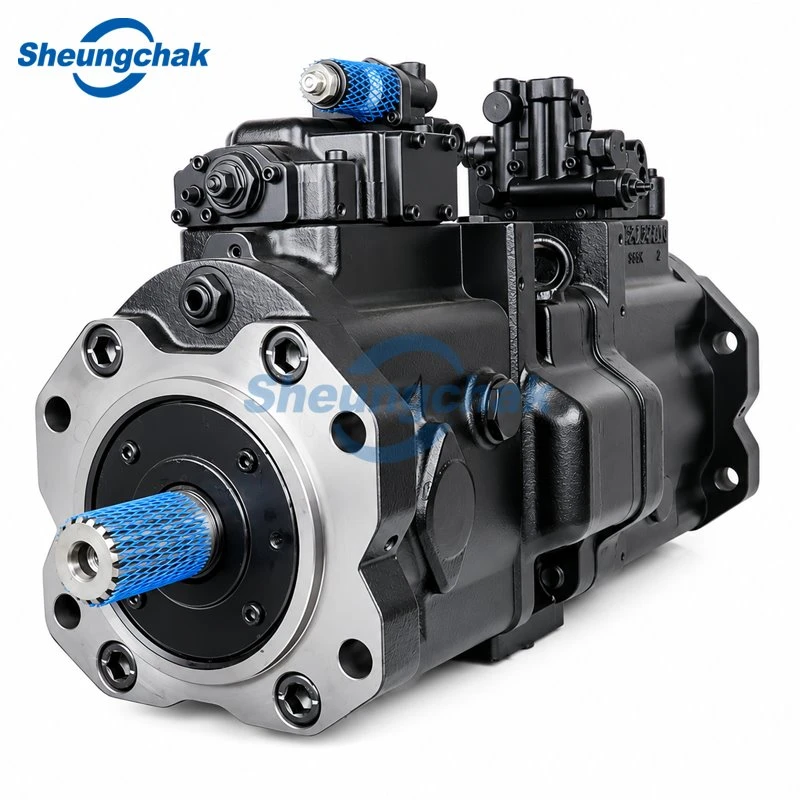
First, let’s start with the basics: a log splitter’s core job is to generate enough force to split dense, hard wood like oak, hickory, or maple. That force comes from the hydraulic system, and the pump is the heart of that system. The two numbers you’ll see for any hydraulic pump are flow rate, measured in gallons per minute (GPM), and pressure, measured in pounds per square inch (PSI). These two numbers work hand in hand—you can’t just pick a GPM or a PSI in isolation. For log splitters, the sweet spot almost always lands between 10 GPM and 15 GPM, but that’s not a one-size-fits-all rule. Let’s talk about what changes that: the log splitter’s ram size, the engine’s HP, and the type of wood you’re splitting.
Wait, let’s get one thing straight first: a lot of people mix up log splitter tonnage with hydraulic pump size. Tonnage is the total force the splitter can exert—most residential splitters are 20 to 25 tons, commercial ones go up to 35 tons or more. Tonnage depends on pressure and ram area: Force (tons) = (PSI × Ram Area in square inches) ÷ 2,000. That formula is non-negotiable, and I’ve had customers come to me with a 25-ton splitter that was running a 5 GPM pump, wondering why it took 10 seconds to split a log. That’s the mistake right there. Flow rate directly impacts cycle time—how fast the ram extends and retracts. A higher GPM means faster cycles, which is everything if you’re running a firewood business and splitting cords of wood all day.
Let’s use a real example from a customer last month. He bought a 25-ton log splitter with a 13 HP gas engine, and he initially installed a 10 GPM pump. At first, it worked okay for soft pine, but when he switched to oak, the cycle time jumped to 12 seconds per log, and he started having pump overheating issues. Why? Because the 10 GPM pump was too small for the ram’s cylinder volume. Wait, ram cylinder volume is another key number you need to calculate. To find that, measure the bore of the cylinder (the inside diameter of the ram) and the stroke length (how far the ram moves to split a log). The volume is (Bore Area × Stroke) ÷ 231, which gives you gallons per stroke. For that 25-ton splitter, the cylinder bore was 4 inches, stroke was 24 inches, so cylinder volume came out to just over 1.5 gallons per full stroke. If your pump is 10 GPM, it will take roughly 9 seconds to move that 1.5 gallons, which is exactly what he was seeing. When he upgraded to a 12 GPM pump, cycle time dropped to 7 seconds, and the pump stopped overheating because it wasn’t working as hard to move the oil that fast. That’s the kind of real, on-the-ground data I use when advising customers.
Now, let’s talk about engine compatibility, because this is where a lot of people mess up. Hydraulic pumps need to be driven by the splitter’s engine, usually via a belt drive or direct coupling. The power the pump draws is calculated by Horsepower = (GPM × PSI) ÷ 1,714. That’s a formula you can’t ignore. If your engine only has 10 HP, you can’t run a 15 GPM pump at 3,000 PSI—let’s do the math: (15 × 3,000) ÷ 1,714 = ~26.2 HP. That’s way more than a 10 HP engine can handle, and you’ll either stall the engine or burn out the pump’s internal components. For residential log splitters with 10 to 15 HP engines, the maximum GPM you should use is 12 GPM, assuming a standard operating pressure of 2,500 to 3,000 PSI. For commercial splitters with 18 to 25 HP engines, you can go up to 15 GPM, as long as the pressure is matched to the engine’s power.
But wait, what if someone has a small, residential log splitter for occasional use—say, splitting firewood for a 2,000 square foot home, not a business? A lot of these come with 5 GPM pumps from the factory, and people ask me if upgrading to 8 GPM is worth it. My answer? Not always. If you’re only splitting logs on weekends, the factory 5 GPM will work, but you’ll wait longer. But if you’re splitting even a few cords a year, the 8 GPM will cut your cycle time in half, which saves you hours over a season. I had a retiree last year who upgraded his 22-ton splitter from a 5 GPM to an 8 GPM pump, and he told me he went from splitting a cord every three weekends to every one weekend. That’s the kind of impact the right pump size has on real people’s lives.
Another common question: what about PSI vs. GPM? Do I need a higher PSI pump if my wood is harder? Yes, but not at the expense of GPM. Hardwood (oak, maple) needs more force, so you’ll run higher PSI—usually 2,800 to 3,200 PSI—while softwood (pine, cedar) only needs 2,000 to 2,500 PSI. But if you run a high PSI pump with a low GPM, you sacrifice speed. It’s a balance, and that balance is what makes the GPM number the most important for log splitters, more so than PSI. Because even if you have 3,000 PSI, if the ram moves too slow, you’re wasting time. That’s why I always tell customers: first nail down the GPM, then adjust the PSI to match your tonnage requirement, and make sure the engine can handle the combined power draw.
Let’s talk about pump types too, because even if you get the GPM right, the type of pump matters for log splitters. Most log splitters use either gear pumps or vane pumps, and both have different optimal size ranges. Gear pumps are cheaper, more durable, and work great for log splitters, especially commercial ones that run 12 to 15 GPM. They can handle high pressures and are less sensitive to contamination in the hydraulic oil, which is a big deal for someone who’s splitting logs outdoors and might get dirt or sawdust in the oil. Vane pumps are more efficient, so they run cooler at lower pressures, but they’re better for smaller, residential splitters running 8 to 10 GPM. That’s why when a customer comes to me with a residential splitter, I usually recommend a 10 GPM vane pump, and for commercial, a 12 to 15 GPM gear pump. I’ve seen customers put a vane pump on a 15 GPM commercial splitter, and it burned out in 6 months because it couldn’t handle the continuous high flow.
Now, let’s cover the mistakes I see all the time, so you can avoid them. First mistake: Matching GPM to engine HP without calculating power draw. A customer last year put a 15 GPM pump on a 12 HP engine, and the engine would stall every time he tried to split a thick log. When we did the math, (15 × 2,800) ÷ 1,714 = ~24.5 HP, which is double the engine’s power. No wonder it was stalling. Second mistake: Ignoring cylinder volume. Another customer bought a 10 GPM pump, but his cylinder only had a 1-inch bore, so the actual volume per stroke was 0.5 gallons. That meant the cycle time was still 6 seconds, same as the old 5 GPM pump—he wasted money on a pump that didn’t fit his splitter’s cylinder. Third mistake: Going too big. A guy came to me with a 20-ton residential splitter, and he tried to put a 20 GPM pump on it, thinking more GPM = faster. But his engine was only 10 HP, and the cylinder volume was just 1 gallon. The 20 GPM pump would require (20 × 2,500) ÷ 1,714 = ~29.2 HP, way more than his engine. The pump worked for a week, then burned out from overloading. I always say: bigger isn’t better if it doesn’t fit your system.
What about custom log splitters? I’ve built custom splitters for farm operations that need to split 5 cords a day, and for those, we usually go with 15 GPM gear pumps, paired with 25 HP engines, and 3,200 PSI. Those splitters can split a log in 4 seconds, which cuts their total time in half compared to a standard residential splitter. For small farms that split 10 cords a season, we recommend 12 GPM pumps, which is the sweet spot between speed and cost. The key for custom setups is measuring every part: engine HP, cylinder bore and stroke, desired cycle time, and the type of wood you’ll split most.
Now, let’s talk about maintenance, because even if you pick the right size pump, you’ll run into issues if you don’t maintain it. A common problem with log splitters is dirty hydraulic oil, which causes pumps to wear out faster. If you’re running a 12 GPM pump, you need to change the hydraulic filter every 50 hours, and change the oil every 100 hours. I’ve had customers who skipped maintenance, and their pumps lasted half as long as they should have—even if they had the perfect size. So picking the right pump is only half the battle; taking care of it makes it last 2 to 3 times longer.
Let’s wrap this up with a quick checklist you can use right now to figure out what size pump you need: 1. Calculate your engine’s HP. If it’s less than 15 HP, stick to 8 to 12 GPM. If it’s 15 HP or more, you can go up to 15 GPM. 2. Measure your cylinder’s bore and stroke, calculate the volume per stroke. Divide that volume by your desired cycle time (you want 5 to 8 seconds for most splitters) to get your minimum GPM. 3. Match the PSI to your tonnage: 2,000 PSI for 20 tons, 2,500 PSI for 25 tons, 3,000 PSI for 30 tons, etc. Make sure the power draw (GPM × PSI ÷ 1,714) is less than your engine’s HP. 4. Choose a pump type: gear pump for commercial use or high flow, vane pump for residential use. That’s it—no complicated math, just simple steps that work.
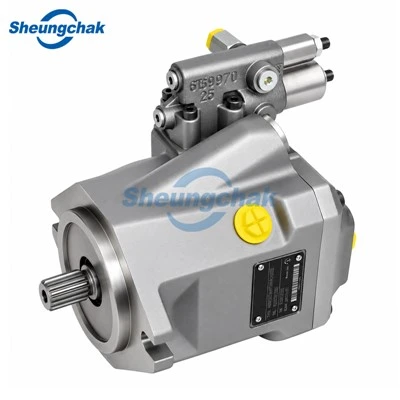
If you’re still not sure, or you have a custom log splitter build and need help picking the right pump, I’m here to help. I’ve spent years working with log splitters, and I can help you pick a pump that fits your setup, saves you time, and doesn’t burn out after a few uses. Whether you’re a homeowner with a single splitter, a small business with a fleet, or a farmer building a custom setup, I can guide you through every step to make sure you get the right size hydraulic pump for your log splitter. Reach out to my team to discuss your needs and find the perfect pump for your application.
Hydraulic Motor References
- Hydraulic Power Institute. (2021). Hydraulic Pump Selection Guide for Mobile Equipment. National Fluid Power Association.
- Log Splitter Manufacturer Association. (2022). Technical Standards for Hydraulic Systems in Wood Splitting Equipment. Wood Industry Technical Council.
- Fluid Power Journal. (2020). Flow Rate vs. Pressure: Balancing Performance in Log Splitter Hydraulics. Penton Media.
- EquipmentWatch. (2023). Commercial vs. Residential Log Splitter Hydraulic System Specifications. Associated Equipment Distributors.
Guangdong Sheungchak Hydraulic Technology Co., Ltd.
Guangdong Sheungchak Hydraulic Technology Co., Ltd. is one of the most professional hydraulic pump manufacturers and suppliers in China. We are committed to providing high quality customized products with competitive price. Please rest assured to wholesale durable hydraulic pump for sale here and get pricelist from our factory.
Address: Building 25, Liantang Industrial City, Shangcun Community, Gongming Subdistrict, Guangming District, Shenzhen, China
E-mail: info@hydraulicsc.com
WebSite: https://www.hydraulicsc.com/
