Hey there, fellow packaging pros and small business owners! If you’ve ever stood in a warehouse, staring at a stack of lock bottom boxes and thought, “How big can these actually go before they stop making sense?” — you’re not alone. I’m Jake, been running this lock bottom box supply shop for 8 years now, and let me tell you, this question comes up at least once a week from customers ranging from Etsy gift shops to regional distributors. Most folks guess way too small, or way too big, and I’ve learned the hard way there’s more to the “maximum size” than just a number off a spec sheet. Let me break this down like I would over a coffee in my warehouse break room, no stuffy industry jargon here. Lock Bottom Boxes

First off, let’s get clear on what a lock bottom box actually is, quick, just so we’re on the same page. It’s that self-locking bottom design, right? No tape needed for the base — you just fold the sides, pop the bottom flaps together, and it locks tight. Way faster to assemble than regular slotted containers (RSC boxes) when you’re doing volume shipping, which is why so many folks swear by ’em. The maximum size isn’t some random “we can print up to X inches” limit; it’s a combination of three big factors: material strength, shipping logistics, and how the box is gonna be used. That’s where most people miss the mark.
Let’s start with the biggest one: material. A lock bottom’s whole thing is that those bottom flaps have to support weight without falling apart. If you make the box too tall or too wide, the lever arm (that’s the fancy term for how far the weight is from the base’s lock points) gets longer, and suddenly the glue or the board can’t hold it. Wait, let me make that relatable. If you’ve ever carried a too-big grocery bag with a flimsy bottom, you know it stretches and might tear — same idea here, just way more engineered. For standard corrugated board, which is what 90% of our lock bottom boxes use, the sweet spot for maximum size is usually around 48 inches in length, width, or height? No, wait — actually, it’s the combined perimeter of the bottom. Wait, yeah, that’s the key number. The total distance around the inside of the bottom, called the girth, can’t exceed a certain limit based on the board’s thickness. For 200# test corrugated (that’s the standard heavy-duty stuff we use for most general shipping), the max bottom girth is around 120 inches. Let’s do the math: if a box is 40 inches long, 20 inches wide, its bottom girth is (40+20)*2 = 120 inches — right at the limit. If we try 41 inches long, 20 inches wide, that’s (41+20)*2=122 inches, and that lock bottom won’t hold 50 lbs of product reliably. It’ll bulge, or the flaps will separate, especially if you’re stacking it.
“But Jake,” I hear you say, “I need a box bigger than that for my 100 lbs of farm equipment parts!” Fair point. That’s where we step up the board grade. We use 275# test double-wall corrugated for heavy-duty stuff, and the max girth jumps to around 180 inches. Wait, let’s test that: 60 inches long, 30 inches wide, that’s (60+30)*2=180 inches — perfect, that’s for heavy, bulky items. Now, before you get excited to build a 100-inch-long lock bottom box for your custom motorcycle part, there’s a catch: even with heavy-duty board, too much size equals another factor: shipping. Most standard trucking and LTL (less-than-truckload) carriers have size limits for parcels. Wait, what’s the rule there? I’ve dealt with this so much I could recite it in my sleep: most carriers cap individual boxes at 130 inches in combined length and girth. Oh! That’s a big one I forgot to mention earlier. So even if your lock bottom’s lock is strong enough for a 140-inch girth, the carrier will flag it as “over-dimensional” and charge you extra fees, or even refuse to haul it if it’s over 165 inches total. That’s a hard stop, no exceptions, because carriers’ trucks and warehouses are designed to handle a certain size. I once had a customer try to get a 150-inch lock bottom box for a big outdoor sign, and even though we made the base strong, he ended up paying $200 more in carrier surcharges than if he’d split the product into two smaller boxes. Total waste. So that carrier limit is a practical maximum, even if your board could technically hold bigger.
Next up, usability. What are you putting in this box, and how are you handling it? If it’s a 50-inch box that’s supposed to hold a set of patio furniture cushions, that’s one thing — easy to lift, move around. But a 60-inch box that’s 40 inches wide? That’s huge. You’re gonna need a forklift to move it around your warehouse, and your customers won’t be able to carry it without a dolly. I had a candle company a couple years back who wanted a 55-inch lock bottom box for their holiday advent calendars — they thought bigger meant less packaging cost per unit, but they didn’t account for how much extra space it took up in their inventory. They ended up switching to a 40-inch box, fit 10 more units per pallet, saved 15% on storage fees. That’s the thing: “maximum size” isn’t just a physical limit, it’s a size that works for your whole operation, not just the box itself.
Wait, let’s talk about what happens when you go too big, just to cover all the bases. I’ve seen lock bottom boxes that are so big, the bottom flaps can’t lock properly. The glue line on the bottom — that’s where the two inner flaps are glued together, right? — has to be a certain width. For a standard lock bottom, that glue line is 1.5 inches. If the box is too wide, the glue line gets stretched, and sometimes it doesn’t adhere right, especially if the box gets wet or jostled in shipping. Another issue: internal bracing. If your box is bigger than 48 inches, you probably need internal dividers to keep your product from shifting, which adds cost. That’s a tradeoff a lot of new customers miss: a slightly smaller box with dividers is cheaper than a giant box with extra reinforcement for the lock bottom.
But wait, is there a case where we go over those standard limits? Absolutely. For industrial uses, like shipping large HVAC parts or construction materials, we make custom lock bottom boxes that go up to 120 inches in length, as long as we use triple-wall corrugated and reinforce the corners with metal strips. But those are specialty orders, not the standard lock bottom boxes you use for e-commerce or retail shipping. And even then, we have to pre-approve them with the carrier first, because over 130 inches combined length and girth is a red flag for carriers. I did a custom order last year for a pool supply company: they needed a 110-inch lock bottom box for their pool filter housing. We used triple-wall board, added metal corner protectors, and got a waiver from the carrier — but that’s way more work and cost than a standard order, so we only do it when it’s absolutely necessary.
Let me also clear up a common misconception: a lot of people think lock bottom boxes are limited because they fold flat for storage. Wait, no! That’s a plus for big boxes, actually. A 60-inch lock bottom box folds down into a 1-inch-thick slab, so you can stack 500 of ’em in the space of one assembled big box. That’s why they’re so popular for industrial and retail use, even when they’re on the larger side. The biggest downside of a big lock bottom box, again, is the strength and carrier limits. I’ve never had a customer come to me asking for a box over 120 inches that didn’t run into issues with shipping or lock integrity.
So, let’s wrap this up with a practical guide, since you’re probably here to actually order a lock bottom box, right? If you’re a small business shipping under 50 lbs, your maximum lock bottom size is around 48 inches combined length and girth, using standard 200# board. If you’re shipping 50-150 lbs, step up to 275# double-wall, max around 180 inches girth, but make sure it’s under 130 inches combined length + girth for carrier fees. If you need something bigger than that for industrial use, we can do it, but be prepared for extra costs and carrier checks.
Now, if you’re reading this and you’ve got a specific project — whether it’s shipping custom goods, stocking your retail shelves, or moving bulk inventory — hit me up. I don’t do generic quotes; I’ll ask about what you’re packing, how much it weighs, and how you’re shipping it, so I can give you the right size that works for you, no guesswork. I’ve been in this game too long to push a giant box you don’t need; I want something that saves you money and works for your operation.
Wait, before I go, let me mention one more thing. A lot of customers ask if we can print on big lock bottom boxes. Yep, no problem, as long as the size is within those limits. We use flexo or digital printing, so you can get your logo, product info, or holiday graphics on there same as a smaller box. No extra hassle, just a box that fits your needs.
Don’t overthink the maximum size. It’s not a number someone made up to sell more boxes — it’s a balance of strength, cost, and logistics. If you’re still not sure what size you need, just reach out, I’ll walk you through it. No fine print, no hidden fees, just honest advice from a guy who’s been folding lock bottom boxes for 8 years.
Let me also add a quick note: I see a lot of new packaging brands online claiming they can make lock bottom boxes up to 150 inches, but 9 times out of 10, those are untested. Their lock bottoms will fail in shipping, or the carrier will charge you way too much. We test every size we make, so you don’t have to deal with that headache.
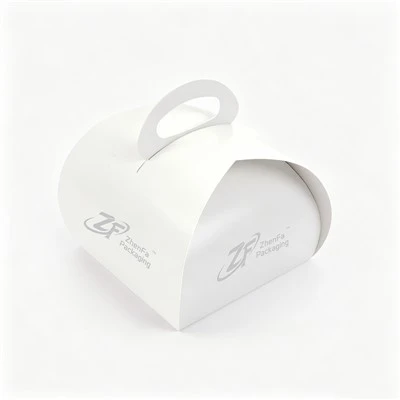
Now, if you’re ready to get started, just send over your details: what you’re packing, weight, dimensions, and how many boxes you need. I’ll get back to you with a quote in 24 hours, no hoops to jump through. I don’t do corporate runaround, so you’ll talk to me, not a sales rep, to work out the right size for your project.
Rigid Boxes References
- Corrugated Packaging Manufacturers Association. (2022). Standard Specifications for Lock Bottom Container Strength.
- National Motor Freight Traffic Association. (2023). LTL Parcel Dimensional and Weight Limits.
- Industrial Packaging Association. (2021). Custom Lock Bottom Box Design Guidelines for Heavy-Duty Applications.
- U.S. Small Business Administration. (2022). Cost-Effective Packaging Strategies for Small to Mid-Sized Businesses.
Wenzhou Zhenfa Packaging Co., Ltd.
As one of the most professional lock bottom boxes manufacturers and suppliers in China, we have world-leading production equipment and strong manufacturing capabilities. Please feel free to wholesale bulk advanced lock bottom boxes in stock here from our factory. Also, quotation is available.
Address: Room 105, Building 10, Century Science and Technology Entrepreneurship Park, Longgang City, Wenzhou City, Zhejiang Province
E-mail: ZhenfaPackaging@outlook.com
WebSite: https://www.cnzhenfa.com/
