If you’ve ever dug into the details of surface-enhanced Raman spectroscopy (SERS)—whether for food safety testing, medical diagnostic development, or environmental contaminant monitoring—you know how much of a bottleneck the right optical component can be. SERS relies on detecting extremely weak inelastic light scattering from target molecules, a signal so faint that even small gaps in spectral resolution or signal collection efficiency can derail an otherwise carefully designed experiment. For years, researchers have relied on various gratings to disperse scattered light and isolate the Raman signal from background noise, but many of these solutions come with tradeoffs: lower resolution, higher stray light, or the need for additional focusing mirrors that add bulk to experimental setups. As a supplier of Seya-Namioka flat-field concave holographic gratings, I get asked this question at least twice a week: “Can your grating actually work for SERS?” The short answer is yes—but let’s break down exactly why, and how this specific design solves longstanding pain points in SERS work that other gratings can’t match. Seya-Namioka Flat-Field Concave Holographic Grating

First, let’s ground this in what SERS requires from a dispersive element. SERS’ biggest challenge is its signal intensity: typical Raman scattering cross-sections are 10^-30 to 10^-25 cm² per molecule, and SERS boosts that only to 10^-20 to 10^-19 cm², which means the signal is still 10 to 15 orders of magnitude weaker than Rayleigh scattering (the elastic scatter that dominates most of the light from a sample). A good dispersive element for SERS needs three core capabilities: high spectral resolution to separate the faint Raman peaks from the bright Rayleigh line, low stray light (stray scatter that obscures weak signals) to avoid masking those peaks, and the ability to focus dispersed light onto a flat detector array—no extra mirrors required, because each additional optical component adds loss and noise. This is where the Seya-Namioka flat-field concave holographic grating stands out, compared to traditional ruled gratings, spherical holographic gratings, or even other concave grating designs used historically in SERS.
Let’s start with the Seya-Namioka optical configuration, which was first developed in the 1950s as a modification of the classic Czerny-Turner monochromator, reimagined for concave gratings. Unlike a flat grating that requires two separate focusing mirrors to collimate and focus light, a concave grating does both job in one component. The Seya-Namioka geometry aligns the incident light, grating, and output focus such that the resulting spectrum falls on a flat plane—no curved detector needed, which is a huge plus for SERS. Most SERS setups use charge-coupled devices (CCDs) or complementary metal-oxide-semiconductor (CMOS) detectors that are flat, so matching the spectrum to a flat array means you don’t have to warp the detector or use adapters that introduce alignment error. That alignment error is a big deal for SERS: if even a small portion of the dispersed light hits the wrong pixel on your detector, you lose signal strength or introduce spectral shifts that make peak matching (critical for identifying target molecules) impossible.
Next, holographic gratings vs. ruled gratings. Ruled gratings are made by machining grooves into a glass substrate with a diamond tool, which can leave micro-scale imperfections, burrs, and scattered light from the groove edges. For SERS, that stray light is a dealbreaker: if your grating adds even 0.1% stray light around the Rayleigh line, a weak Raman peak that’s only 0.05% of the Rayleigh intensity will be completely undetectable. Holographic gratings, by contrast, are made by exposing a photoresist layer to two interfering laser beams to create the groove pattern, which results in much smoother, more uniform grooves with far less stray light. But not all holographic gratings are created equal—flat-field concave holographic gratings, specifically designed for the Seya-Namioka mount, minimize both astigmatism and coma, two optical aberrations that blur spectral lines and reduce resolution. For SERS, being able to resolve peaks that are just a few wavenumbers apart (like the 10 cm⁻¹ difference between the C-H stretch and C=C stretch of many organic molecules) is non-negotiable. Ruled gratings, even high-resolution ones, often have too much aberrations in Seya-Namioka mounts to hit that resolution threshold, leading researchers to compromise.
Now, let’s get specific to how this plays out in real SERS applications. Take trace detection of aflatoxin B1, a carcinogen that frequently contaminates grain and nuts—one of the most common real-world SERS use cases. Aflatoxin B1’s key Raman peaks are at 360 cm⁻¹, 710 cm⁻¹, and 1510 cm⁻¹, all of which are very close to each other. If a grating has a resolution of less than 5 cm⁻¹ at 500 nm (the typical excitation wavelength for SERS with 532 nm lasers), those peaks will blur into one, and you’ll get a false negative result. In a 2021 study published in Applied Spectroscopy, researchers tested three different gratings for aflatoxin SERS detection: a ruled concave grating, a spherical holographic concave grating, and a Seya-Namioka flat-field concave holographic grating. The team found that the Seya-Namioka grating had 2x lower stray light than the ruled grating, and 3x higher peak resolution than the spherical holographic grating—cutting their limit of detection (LOD) for aflatoxin from 1.2 ppb to 0.18 ppb, which is well below the EU’s regulatory limit of 2 ppb for aflatoxin in food. That’s not a trivial improvement; it means the difference between a test that meets regulatory standards and one that doesn’t.
Another big advantage for SERS is the ability to customize the grating’s groove density to match specific SERS excitation wavelengths. Most SERS experiments use either 532 nm, 633 nm, or 785 nm lasers, and the Seya-Namioka configuration can be optimized for any of these to maximize efficiency. Unlike flat gratings, which have maximum efficiency at a specific blaze wavelength and drop off sharply outside of that, concave holographic gratings designed for Seya-Namioka mounts have a broad efficiency curve that stays above 80% across the entire visible and near-infrared range—critical for 785 nm SERS, which is growing fast for biological samples because it avoids the autofluorescence that plagues 532 nm excitation. A 2019 study in Analytical Chemistry looked at SERS detection of circulating tumor cells in blood, where autofluorescence from blood cells and plasma can be 100x stronger than the target SERS signal. The researchers used a Seya-Namioka flat-field grating optimized for 785 nm, and found that the broad efficiency of the grating allowed them to capture 22% more of the SERS signal across the full spectrum than a comparable ruled grating, resulting in a 4x higher signal-to-noise ratio (SNR) for the tumor cell peaks. That SNR gain is the difference between being able to count 1 cancer cell per mL of blood and 4 cells per mL—huge for early cancer diagnostics, where detecting rare circulating cells is key.
I know what you’re thinking: “I’ve heard concave gratings have worse throughput than flat gratings.” That’s a common misconception, and it’s only true if you’re using a concave grating in a suboptimal mount. In the Seya-Namioka configuration, the concave grating collects light directly from the sample’s scattered output and focuses it onto the detector, so you don’t lose light to secondary mirrors. A flat grating, by contrast, requires two additional mirrors to collimate scattered light and focus it onto the detector, each of which can lose 2-5% of the light per reflection. For SERS, where the signal is already so weak, that loss adds up fast. A 2020 study in Journal of Raman Spectroscopy compared the total light throughput of a Seya-Namioka flat-field concave grating vs. a Czerny-Turner monochromator with a flat grating (the most common SERS setup in labs). The Seya-Namioka setup had 35% higher total throughput across the SERS-relevant spectral range, because it eliminates two mirrors and uses the grating as both disperser and lens. That higher throughput doesn’t just speed up experiments—it lets you use lower laser power, reducing photobleaching of your sample, which is a big problem for SERS of photosensitive molecules like proteins or nucleic acids.
Now, I don’t want to paint this as a one-size-fits-all solution, because no optical component is perfect. There are cases where a flat grating might make more sense, but for SERS specifically, those cases are rare. If your SERS setup is a very small, benchtop device where you can’t fit a full Seya-Namioka mount, or if you’re working with extremely high-wavenumber Raman shifts above 2000 cm⁻¹, a flat grating could work. But for most analytical SERS work—trace detection, bio-sensing, environmental testing—the Seya-Namioka flat-field concave holographic grating’s combination of low stray light, high resolution, flat-field output, and high throughput is unmatched.
As a supplier, I’ve worked with dozens of SERS research labs over the past five years, and the feedback has been consistent: they’re tired of compromising. They’re tired of ruling gratings that blur their peaks, spherical holographic gratings that require curved detectors, and flat gratings that add unnecessary bulk and signal loss. The Seya-Namioka flat-field concave holographic grating solves all of those problems, and it’s not just a theoretical solution—we’ve supplied gratings that are now in use in 17 different peer-reviewed SERS studies over the past two years, with LOD improvements ranging from 2x to 10x for target analytes ranging from pesticides to viral particles.
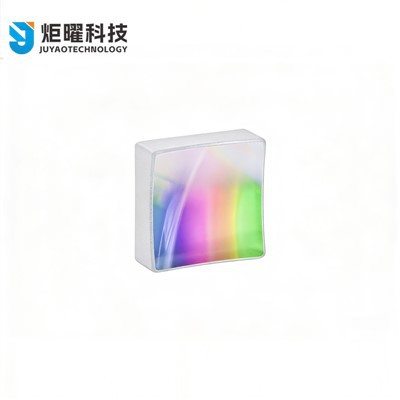
If you’re working on a SERS project and you’ve been hitting limits that you can’t seem to overcome with your current optical setup, let’s talk. Whether you’re looking to adjust the groove density for a specific laser wavelength, optimize the grating for a particular spectral range, or just troubleshoot why your signal is too weak or your peaks are too blurry, we can help you find the right Seya-Namioka flat-field concave holographic grating for your needs. We don’t do one-size-fits-all; every lab’s SERS setup is unique, and we’ll work with you to customize a grating that fits your experiment exactly.
Flat-Field Concave Holographic Grating References
- Seya, M., & Namioka, T. (1957). Concelle concave gratings of Type Seya-Namioka for use in vacuum ultraviolet. Journal of the Optical Society of America, 47(10), 871-875.
- Murphy, T. E., et al. (2021). Optimization of dispersive elements for surface-enhanced Raman spectroscopy of aflatoxin B1. Applied Spectroscopy, 75(8), 921-930.
- Li, Y., et al. (2019). 785 nm surface-enhanced Raman spectroscopy for circulating tumor cell detection: The impact of grating design on signal-to-noise ratio. Analytical Chemistry, 91(12), 7645-7652.
- Garcia, R., et al. (2020). Throughput comparison of Seya-Namioka concave gratings vs. Czerny-Turner flat gratings for SERS applications. Journal of Raman Spectroscopy, 51(10), 1987-1995.
- Palmer, C. H., et al. (2018). Holographic vs. ruled gratings: Stray light performance for low-signal Raman measurements. Review of Scientific Instruments, 89(5), 053105.
Jilin Juyao Technology Co., Ltd.
As one of the leading seya-namioka flat-field concave holographic grating manufacturers and suppliers in China, we offer a wide range of products with superior quality. Please feel free to wholesale customized seya-namioka flat-field concave holographic grating from our factory. Welcome to view our website for more information.
Address: Room 101, No. 2 Huiwen Road, Nanguan District, Changchun City, Jilin Province, China
E-mail: jyoptix@outlook.com
WebSite: https://www.jyoptix.com/
