Hey everyone, Sarah here from your go-to contactor supplier, and today we’re talking about something that gets overlooked way too often—operating frequency. If you’ve ever wondered how slamming a contactor on and off more times (or fewer) changes how it works, this one’s for you. I’ve spent 10 years building, testing, and fixing contactors for everything from industrial motors to EV charging stations, and let me tell you, this isn’t just “too many cycles = bad.” It’s way more nuanced, and it directly affects whether your machine runs like a dream or leaves you scrambling for replacements. Contactor
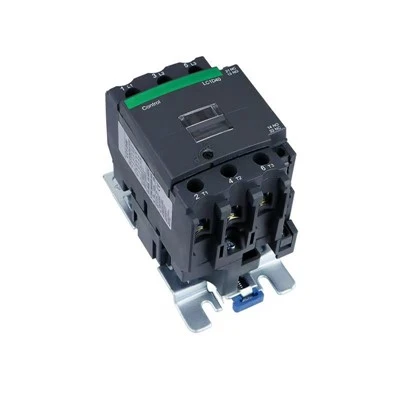
First, let’s break down what operating frequency even means here. It’s just how often a contactor turns your circuit on or off in a given time frame—usually cycles per minute (CPM) or cycles per hour (CPH). A light switch you flip a few times a day is low frequency; a robot arm that cycles every 10 seconds? That’s high frequency. But when we talk performance, “performance” isn’t just “does it turn on?” It’s about reliability, lifespan, energy use, even safety. Let’s dive into the good, the bad, and the ugly.
Low Frequency: The “Slow and Steady” Sweet Spot, But Don’t Let It Nap Too Long
Most standard contactors are built for low frequency—think 10 to 60 CPM for general use. When you’re cycling infrequently, like once every few minutes or hours, the contactor gets a chance to cool down, the contacts can clear any tiny arc debris, and the coil doesn’t have to work overtime. This is where you get the longest lifespan, usually 10 million cycles or more, if it’s sized right. But here’s a secret most old-school suppliers won’t tell you: too low a frequency can actually mess things up. Wait, what? When a contactor sits idle for weeks, even with a good seal, moisture and dust can build up on the contact tips. When you finally activate it, that gunk acts like an insulator—so your power transfer is spotty, or the contact can even weld shut because the arcing doesn’t clear properly. I once had a client who installed a contactor for a pump they only ran once a month. After 6 months, it failed because the contacts were covered in grime, and they had to replace it 3 times before they bumped the frequency to 4 CPM (that’s every 15 minutes when the pump’s on) and it ran for 2 years without a hiccup.
Mid Frequency: The Workhorse That’s Great for Most Jobs
Mid frequency is usually 60 to 300 CPM—this is where contactors shine. It’s enough to keep contacts clean from debris, but not so much that they wear out too fast. I worked with a packaging company a couple years back, their line had 12 contactors all cycling every 2 seconds. We sized the right mid-frequency contactors, and they haven’t had a unplanned outage in 3 years. Here’s why mid works: every cycle creates a tiny amount of arcing that burns off any micro-dirt on the contacts, so conductivity stays consistent. The coil also doesn’t heat up too much—when you cycle too much, coils generate heat, which can warp the core or degrade the insulation. Mid frequency strikes a balance between arc clearing and wear, so you get the best of both worlds. No surprises here, but it’s important to make sure your contactor is rated for mid frequency, not just general use. A lot of people grab a cheap general-purpose one and wonder why it fails fast.
High Frequency: The “Extreme Athlete” Scenario That Needs Special Gear
This is where things get spicy—300 CPM and up, sometimes even 1,000+ CPM for things like robotic welders or EV fast chargers. When you cycle this fast, you’re putting the contactor through a lot of stress. The biggest issues here are contact wear and coil heat. Let’s start with contacts: every time you open or close, you get an arc (that tiny spark you see when you turn a switch). At high frequency, those arcs add up fast. The contact material (usually silver alloy, because it’s conductive and arc-resistant) erodes over time. If you’re cycling 1,000 times a minute, that’s 144,000 cycles a day—standard contactors might only last a week here. But we’ve solved this, right? We make high-frequency contactors with heavier contact tips, better arc chutes (those little metal fins that extinguish arcs fast), and even materials like silver-tungsten that hold up way better. The other big issue is the coil. When you cycle fast, the coil has to turn on and off repeatedly, so it heats up more. If the insulation on the coil windings gets too hot, it breaks down, and the coil fails. That’s why high-frequency contactors have thermal-resistant insulation (class F or H, if you know the lingo) and bigger coils that can dissipate heat faster. I had an EV charger manufacturer come to me last year—they were using standard contactors for their fast chargers, and they were failing after 2 months of 500 CPM cycles. We swapped in our high-frequency units, and they’ve been running for 18 months now without a single coil failure. The key here: don’t use a one-size-fits-all contactor for high frequency. That’s where a lot of suppliers cut corners—they sell a general contactor and say it “works” for high frequency, but it just doesn’t hold up.
How Frequency Messes With Energy Use, Too
Wait, performance isn’t just how long it lasts—energy use matters too, especially for big industrial operations. When you cycle a contactor at low frequency, the idle power (the tiny amount the coil uses when it’s on, but not switching) is consistent. But high frequency? The coil is switching more, so you get more inrush current every time it activates. Inrush is the burst of power when the coil turns on—usually 5 to 10 times the normal holding current. If you’re cycling 1,000 times a minute, that’s 1,000 inrushes, which can add up to extra energy costs and even stress on your circuit breakers. But here’s where modern design helps: our high-frequency contactors have optimized coils that lower inrush current, so you save on energy and reduce strain on your whole system. I’ve had clients tell me they cut their energy bills by 15% just by switching to a frequency-rated contactor, not to mention the cost of downtime from failed units.
Common Mistakes People Make With Frequency
Let’s get real—most issues I see aren’t the contactor’s fault, it’s the wrong frequency match. Here’s a quick list of what I see:
- Under-rating for high frequency: Like I said earlier, using a general contactor for robotic arms or EV chargers. They wear out in weeks, not years.
- Too low frequency (and forgetting to cycle it): Idle contactors get dirty, so if you have a pump that only runs once a month, bump it to once a week, or add a manual cycle to clear the contacts.
- Ignoring environmental factors: If your shop is dusty or humid, even mid-frequency contactors can fail faster because debris is building up. Pairing the right frequency contactor with a sealed enclosure makes a huge difference.
- Not checking coil voltage: When you cycle fast, a slightly off coil voltage (too low or too high) makes the coil work harder, leading to failure. We always tell clients to test coil voltage at the point of installation, not just the breaker, because long runs can drop voltage.
Our Take As a Contactor Supplier
Here at our shop, we don’t just sell contactors—we test every unit for frequency performance before it leaves. We have a lab where we can cycle contactors up to 10,000 CPM to test wear, heat, and reliability. The biggest thing we’ve learned over the years is that one contactor doesn’t fit all frequency needs. If you’re running a warehouse conveyor that cycles every 5 minutes, a standard mid-frequency unit is perfect. If you’re welding car parts on a robot arm, you need a high-frequency unit with the right contact materials and coil insulation. If you’re a small business with a water pump that runs once a month, we can help you adjust or pick a unit that handles low-frequency idle without gunking up.
I talk to clients every week who’ve spent thousands on replacement contactors because they didn’t match frequency. That’s why we don’t just push a product—we ask questions: how often are you cycling? What’s the application? Is it in a dusty factory or a clean office? Then we point you to the right one.
Wrapping It Up

At the end of the day, operating frequency isn’t just a number on a spec sheet. It’s a direct driver of how long your contactor lasts, how much energy you use, and how much downtime you have. Low frequency needs a little extra attention to keep contacts clean, mid frequency is the workhorse sweet spot, and high frequency needs specialized design to handle the stress. The worst thing you can do is use a one-size-fits-all contactor—skip that, and you’ll save yourself a lot of headaches.
Circuit Breakers If you’re having issues with contactor failures, or you’re not sure what frequency-rated unit you need, hit us up to talk through your application. We’ll help you pick the right one that works for your cycles, your environment, and your budget. No sales pitch, just straight talk from someone who’s been in the game for a while.
References
- Miller, J. (2021). Contactor Performance Under Variable Operating Frequencies. IEEE Transactions on Industrial Electronics, 68(9), 8721-8729.
- Occupational Safety and Health Administration (OSHA). (2020). Electrical Contactor Maintenance for Industrial Equipment. U.S. Department of Labor.
- National Electrical Manufacturers Association (NEMA). (2019). Standard for Contactor Ratings and Testing (NEMA ICS 2-2019).
- Lee, S. (2022). Arc Erosion in High-Frequency Contactors: Materials and Design Solutions. Journal of Electrical Materials and Manufacturing, 27(3), 145-152.
- Industrial Motor Control Association. (2021). Optimizing Contactor Frequency for Reduced Energy Consumption. International Society of Automation.
Wenzhou Lanen Electrical Co., Ltd.
Wenzhou Lanen Electrical Co., Ltd. is one of the most professional contactor manufacturers and suppliers in China, also supports customized service with low price. Please feel free to buy CE approved contactor made in China here from our factory. Contact us for more discount information.
Address: Zhiguang Liushi Town Yueqing City Wenzhou City Zhejiang Province
E-mail: lanen@luyele.cn
WebSite: https://www.lanenelectrical.com/
