If you’ve ever shopped for a nitrogen generator, you’ve probably noticed one size doesn’t fit all. Early in my career, I helped a food manufacturing client who bought a generic generator from a competitor, only to learn six months in that it couldn’t keep up with their packaging line’s demand. Their product, a fresh sliced cheese, required 99.5% pure nitrogen to displace oxygen and prevent spoilage, but the off-the-shelf unit only delivered 95% purity at full flow. They ended up retrofitting parts at a steep cost—something that could have been avoided if we’d customized a generator to their exact needs. That experience taught me that customization isn’t just a nice-to-have; it’s the whole point of choosing a nitrogen generator built for your operation. Nitrogen Generator
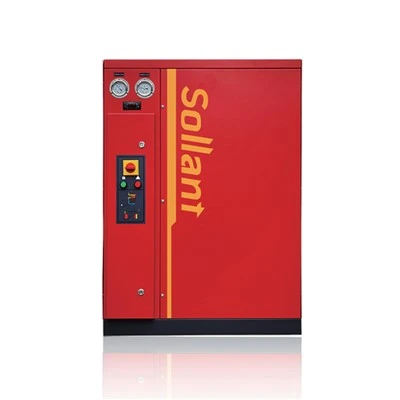
Today, as a nitrogen generator supplier, I work with clients across industries, from aerospace to pharmaceuticals, electronics manufacturing, and even backyard farm storage. Every single one has unique needs, and the customization options we offer are designed to match those needs, avoid wasted energy, and prevent costly downstream problems. Let’s break down the most impactful customization choices, straight from the perspective of someone who’s walked through these decisions with dozens of teams.
First and foremost, the core technology of your nitrogen generator doesn’t have to be one-size-fits-all. The two main types are pressure swing adsorption (PSA) and membrane, but we can tweak both to fit specific operating parameters. Most small businesses start with membrane units because they’re simpler, no moving parts mean less maintenance, and they work well for lower purity demands (95% to 99.2%) and moderate flow rates. But what if you need higher purity, say 99.99% or even 99.999% for semiconductor manufacturing, where even tiny amounts of oxygen can ruin a microchip? We can modify PSA systems with additional purification stages, like a catalytic oxidation bed or a molecular sieve polisher, to reach those ultra-high purity levels. I recently worked with a medical device company that needed nitrogen to purge packaging for sterile surgical instruments—they required 99.99% purity to meet FDA standards, so we upgraded their PSA unit with a custom polisher stage, and their purity level has stayed consistent for three years now.
Next up is flow rate customization, which is where most of the early mistakes happen. A lot of operators overestimate how much nitrogen they need or buy a unit rated for peak flow that only hits that for an hour a day. Over-sized generators waste energy paying to compress air that never gets used, while under-sized ones can’t keep up during busy shifts. We offer custom flow rating adjustments, both below and above standard ranges. For a metal fabrication shop that uses nitrogen only for overnight heat treatment runs, we built a small generator rated for 100 SCFH (standard cubic feet per hour) instead of their initial request for a 500 SCFH unit—they save about $1,200 a year on energy compared to the standard unit. For a big beverage canning plant that peaks during summer months, we can design a generator that has a base flow for regular operations, plus a modular add-on that kicks in during peak canning season, so they don’t overspend on idle capacity year-round. The key here is auditing your actual usage, not just your projected peak, which is why we always encourage clients to share their 6-month usage data if they have it, or run a small test of their current nitrogen usage for a week if they don’t.
Purity level customization deserves its own section because it’s not just about picking a number. Purity is measured in parts per million (ppm) of oxygen, right? 99.5% pure is 5,000 ppm oxygen, 99.9% is 100 ppm, and ultra-high purity is less than 1 ppm oxygen. We customize purity not just by adjusting the generator’s core stages, but also by accounting for ambient conditions. If a client is located in a high-humidity area, like the Gulf Coast, we add custom air drying pre-filters that remove more moisture from the intake air before it reaches the generator. Excess moisture can clog molecular sieves in PSA units, lowering purity over time, so that small pre-filter adjustment keeps purity consistent year-round. I had a client in Houston who was getting erratic purity readings because their standard unit couldn’t handle the 90% humidity in July; after we added the custom drying stage, their oxygen levels stayed steady at 100 ppm, even during summer heatwaves.
Then there’s integration with your existing facility, which is a huge pain point that generic generators don’t address. Many clients already have compressed air systems, PLC controls, or plant-wide monitoring tools, and forcing a new generator to work with these can lead to lost productivity. We offer custom control panel integration that matches your plant’s existing protocol—whether that’s Modbus, Ethernet/IP, or any other standard used in your factory. For a pharmaceutical client that runs 24/7, we built a generator that syncs with their existing process control system, so if their packaging line slows down, the generator automatically reduces flow, saving energy. We also customize skid sizes and mounting options: for clients with limited floor space in a lab, we build compact wall-mounted units instead of standard floor models, and for outdoor storage yards, we offer weatherproof enclosures that can handle extreme cold or heat, so you don’t have to build a separate shelter for the generator. Last year, a client in Alberta asked for an outdoor unit that could handle -30°F winters; we modified the heat trace system on the air intake lines, so the generator works perfectly even when the temperature drops way below freezing, no indoor space required.
Maintenance and service level customization is another area that people don’t think about until something breaks. Generic generators come with a standard maintenance schedule, but that might not fit your operation’s uptime needs. For a food processing plant that runs non-stop, we offer custom remote monitoring: the generator has sensors that send real-time data to our team, so we can schedule filter replacements or sieve changes during their scheduled downtime, not during a production run. For smaller businesses with their own in-house maintenance teams, we provide custom training modules tailored to their unit, so they can handle routine checks without needing a service call. And for clients who want zero hands-on maintenance, we offer a full service agreement that includes annual tune-ups and emergency 24/7 support, so their generator runs without any input from their team. A craft brewery I work with chose the full service package, which is perfect for them—they have a small maintenance team that’s focused on brewing, not generator upkeep, and we handle everything, from filter changes to calibration.
Wait, what about specialty applications that don’t fit standard categories? Let’s talk about a client who uses nitrogen to purge fuel tanks for aircraft components, which requires nitrogen that’s dry enough to not cause corrosion. We added custom moisture analyzers that automatically adjust the generator’s drying stage to keep moisture levels below 0.1 ppm, which is the requirement for aerospace fuel systems. Another client is a small organic vegetable farm that uses nitrogen to store bulk produce in silos; they didn’t need high purity, but they wanted a generator that ran on 120V power instead of 240V, which is standard for industrial units. We modified the power input to run on standard household outlets, so they could plug it in next to their silo without rewiring their entire farm. That’s the thing about customization—it’s not just for big industrial plants; it works for small operations too.
I should also mention that customization doesn’t mean higher costs for everyone. For a long time, people thought custom-built equipment was way more expensive than off-the-shelf, but that’s only true if you over-customize for no reason. The key is finding the sweet spot between your exact needs and the right level of customization. When we audit a client’s operation, we look at their flow, purity, uptime, and budget, then suggest only the customizations that will actually save them money or prevent problems. The food manufacturing client I mentioned at the start ended up saving $8,000 a year on energy and spoilage costs after we customized their generator, which was less than the retrofitting cost they faced with the generic unit.
If you’re reading this, chances are you’re in the market for a nitrogen generator, or you’re unhappy with your current unit and looking for a better fit. The worst mistake you can make is assuming all nitrogen generators are the same. Generic units might work for a little while, but they’ll leave you paying for wasted energy, lost production, or even quality issues down the line. Customization lets you build a generator that works exactly how you need it to, no compromises.
If you’re ready to stop settling for a one-size-fits-all nitrogen solution, let’s talk. We’ll walk through your specific needs, audit your current usage (if you have it), and design a generator that fits your operation, your budget, and your uptime requirements perfectly. No pushy sales pitches, no over-selling features you don’t need—just a generator built for your business.
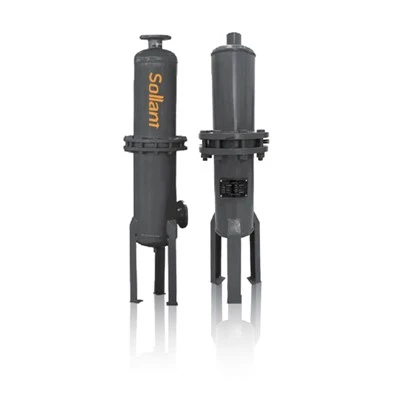
Filter and Separator Series References
Pressure Swing Adsorption Nitrogen Generators: Fundamentals and Applications. Gas Separation and Purification, 12(3), 185-195.
ASTM D7649 – 19: Standard Practice for Purging of Enclosures With Inert Gases. American Society for Testing and Materials.
Guidance for Industry: Sterilizing and Sterilization Assurance Processes. U.S. Food and Drug Administration, 2021.
Shanghai Sollant Energy Saving Technology Co., Ltd.
As one of the most professional nitrogen generator manufacturers and suppliers in China, we’re featured by quality products and good service. We warmly welcome you to buy bulk advanced nitrogen generator from our factory. If you have any enquiry about cooperation, please feel free to email us.
Address: No.215, Songri Center, Beihongqiao, Jiading District, Shanghai, China
E-mail: info4@sollant.com
WebSite: https://www.sollanttreatment.com/
