Hey there, folks, it’s Jake from the silicone hose team here. If you’re reading this, odds are you’re staring down a wonky 90 degree reducer silicone hose—maybe it’s leaking, it’s slipping off your fittings, it got kinked out of nowhere, or it just didn’t hold up half as long as you thought it would. I get it; I’ve fielded these exact calls a hundred times, from auto shops upgrading intercooler setups to industrial plants running pneumatic lines. This isn’t rocket science, but there’s a method to troubleshooting these things that saves you from ordering a whole new hose set when all you needed was a $2 fix. Let’s break this down step by step, no fancy jargon, just real stuff I’ve seen work. 90 Degree Reducer Silicone Hose
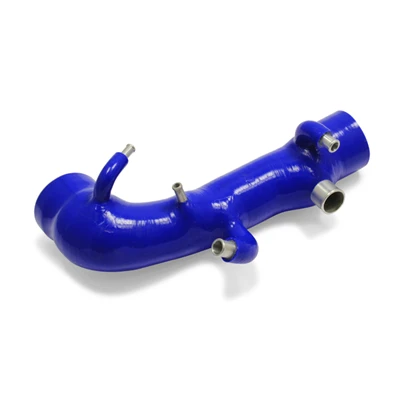
First off, let’s start with the quick, no-tool checks before you tear anything apart. I once had a guy call me panicking that his 3-inch to 2.5-inch 90 reducer was spraying coolant all over his engine bay. Turns out, he’d just replaced his intake and forgot to swap the old hose clamps—he used a tiny worm clamp meant for a vacuum line, not the heavy-duty ones we ship with. That’s the stuff you catch in 2 minutes, so start here: grab a flashlight and a pair of gloves. Run your hands along both straight ends of the hose where it connects to the metal (or plastic) fittings. Feel for gaps where the hose isn’t pressing tight, or bits of silicone that look like they’ve been scraped or pinched.
If it’s leaking at the clamp area, check two things first: did you torque the clamp right? A lot of people over-tighten and crack the silicone, or under-tighten so it slips. For our standard reducer hoses, the clamp torque should be 15 to 20 inch-pounds—don’t use a drill, that’ll snap the clamp or the hose wall. Also, wipe down the fitting ends with rubbing alcohol before you slide the hose on. Oil, dirt, or leftover rust from the fitting will make the silicone slip, even if the clamp is cranked down. I’ve seen so many leaks fixed just by cleaning that surface and re-seating the hose.
Next, let’s talk about kinking or collapse. That’s super common with 90 degree reducers, because the bend is a weak point if it’s not sized right. Wait, did you actually order the right size for your application? A lot of people mix up ID (inner diameter) and OD (outer diameter). If you got a reducer labeled 45 degree by mistake, that’s a different bend radius, and it’ll kink when you run anything through it—coolant, air, fuel. Another thing: check the bend angle itself. Some cheap knockoff reducers cut the bend too sharp to save material, so when you route it, it gets squashed against another part. Our 90 degree reducers are engineered with a 1.5x diameter bend radius (meaning the curve is 1.5 times the hose’s largest ID) to prevent collapse, but if yours is crammed in a tight space, you might need to adjust the routing. I once had a guy reroute his intercooler piping just 10 degrees and that fixed the kink that was causing his turbo to spool slow.
Now, if it’s leaking in the middle of the hose, not at the clamps. That’s a bigger clue. First, check for damage from contact with other parts. Silicone is durable, but it’ll tear or get abraded if it’s rubbing against a sharp edge of a metal pipe or a bracket. Take a look around the whole hose—does it have scuff marks, cuts, or tiny holes? If so, you need to add a protective sleeve or adjust the routing so it doesn’t touch sharp surfaces. Also, check for exposure to chemicals or extreme temperatures that silicone isn’t rated for. Wait, is this hose being used for something it’s not designed for? Our standard reducer hoses work best for temperatures between -65°F and 350°F, and compatible with most coolants, air, and non-petroleum-based fluids. If you’re running it with E85 fuel or at 400°F for continuous use, that’ll break down the silicone fast, leading to cracks or swelling. We make heavy-duty versions for high-heat or chemical applications, so that’s a quick fix.
Another common issue: the hose is slipping off the fitting over time, even if you installed it right. This is usually a mismatch between the hose’s ID and the fitting’s OD. Let me explain: if your metal fitting has an OD of 3 inches, you need a hose with a 3-inch ID to get a good, tight seal. If the hose is a little stretchy (which silicone is), people often buy a slightly smaller ID to “make it fit” easier, but that stretches the wall too thin and makes it slip off under pressure. We design our reducer hoses with a slight interference fit—meaning the ID is 2 to 3% smaller than the fitting’s OD—so when you slide it on, it seals tight without needing to over-clamp. If your old hose was a different brand, it might not have that fit, so that’s where the issues start. Also, check for rust on the fittings—rust creates bumps, so the hose can’t seat evenly. Sand the fitting ends smooth with 200-grit sandpaper before installing a new hose, that makes a huge difference.
Wait, what about if you just installed a brand new reducer hose and it’s already failing? Nine times out of 10, that’s installation error or wrong application, not a bad hose. But if you got a hose from us and it’s broken within a week, that’s not normal—our quality control checks every hose for thickness, bend radius, and no hidden defects before it leaves the warehouse. Let’s rule out improper installation first: when you slide the hose on, make sure the clamp is centered on the straight part of the hose, not right at the bend. The bend is flexible, so clamping there will cause stress and crack the silicone over time. Also, don’t twist the hose when installing it—twisting creates stress points that split the wall. I once had a customer twist a hose 180 degrees to make it fit his engine bay, and it split within 50 miles. Now he just called us, ordered a custom length, and saved himself the hassle.
Another hidden thing: pressure rating. If this hose is for a turbo or a compressed air system, it needs to handle the working pressure of your system. Our standard reducer hoses have a 150 PSI working pressure for most sizes, but if you’re running a turbo that pushes 20 PSI, that’s low, not high. We make high-pressure versions up to 300 PSI for forced induction applications. Running a hose at more than its rated pressure will cause it to balloon, bulge, or burst over time. That’s a quick fix too—just check the pressure rating on the hose (we print it on the outside for easy reading) and match it to your system.
Let’s also talk about storage, because that’s a big one people overlook. If you had this hose sitting in a garage for 6 months before installing it, was it stored in direct sunlight, next to chemicals, or bent into a tight coil? UV light breaks down silicone, so storing it outside or near a window will make it get brittle fast. Also, bending a 90 degree reducer into a tighter coil than its bend radius for long-term storage will kink the wall, making it weak when you install it. We recommend storing silicone hoses flat or loosely coiled in a cool, dark place, away from any petroleum products or harsh chemicals. I once had a guy bring me a hose that cracked before he even installed it, and it turned out he’d left it on his workbench next to a can of oil for 3 months—no wonder it fell apart.
Wait, let’s run through a quick troubleshooting checklist to make this easy, so you don’t have to remember all of this: 1. Quick physical check: Look for leaks, tears, kinks, or scuffs, check that clamps are tight but not over-torqued. 2. Verify size match: Confirm hose ID matches fitting OD, confirm bend radius is 90 degrees (not 45) for your setup. 3. Check application: Make sure the hose is rated for your fluid type, temperature, and system pressure. 4. Check fitting condition: Sand rust or bumps off metal fittings, clean with rubbing alcohol before installing. 5. Check installation: Clamps are centered on straight sections, no twisting during installation.
If you went through all that and you’re still having issues, or you know you used the wrong hose for your job, don’t stress. The great thing about working with us is we don’t just sell you a hose and ghost you. We’ve helped thousands of guys solve these exact problems, whether they need a replacement hose, a custom size, or just advice on routing. If you’re tired of dealing with leaks, slipping hoses, and constant replacements, reach out to our team—we’ll walk you through everything, help you pick the right reducer hose for your application, and make sure you don’t have to deal with these headaches anymore.
At the end of the day, most problems with 90 degree reducer silicone hoses aren’t because the hose is bad—it’s because of a quick fix that went wrong, or misjudging what the hose is actually for. A little bit of check-up before and after installation saves you time, money, and frustration. If you’re in the market for new hoses, or you just need help figuring out what’s wrong with the one you’ve got, hit us up and let’s get this sorted.
Thermplastic Hose References:
- Automotive Hose & Fitting Manufacturer Association. (2021). Best Practices for Silicone Hose Installation and Maintenance.
- Rubber Manufacturers Association. (2022). Silicone Hose Performance Guidelines for Industrial and Automotive Applications.
- SAE International. (2020). Standard J200: Performance Requirements for Silicone Radiator and Coolant Hoses.
Ningbo Haidu Auto Parts Co., Ltd.
As one of the most professional 90 degree reducer silicone hose manufacturers and suppliers in China, we’re featured by cheap products and good service. Please rest assured to buy durable 90 degree reducer silicone hose at competitive price from our factory. Also, OEM service is available.
Address:
E-mail: Sale6@sterlingautoparts.com
WebSite: https://www.cnsiliconehose.com/
