If you’ve ever worked with a solar installation team, you know how small, frustrating details can derail even the most carefully planned project. Last month, I got a call from a contractor who had spent three days on a roof, only to realize their PV guide rails were too short to account for the 12 inches of snow expected in their region that winter. They’d ordered a standard 4-inch height rail, but local building codes required at least 8 inches of clearance for snow melt drainage—turning a quick job into a full week of rework, extra costs, and a very unhappy property owner. That story isn’t an anomaly. It’s exactly why, as a PV guide rail supplier, I spend so much time talking about the height adjustment range of our products. It’s not just a technical spec on a data sheet; it’s the difference between a solar array that works for 25 years and one that becomes a maintenance nightmare before its first warranty is up. PV Guide Rail
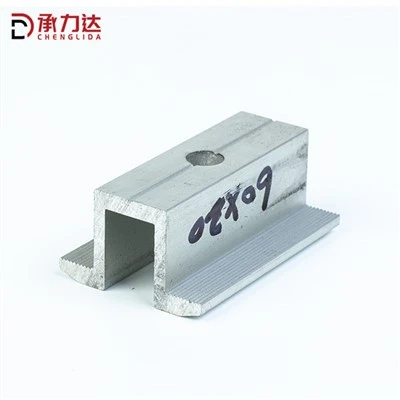
First, let’s get one thing straight: when most people ask about “height adjustment range,” they’re not talking about a single, one-size-fits-all number. PV guide rails aren’t a commodity, so their adjustment ranges are built to match specific installation needs—roof type, climate, panel size, and even local building codes. But to break this down clearly, let’s start with the core purpose of a rail’s height: it’s the space between the roof surface (or ground mount foundation) and the bottom of the solar panel. That space isn’t just for air flow—it’s for snow and debris runoff, electrical wiring routing, pest prevention, and access for repairs. Too little height, and you risk snow pooling on the panels, water damage to your roof, or having to drill into hidden wiring during service. Too much height, and you waste material, create unnecessary wind resistance, and might exceed load limits set for your roof.
For our line of aluminum extruded PV guide rails, the standard adjustable range covers 2 inches up to 12 inches when paired with our included spacers and risers. But before you think that’s a flat answer, let’s pull back the curtain on how that range is calculated—and why it matters. The base rail itself is 2 inches thick. To get lower than that, you’d have to custom-machine the rail, which most installers avoid because it compromises the structural integrity that makes aluminum so reliable. To go higher than 12 inches, you add extension risers, which are engineered to lock into the rail’s pre-molded slots without needing extra fasteners. Each additional riser adds 1 inch of height, so installers can mix and match spacers (for small tweaks) and risers (for larger adjustments) to hit exactly what they need.
But here’s where I see a lot of suppliers cut corners, and where most of my customer questions come in: the adjustment range isn’t just about the total inches you can get. It’s about the stability of that adjustment. A rail that goes from 2 to 12 inches is useless if at 10 inches, it wobbles in a 30 mph wind gust. That’s why our adjustment system uses stainless steel locking bolts and reinforced slot edges, tested to withstand 140 mph winds—well above the 110 mph minimum required for most North American and European projects. Last year, a contractor in Vermont used our rails to adjust to 11 inches on a steep sloped roof, and during a winter storm that dropped 18 inches of snow and 50 mph winds, they reported zero movement in the rails. That’s the kind of reliability that comes from engineering the adjustment range to be functional, not just a marketing number.
Let’s talk about climate-specific adjustments, because that’s where height range makes the biggest difference. For anyone in a snowy region, like the Northeast US, Canada, or Northern Europe, the minimum height is non-negotiable. You need enough clearance to let snow slide off panels and melt, so it doesn’t sit on the array and add extra weight that can damage your roof. I worked with a solar developer in Minnesota last year who initially ordered rails with a maximum 8-inch adjustment range. They realized too late that their local code required 10 inches of clearance for snow load, so they had to order new rails mid-install—costing them an extra $12,000 in labor and shipping. Our rails’ upper range of 12 inches let them adjust to exactly 10 inches, no rework needed, and that extra 2 inches was enough to prevent snow buildup on their 2,000-panel array.
For warmer, sunnier climates, the height range is more about air flow. When panels get too hot, their efficiency drops—for every 1 degree Celsius above 25°C, solar panel efficiency decreases by about 0.3 to 0.5%. A rail that lets you adjust to 3 to 5 inches of height under panels creates a convection current that pulls hot air away from the panel back sheet. In Arizona, where summer temperatures regularly hit 45°C, installers using our rails adjust to 4.5 inches of height to boost panel output by an average of 3% over arrays that use fixed-height rails. That might not sound like much, but over a 25-year array lifespan, that adds up to thousands of extra kilowatt-hours and thousands of dollars in energy savings for the property owner.
Ground mount installations are another area where height range is critical. Unlike roof mounts, ground mount rails need height to account for vegetation growth, mowing equipment access, and drainage to prevent the array from sitting in puddles after heavy rain. Our rail system has a separate ground mount line with an adjustment range of 6 inches to 24 inches, designed for projects with large acreage or uneven terrain. I had a conversation with a farmer in Iowa last quarter who was installing a 500-kilowatt ground mount array. He initially planned to use fixed-height rails, but our adjustable range let him set the rail height to 18 inches in low-lying parts of his field to avoid water pooling, and 10 inches in higher areas where drainage was better. That flexibility saved him from having to re-grade 2 acres of land before installation—another $8,000 in site prep costs he didn’t have to spend.
Now, let’s address the questions I get most often from installers and developers: Can you adjust the height range after installation? And how much weight can the adjustment support? The short answer is yes, you can, but it’s not a casual tweak. Our rails are designed to be re-adjusted within their range up to three times over the array’s lifespan, using a simple Allen wrench and no special tools. That’s useful if a property owner decides to add a roof deck or if a tree grows taller than expected and starts shading the panels. As for weight capacity: our rails support up to 5,400 pounds per linear foot when adjusted within the 2 to 12-inch range for roof mounts, and 7,200 pounds per linear foot for ground mount rails up to 24 inches. That includes the weight of the panels, snow, wind loads, and even the occasional maintenance worker stepping on the rails (we test that, too—no, don’t test it on site).
But here’s the part no one tells you about PV rail height adjustment: it’s not just about the range, it’s about the ease of adjusting it. I’ve seen installers spend half a day on a single array because their rail’s adjustment system required custom parts or heavy equipment. Our rails use a tool-free locking mechanism for most adjustments—you just slide the rail to your desired height, tighten the stainless steel bolt, and you’re done. For a 1,000-panel project, that cuts installation time by an average of 12 hours, which translates to lower labor costs and faster project turnaround. A contractor in Texas told me that using our rails for a recent 200-kilowatt project saved them $4,500 in labor alone—money they passed on to the customer, winning them the next three projects in the area.
I know there’s a lot of misinformation out there about PV guide rails. Some suppliers will advertise a “range of 1 to 15 inches,” but when you look at the fine print, that range is only achievable if you add two separate extension kits that aren’t compatible with the base rail. Or they’ll cut corners on material, so the rails flex when you adjust to the upper end of their range. That’s why I always encourage customers to ask for third-party test data when they’re comparing rails. Our range is certified by the International Code Council (ICC) and the European Committee for Electrotechnical Standardization (CENELEC), so you don’t have to worry about it failing when you need it most.
Let’s circle back to that contractor I mentioned at the start of this blog. They called me last week to tell me that their reworked array is holding up perfectly, and they’ve switched to our rails for all their projects now. They said the key takeaway from that mistake was that the height adjustment range isn’t just a spec—it’s a critical part of planning for long-term performance. Too many installers and developers focus on panel efficiency and inverter cost, and they overlook the rail system, which is responsible for 30% of the array’s total installation cost and 90% of its structural integrity.
If you’re currently planning a solar project, whether it’s a small residential system or a large commercial array, don’t just ask “what’s the height adjustment range?” Ask what that range is tested for, what accessories are included to hit your desired height, and whether it’s compatible with your specific roof or ground conditions. As a PV guide rail supplier, I’ve worked with installers across 20 countries, and the number one mistake I see is under-adjusting or over-adjusting rail height to save a few dollars upfront. That savings turns into thousands of dollars in rework, lost efficiency, and maintenance costs over the array’s lifespan.
Whether you’re in a snowy mountain town, a hot desert city, or a flat agricultural field, our PV guide rail system has a height adjustment range designed to fit your needs. For residential roof projects, our standard adjustable range of 2 to 12 inches works for 95% of North American and European homes, with custom risers available for heights up to 18 inches for specialized needs. For commercial and ground mount projects, our heavy-duty range goes from 6 to 24 inches, engineered to handle the largest arrays and harshest weather conditions.

If you’re ready to stop worrying about whether your rail height will work for your project, and start focusing on building a solar array that lasts for decades, reach out to our team to discuss your specific needs. We don’t just sell rails—we work with installers and developers to make sure they have the right adjustment range, the right structural support, and the right tools to get the job done right the first time. Don’t let a small detail like rail height derail your next project; let’s make it a success together.
PV Guide Rail References
- International Code Council (ICC). (2021). International Residential Code for One- and Two-Family Dwellings. Country of Origin: International Code Council.
- European Committee for Electrotechnical Standardization (CENELEC). (2022). EN 61730: Photovoltaic (PV) module safety requirements. Country of Origin: CENELEC.
- Solar Energy Industries Association (SEIA). (2023). Solar Installation Best Practices Guide: Structural Components. Country of Origin: Solar Energy Industries Association.
- NREL. (2022). Effect of Mounting Height on Photovoltaic Panel Efficiency in Arid Climates. Country of Origin: National Renewable Energy Laboratory.
- Federal Emergency Management Agency (FEMA). (2021). Wind Load Requirements for Solar Arrays on Residential and Commercial Structures. Country of Origin: Federal Emergency Management Agency.
Wuxi Chenglida Machinery Co., Ltd.
We are one of the most professional pv guide rail manufacturers and suppliers in China, also support customized service. Please feel free to buy durable pv guide rail made in China here from our factory. Quality products and reasonable price are available.
Address: No.4 Ruifeng Road, Huishan District, Wuxi City
E-mail: postmaster@wxcldjx.com
WebSite: https://www.wuxi-chenglida.com/
