Hey there! I’m a supplier of gypsum powder production lines. You might be wondering about the dust emission situation of these production lines. Well, let me break it down for you. Gypsum Powder Production Line

Dust Emission Sources in a Gypsum Powder Production Line
First off, we need to understand where the dust comes from in a gypsum powder production line. There are several key sources.
Mining and Quarrying
When gypsum is mined from quarries, the process of extraction and transportation can generate a significant amount of dust. Drilling, blasting, and loading the gypsum onto trucks all contribute to dust being released into the air. The dust particles are mainly composed of gypsum itself, along with some other minerals present in the quarry.
Crushing and Grinding
Once the gypsum is brought to the production facility, the first step is usually crushing and grinding. In the crushing stage, large chunks of gypsum are broken down into smaller pieces. This process creates a lot of dust as the gypsum is shattered. The grinding process further reduces the particle size, and fine dust is generated. The dust from crushing and grinding is very fine and can easily become airborne.
Drying and Calcination
After the gypsum is crushed and ground, it often goes through a drying and calcination process. During drying, moisture is removed from the gypsum, and this can cause some dust to be released. Calcination, which involves heating the gypsum to a high temperature to convert it into plaster of Paris or other forms, also generates dust. The high – temperature process can cause the gypsum particles to break down and release fine dust into the surrounding environment.
Packaging and Handling
Finally, when the gypsum powder is packaged into bags or other containers, dust can be released. The transfer of the powder from the production line to the packaging equipment, as well as the filling of the bags, can create dust clouds. Also, during the handling and storage of the packaged products, dust can be generated if there are any spills or if the packaging is not properly sealed.
Measuring Dust Emission
To understand the dust emission situation, we need to measure it. There are several ways to measure dust emission in a gypsum powder production line.
Gravimetric Method
This is one of the most common methods. It involves collecting dust samples on a filter paper over a certain period of time. The filter paper is then weighed before and after the sampling. The difference in weight gives the amount of dust collected. This method is relatively simple and accurate, but it can be time – consuming.
Optical Particle Counters
These devices use light scattering to detect and count dust particles. They can provide real – time information about the number and size distribution of dust particles. Optical particle counters are very useful for quickly assessing the dust emission situation, but they may not be as accurate as the gravimetric method for measuring the total mass of dust.
Dust Monitors
Dust monitors are installed at various points in the production line to continuously measure the dust concentration in the air. They can provide data on the dust levels over time, which is important for understanding the trends in dust emission. Some dust monitors can also be connected to an alarm system, which will alert the operators if the dust concentration exceeds a certain limit.
Factors Affecting Dust Emission
Several factors can affect the dust emission situation in a gypsum powder production line.
Production Capacity
The higher the production capacity of the line, the more dust is likely to be generated. This is because more gypsum is being processed, which means more crushing, grinding, and other operations that produce dust. For example, a large – scale production line that can produce several tons of gypsum powder per hour will generate more dust than a small – scale line.
Equipment Efficiency
The efficiency of the equipment used in the production line also plays a role. Well – maintained and high – quality equipment is less likely to generate dust. For instance, a crusher with sharp blades and proper sealing will produce less dust during the crushing process compared to an old and worn – out crusher.
Environmental Conditions
The environmental conditions, such as temperature, humidity, and wind speed, can affect dust emission. High temperatures can cause the gypsum to dry out more quickly, which may increase dust generation. Low humidity can also make the dust more likely to become airborne. Wind can carry the dust over a larger area, increasing the potential for environmental pollution.
Controlling Dust Emission
As a supplier of gypsum powder production lines, we are very concerned about dust emission control. Here are some of the ways we help our customers reduce dust emission.
Dust Collection Systems
We install dust collection systems in the production lines. These systems use filters to capture the dust particles. There are different types of dust collectors, such as bag filters and cyclone separators. Bag filters are very effective at capturing fine dust particles, while cyclone separators are good at removing larger particles. The collected dust can then be recycled or disposed of properly.
Sealing and Enclosure
We also focus on sealing and enclosing the equipment in the production line. By sealing the crushers, grinders, and other equipment, we can prevent dust from escaping into the surrounding environment. Enclosures can also be used to contain the dust within a specific area, making it easier to collect and control.
Wetting and Spraying
Another method is to use wetting and spraying systems. Water is sprayed onto the gypsum during the production process to reduce dust generation. The water helps to bind the dust particles together, making them heavier and less likely to become airborne. This method is particularly effective in the mining and quarrying stages.
The Importance of Controlling Dust Emission
Controlling dust emission is not only important for environmental reasons but also for the health and safety of the workers. Dust inhalation can cause various health problems, such as respiratory diseases, lung cancer, and silicosis. By reducing dust emission, we can create a safer and healthier working environment for the employees.
In addition, environmental regulations are becoming more and more strict. If a gypsum powder production line does not meet the dust emission standards, it may face fines and other penalties. Therefore, it is in the best interest of the producers to control dust emission.
Conclusion
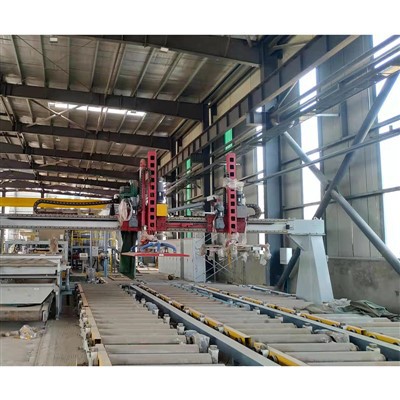
So, that’s the dust emission situation of a gypsum powder production line. As a supplier, we are committed to providing our customers with production lines that are not only efficient but also environmentally friendly. We understand the importance of controlling dust emission and offer various solutions to help our customers meet the environmental standards.
Desulfurization Gypsum Powder Production Line If you’re in the market for a gypsum powder production line and want to learn more about how we can help you control dust emission, don’t hesitate to reach out. We’re here to have a chat and see how we can work together to meet your needs.
References
- Occupational Safety and Health Administration (OSHA). "Dust Control in Mining Operations."
- Environmental Protection Agency (EPA). "Air Quality Standards for Particulate Matter."
- Industry reports on gypsum powder production and dust emission control.
Shineye Mach Co., Ltd.
Shineye Mach Co., Ltd. is one of the most reliable manufacturers and suppliers of gypsum powder production line in China, also supports customized service with reasonable price. Please feel free to buy advanced gypsum powder production line made in China here from our factory. For quotation, contact us now.
Address: Jinzhou Circular Industry Park, Jinzhou City, Shijiazhuang City, Hebei Province, China
E-mail: xiangyijixielucia@yeah.net
WebSite: https://www.shineyemach.com/
