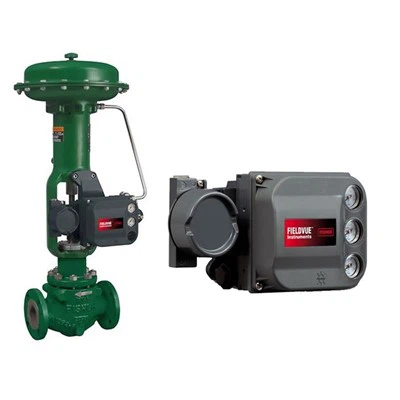
Valve stiction is a well – recognized and persistent issue in the field of industrial process control. It can lead to oscillations, inaccurate control, and increased wear and tear on valves, ultimately affecting the efficiency and reliability of the entire process. As a supplier of Fisher Valve Positioners, I am frequently asked about how our products handle valve stiction. In this blog, I will delve into the science behind Fisher Valve Positioners and explain how they effectively tackle this problem. Fisher Valve Positioner
Understanding Valve Stiction
Before we discuss how Fisher Valve Positioners deal with valve stiction, it’s essential to understand what valve stiction is. Stiction is a combination of static friction (stiction) and dynamic friction. When a valve is at rest, the static friction resists the initial movement. Once the valve starts moving, the dynamic friction comes into play. The difference between static and dynamic friction can cause the valve to stick at its current position and then suddenly jump to a new position when the force overcomes the static friction. This erratic behavior can disrupt the control loop and lead to process instability.
The Working Principle of Fisher Valve Positioners
Fisher Valve Positioners are designed to work in tandem with control valves to ensure accurate and precise positioning. They receive a control signal from the process controller and convert it into a pneumatic or electric output to move the valve stem to the desired position.
One of the key features of Fisher Valve Positioners is their advanced control algorithms. These algorithms are based on years of research and development, taking into account the complex behavior of valves in different industrial environments. The positioner continuously monitors the valve position and compares it with the setpoint. If there is a deviation, the positioner adjusts the output signal to correct the valve position.
How Fisher Valve Positioners Overcome Valve Stiction
Adaptive Control
Fisher Valve Positioners employ adaptive control strategies to deal with valve stiction. The positioner can adapt to the changing friction characteristics of the valve over time. As the valve ages or the operating conditions change, the static and dynamic friction coefficients may vary. The adaptive control algorithm in the Fisher Valve Positioner can detect these changes and adjust the control signal accordingly. For example, if the valve is sticking more than usual, the positioner can increase the driving force to overcome the static friction and ensure smooth valve movement.
High – Gain Control
Another way Fisher Valve Positioners handle valve stiction is through high – gain control. The positioner has a high – gain amplifier that can generate a strong output signal when needed. This high – gain control allows the positioner to provide enough force to break the valve free from its stuck position. The high – gain feature is especially useful in applications where the valve experiences high levels of stiction, such as in high – pressure or high – temperature environments.
Diagnostic Capabilities
Fisher Valve Positioners are equipped with diagnostic capabilities that can detect valve stiction early. By continuously monitoring the valve position and the control signal, the positioner can identify signs of stiction, such as slow response times or erratic movements. Once stiction is detected, the positioner can alert the operator or take corrective actions automatically. This early detection and intervention can prevent more serious problems from occurring and reduce the downtime of the process.
Feedback Mechanisms
The feedback mechanisms in Fisher Valve Positioners play a crucial role in handling valve stiction. The positioner uses a position sensor to provide accurate feedback on the valve position. This feedback is used to adjust the control signal and ensure that the valve reaches the desired position. In the presence of stiction, the feedback mechanism can detect the difference between the commanded position and the actual position of the valve. The positioner can then take appropriate actions, such as increasing the driving force or adjusting the control algorithm, to correct the position.
Case Studies
To illustrate the effectiveness of Fisher Valve Positioners in handling valve stiction, let’s look at a few case studies.
Case Study 1: Chemical Plant
In a chemical plant, a control valve was experiencing severe stiction, which was causing oscillations in the process. The plant operators had tried various methods to solve the problem, but none of them were successful. After installing a Fisher Valve Positioner, the oscillations were significantly reduced. The adaptive control algorithm in the positioner was able to adjust to the changing friction characteristics of the valve, and the high – gain control provided enough force to overcome the stiction. As a result, the process became more stable, and the product quality improved.
Case Study 2: Power Generation
In a power generation plant, a steam control valve was sticking due to high – temperature and high – pressure conditions. The Fisher Valve Positioner’s diagnostic capabilities detected the stiction early and alerted the operators. The positioner then adjusted the control signal to provide more force to move the valve. The feedback mechanism ensured that the valve was accurately positioned, and the process was able to operate smoothly. This not only improved the efficiency of the power generation process but also reduced the maintenance costs associated with the valve.
Conclusion
Valve stiction is a challenging problem in industrial process control, but Fisher Valve Positioners offer an effective solution. Through advanced control algorithms, adaptive control, high – gain control, diagnostic capabilities, and feedback mechanisms, Fisher Valve Positioners can overcome valve stiction and ensure accurate and reliable valve positioning.
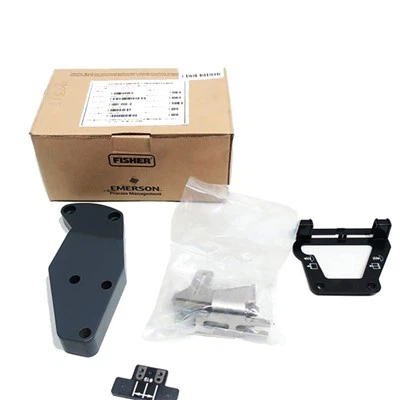
Fisher Valve Parts If you are facing valve stiction issues in your industrial processes, I encourage you to consider Fisher Valve Positioners. Our products have been proven to be effective in a wide range of applications, and we have a team of experts who can provide you with technical support and guidance. Contact us to discuss your specific requirements and find out how Fisher Valve Positioners can improve the performance of your control valves.
References
- "Control Valve Handbook" by Clark W. Lenz
- "Industrial Process Control: Fundamentals and Applications" by Babatunde A. Ogunnaike and Richard W. Ray
Century Weiye (Dalian) Control Equipment Co., Ltd.
As one of the leading fisher valve positioner manufacturers and suppliers in China, we warmly welcome you to buy discount fisher valve positioner in stock here from our factory. If you have any enquiry about quotation, please feel free to email us. Quality products and reasonable price are available.
Address: 2205, Building 8, Red Star International, Ganjingzi District, Dalian City, Liaoning Province
E-mail: serena@valvesjwy.com
WebSite: https://www.valve-sjwy.com/
