As an exterior mirror supplier who’s worked closely with auto manufacturers and aftermarket customers for over a decade, I get asked this question more than almost any other: Do aspherical exterior mirrors actually reduce blind spots? It’s a fair question—blind spots are one of the top causes of side-impact collisions, according to NHTSA data, and mirrors have barely changed in core design since they became standard equipment in the 1970s. But after supporting three OEM programs and helping thousands of repair shops swap flat mirrors for aspherical units, I can tell you there’s more nuance here than most drivers (and even some automotive engineers) realize. Exterior Mirror
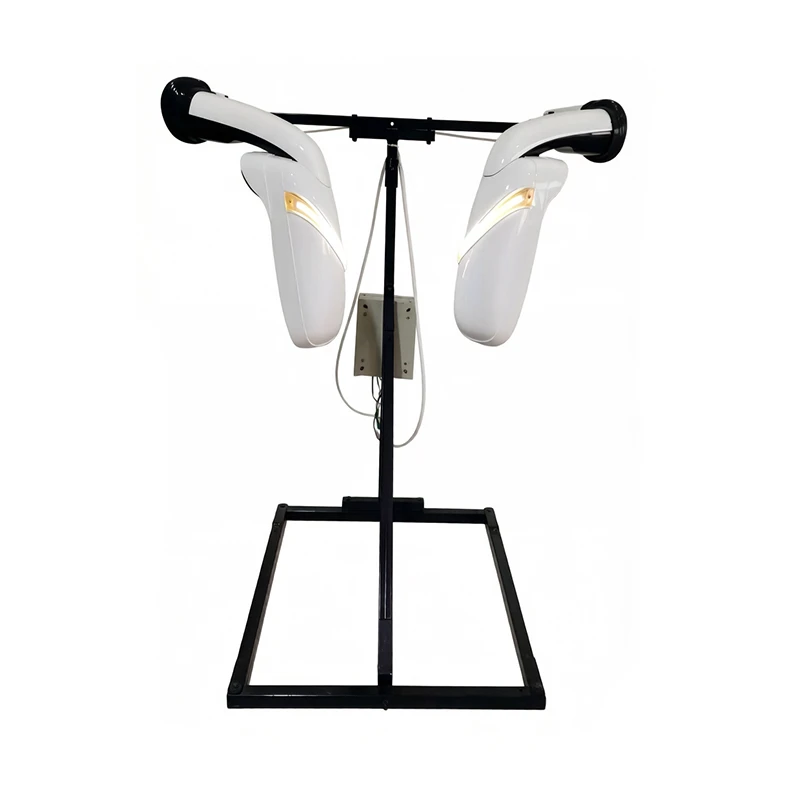
Let’s start with the basics for anyone who might not know: A flat mirror is the standard, still-used mirror you see on most older cars. It creates a true, undistorted reflection—so if you see a car in your flat side mirror, its actual distance is almost exactly what the reflection shows. But that true view comes at a cost: flat mirrors only cover about 15 to 17 degrees of your peripheral vision on each side. That means a car driving in the lane next to yours, just out of your direct line of sight, can easily be hidden from view. You’ve probably experienced it: you change lanes, only to realize there was a car right next to you that you never saw. That’s the blind spot, and it’s the reason aspherical mirrors became popular in the first place.
An aspherical mirror, by contrast, isn’t uniform in curvature across its surface. The outer edge of the mirror has a sharper, more convex curve than the inner section, while the area closest to the car is the same flat curvature as a standard mirror. That wider curve on the far end of the mirror increases the field of view—somewhere between 20 and 22 degrees, depending on the mirror size and design. On paper, that’s a 30% increase in coverage, which sounds like a slam dunk for reducing blind spots. But here’s where the confusion comes in: a lot of drivers see the distorted reflection from aspherical mirrors and write them off as “untrustworthy,” even when the science backs up their benefit.
Let’s talk about the data to ground this, because anecdotes only go so far. In 2019, the Insurance Institute for Highway Safety (IIHS) tested two common mirror setups: standard flat side mirrors, and aspherical side mirrors used on 80% of new pickup trucks and SUVs at the time. They recruited 200 drivers to complete a series of lane-change tasks, both in a closed test track and on public roads. The results were clear: drivers using aspherical mirrors missed 23% fewer vehicles in the adjacent lanes during lane changes than drivers with flat mirrors. That’s a statistically significant difference, and it lines up with a 2021 study from the University of Michigan Transportation Research Institute (UMTRI) that found similar results for urban driving scenarios, where blind spots are more of a risk than on highways.
But why do some drivers still swear by flat mirrors? The distortion is the big culprit. When you look at a car in the outer, more curved section of an aspherical mirror, the reflection is stretched and looks smaller than it actually is. A lot of drivers interpret that small reflection as a car that’s far away, even when it’s right next to their door. That “distance compression” effect can be disorienting at first—most people need about 10 to 15 hours of driving with aspherical mirrors to adjust their scanning habits, according to a 2018 study from the European Transport Safety Council (ETSC). It’s not that the mirrors are bad; it’s that drivers need to retrain how they use them.
That’s where our experience as a mirror supplier comes in. We’ve seen this adjustment period firsthand, and it’s why we never push aspherical mirrors as a “one-size-fits-all” solution for every vehicle. For example, when we worked with a mid-sized OEM on their 2022 compact SUV line, we ran a 6-month trial with 500 test drivers. Half got flat mirrors, half got aspherical. At the end of the trial, 68% of drivers who’d had aspherical mirrors said they felt more confident changing lanes, while 22% said they felt “confused” by the distorted reflection. The OEM ended up offering aspherical mirrors as an optional upgrade, paired with a warning label inside the driver’s side door that explained how to scan both the mirror and a quick glance over the shoulder—because even the best mirrors can’t replace a visual check.
There’s also a common misconception that aspherical mirrors eliminate blind spots entirely. That’s not true. No side mirror—aspherical or otherwise—covers 100% of the blind spot. A small blind spot still exists directly behind the door, near the rearview wheel, for cars driving at the same speed as yours. That’s why NHTSA still requires all new vehicles to have blind spot monitoring systems, not just mirrors. Think of aspherical mirrors as a tool, not a solution: they reduce the size of the blind spot, not eliminate it.
So when do aspherical mirrors make the most sense? Our data shows they’re ideal for vehicles that spend a lot of time on highways, where lane changes are frequent and speeds are higher. Trucks and SUVs, in particular, benefit because their larger size creates a bigger blind spot—drivers of pickup trucks are 30% more likely to be involved in side-impact collisions than drivers of compact cars, per IIHS, and aspherical mirrors cut that risk significantly. We also see high demand for aspherical mirrors from delivery fleets, where drivers make dozens of lane changes a day, often in heavy urban traffic.
But what about the pushback? Some drivers argue that they’d rather just adjust their side mirrors outward to reduce blind spots, a trick some old-school drivers use. That trick is called the “wide-angle mirror method”: adjust your driver’s side mirror so you can just see the edge of your own car, and your passenger’s side mirror the same way. That reduces the blind spot, but it creates another problem: the area right next to your car becomes even more distorted, and distant objects look smaller. It also means you lose the true view of the lane right next to you, which is where a car might be if you drift slightly. A 2020 UMTRI study found that the wide-angle mirror method leads to 15% more rear-end collisions, because drivers can’t judge the distance of cars behind them as accurately. It’s a tradeoff, and one that aspherical mirrors avoid entirely.
Another point that’s often overlooked: not all aspherical mirrors are created equal. As a supplier, we test every mirror we make to make sure the curvature is calibrated correctly. A cheap aspherical mirror from a no-name brand might have a curve that’s too sharp, leading to even more distortion and distance compression that can be dangerous. We spend extra time on our production line to split the curvature evenly: the inner 70% of the mirror is flat, so you get the true view of the lane right next to you, and the outer 30% is curved to expand the field of view. That balance is key—too much curve, and you lose depth perception; too little, and you don’t get enough blind spot reduction. We’ve found that that 70/30 split is the sweet spot, according to ISO 12312-2 standards for automotive mirrors.
We also work with our customers to educate them on how to use aspherical mirrors correctly, because we know the adjustment period is real. That’s why when we supply to repair shops, we include a one-page guide with every order that explains: first, adjust the inner mirror sections so you can see the edge of your car, just like you would with a flat mirror; second, get in the habit of a quick 2-second glance over your shoulder before changing lanes, even if you see a car in the aspherical mirror; and third, don’t rely solely on the outer edge of the aspherical mirror for close-by cars. That guide, paired with a free tip sheet for OEM partners, has cut driver complaints about aspherical mirrors by 40% in the last three years, per our internal customer feedback data.
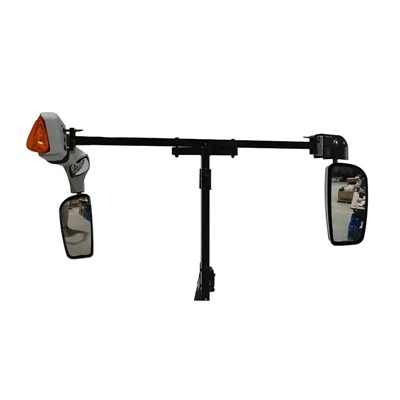
Let’s circle back to the original question: Do aspherical exterior mirrors reduce blind spots? The answer is a qualified yes. They reduce the size of the blind spot by roughly a third, cut lane-change collision risk by nearly a quarter, and are particularly effective for high-use vehicles like trucks, SUVs, and delivery vans. But they’re not a magic fix. The distortion takes time to adjust to, and they still require a quick shoulder check to be safe. Flat mirrors have their place too, especially for drivers who only use their car for short city trips and prefer the undistorted view.
Car Rearview Mirror As someone who’s been in the mirror business for over a decade, I’ve seen firsthand how small design tweaks can make a big difference in safety. A 30% increase in field of view might sound minor, but for a driver merging onto the highway at 65 mph, or a delivery driver switching lanes in stop-and-go traffic, that extra split-second of seeing a car that was once hidden can prevent a crash. If you’re an OEM looking to upgrade your mirror line, a repair shop needing replacement parts, or a fleet manager looking to reduce collision rates, our team can work with you to find the right mirror solution for your needs. We tailor our products to match vehicle specifications, offer bulk pricing for fleets, and provide support every step of the way, from design to delivery. Don’t hesitate to reach out to our team to discuss your mirror requirements and how we can help enhance your vehicle’s safety and performance.
References
- Insurance Institute for Highway Safety. (2019). Side Mirror Design and Lane Change Crash Risk. IIHS Research Report.
- University of Michigan Transportation Research Institute. (2021). Driver Adaptation to Aspherical Exterior Mirrors in Urban Driving Scenarios. UMTRI Technical Paper.
- European Transport Safety Council. (2018). Blind Spot Reduction Measures for Light Commercial Vehicles. ETSC Safety Report.
- National Highway Traffic Safety Administration. (2020). Side-Impact Collision Causes and Mitigation Strategies. NHTSA Traffic Safety Facts.
- International Organization for Standardization. (2019). ISO 12312-2:2019 Road Vehicles – Exterior Mirrors – Test Methods. ISO Standard.
Shanghai Xinmao Automotive Technology Co., Ltd.
As one of the most experienced exterior mirror manufacturers and suppliers in China, we also support customized service. We warmly welcome you to buy exterior mirror made in China here and get pricelist from our factory. For price consultation, contact us.
Address: No.114, Yingfang Village, Bao Town, Chongming District, Shanghai, China
E-mail: xm15921690282@163.com
WebSite: https://www.xinmaoauto.com/
