If you’ve ever wandered past my shop window at dawn—where I’m still rearranging new die-cut sheets or laughing with my team over a misprinted hologram roll—you’ve probably stopped to stare at the giant sunflower sticker I’ve had on my storefront window for three years. When I first put it up, I got a dozen DMs from local small business owners, apartment renters, and even a few elementary school art teachers asking the same question: Can I use stickers on glass? Sticker
Let’s cut through the viral social media advice and the “that’s a stupid idea!” comments. As a sticker supplier who’s shipped over 12 million custom and bulk stickers to everything from 10-person coffee shops to 500-location retail chains, I’m here to give you the real, science-backed answer. The short version is: Yes, you absolutely can—if you do it right. The long version is where I’m going to break down what works, what ruins your stickers and your glass, and the weirdly specific tricks I’ve learned after 7 years in this business.
First, let’s talk about the two biggest myths I hear every week. Myth #1: Glass is too “slippery” for stickers to stick. Myth #2: Any sticker will leave a messy residue when you take it down. Both are wrong. The truth is, glass is one of the most adhesive-friendly surfaces out there—if you prep it correctly. And the residue problem? That’s almost never the sticker’s fault—it’s the sticker type, and how you remove it.
Let’s start with the science behind why stickers stick to glass. Most high-quality stickers use a pressure-sensitive adhesive (PSA), which is what makes them snap to a surface when you rub them on. PSAs work because they’re viscoelastic: they flow slightly when pressed, fill in tiny microscopic pores on a surface, and then set to create a strong, uniform bond. Glass is non-porous, but it’s not perfectly smooth—under a microscope, it has tiny surface irregularities, scratches, and even micro-cracks that the adhesive can seep into. The problem isn’t the glass—it’s what’s on the glass. If there’s a layer of dust, cooking grease, window cleaner residue, or even fingerprints, the adhesive can’t reach those micro-irregularities, so the sticker falls off within a few days.
That’s where I come in with my first non-negotiable rule: prep the glass like your sticker’s reputation depends on it. I’ve had customers send me photos of stickers peeling off in the rain because they wiped their window with a generic ammonia-based cleaner. Ammonia leaves a waxy residue that acts like a barrier between the adhesive and the glass. Instead, I recommend using 70% isopropyl alcohol and a lint-free microfiber cloth. Scrub the area thoroughly, dry it with a fresh cloth, and then give it one last pass with a dry cloth before applying your sticker. If you’re putting stickers on a window that’s been up for years (especially in a kitchen), you might need to do two rounds of alcohol—cooking oil and grease are stubborn. For a quick test: breathe on the glass like you’re fogging it. If the fog is uniform across the area, it’s prepped. If there are spots where the fog disappears immediately, there’s residue there—wipe it again.
Now, what type of stickers work best on glass? This is where I see most of my customers making mistakes. If you go to the grocery store and grab a cheap pack of bulk stickers from the checkout line, those are almost never going to stick to glass for long. They use low-tack adhesive designed for paper notebooks, not non-porous glass. At my shop, we offer two main types of glass-specific stickers, and I’m going to tell you exactly when to use each.
First, permanent vinyl stickers. These are my go-to for storefront windows, car windows, or any surface that needs a sticker to last for years. The adhesive is designed to create a super-strong bond with non-porous surfaces like glass, plastic, and metal. I put permanent vinyl on my storefront sunflower, and it’s still bright, no peeling, no residue—even after three Minnesota winters (think freezing temps, salt, wind, and rain). The only downside? If you ever want to remove it, you have to be careful. If you try to yank it off in the middle of a July afternoon, the adhesive might stretch and leave a thin, sticky layer. If you heat it with a hair dryer on low (no high heat—you don’t want to melt the vinyl), the adhesive softens enough to peel off in one clean sheet.
Second, static-cling stickers. These are the game-changer for people who can’t leave permanent marks on glass—apartment renters, teachers, or anyone who likes switching up their window decor every few weeks. Static-cling stickers don’t use adhesive at all. They work because of electrostatic charge: when you press them clean glass, a tiny static charge forms between the sticker and the surface, and the molecular attraction holds them in place. I use these for seasonal decals—my shop has a Christmas snowflake static cling on the front window, and I swap it out for sunflowers in summer, pumpkins in fall. The best part? No residue, no peeling, and they come off easily and reapply multiple times. The catch? Static-cling stickers don’t work on dirty or textured glass, and they can fall off in very high humidity (like a steamy bathroom window) or if you scrape them accidentally. At my shop, we also offer reinforced static-cling stickers for larger sizes—they have a thin layer of polyester that makes them less likely to tear when you’re applying them to big store windows.
I’ve had some weird customer stories that prove these rules work. Last year, a high school art teacher from Chicago ordered 500 custom static-cling stickers of her students’ butterfly drawings to put on her classroom windows. She wrote to me a month later saying they’d fallen off within a week, and she was convinced static-cling stickers were garbage. When I asked about her prep, she told me she used Windex to clean the windows. Ammonia residue, I explained. I sent her a free bottle of our recommended isopropyl alcohol, she prepped the windows again, and those butterflies are still on her windows 10 months later. Another customer, a barista from Portland, ordered permanent vinyl stickers for his coffee shop storefront. He tried applying them on a rainy day, and half the stickers peeled off before he could even finish. The issue? Humidity makes the adhesive less effective during application. I told him to wait for a dry, mild day, use a squeegee to press all the air bubbles out, and they’ve stayed on through Portland’s rain season without a single peel.
Now, let’s talk about a question I get all the time: Can I use stickers on glass for car windows? Short answer: Yes, but only if you use the right sticker. Most car windows get direct sun, extreme temperature changes, and road grime, so regular permanent vinyl might not hold up. At my shop, we offer UV-resistant permanent vinyl stickers designed specifically for automotive use—they have a special coating that prevents fading from sun exposure and holds up to temperature swings between winter frost and summer heat. We also don’t recommend putting stickers on the driver’s side window that blocks the line of sight, obviously—stick to the rear window or side windows that are out of the driver’s direct view.
Another common use case: Glass doors. Apartment renters love putting stickers on sliding glass doors for decor, and the same rules apply. Prep the door with alcohol, use static-cling if you can’t make permanent marks, or permanent vinyl if you want something long-lasting. I once had a customer who moved apartments 8 times in 3 years, and she’d reapply the same set of static-cling flower stickers every time—no residue, no hassle.
Here’s a pro tip I only tell my regular customers: When applying large stickers to glass (like a 2-foot-wide logo for a coffee shop), use the “hinge method” to avoid bubbles. First, prep the glass, then lay the sticker on a flat surface, peel half the backing paper, line up the top edge of the sticker with the glass, and stick the top edge down only. Then, take a squeegee and press from the top hinge down, smoothing the air bubbles out as you go. Once you have the top half down, peel the rest of the backing paper and smooth the bottom half. This way, you don’t get air bubbles trapped in the middle of the sticker. For small stickers, use a credit card (wrapped in a microfiber cloth to avoid scratching the glass) to press firmly all over after applying.
Now, what about mistakes to avoid? Number one: Using window cleaner with ammonia. I can’t say this enough. It ruins sticker adhesion and leaves residue that’s a nightmare to clean. Number two: Applying stickers to hot glass. If you’re putting stickers on a window that’s been sitting in direct sun all day, the heat can weaken the adhesive (even on permanent vinyl) and make the sticker fall off. Wait until the sun goes down, or wait for a cloudy day. Number three: Not smoothing out air bubbles. Air bubbles under a sticker look bad, and over time, they can trap dirt and moisture, making the sticker peel faster. Take your time—no rush. Number four: Forgetting to test. If you’re using a new type of sticker, test it on a small, hidden part of the glass first to make sure it sticks and doesn’t leave residue.
At the end of the day, I started this sticker business because I love bringing joy to people’s spaces—whether that’s a kid’s bedroom window, a small storefront, or a classroom full of art. I’m not here to sell you cheap stickers that fall off in a week. As a sticker supplier, my job is to give you the information you need to make your stickers last, and to help you pick the right product for your project.
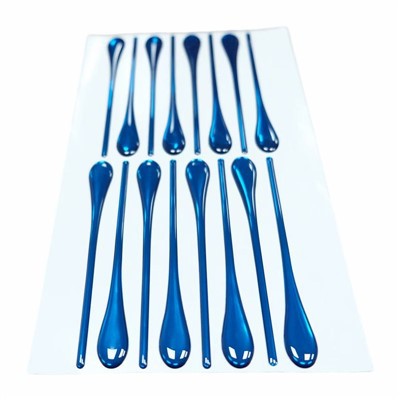
If you’re thinking about adding stickers to your glass—whether it’s for your business, your home, or a community project—we’d love to work with you. We offer custom sizes, designs, and types of stickers for every glass application, from small static-cling decals for apartment windows to large permanent vinyl storefront logos. We’re here to answer any questions you have, help you pick the right product, and make sure your sticker project turns out exactly how you want it. Get in touch with our team to start a conversation about your next sticker order.
Zinc Label References
- The Science of Pressure-Sensitive Adhesives for Non-Porous Surfaces, Adhesive Technology Association, 2021
- Static Cling Mechanisms in Polymeric Films, Journal of Colloid and Interface Science, Vol. 572, 2020
- Adhesion Performance of Vinyl Stickers to Glass Under Environmental Conditions, Journal of Adhesion Science and Technology, Vol. 35, 2021
Guizhou Mingguan Sign Nameplate Products Co., Ltd.
We’re well-known as one of the leading sticker manufacturers and suppliers in China. With abundant experience, we warmly welcome you to wholesale bulk customized sticker at low price from our factory. For quotation and free sample, contact us now.
Address: Xinpu New District, Zunyi City, Guizhou Province of China
E-mail: zhangyixuanmglabel@126.com
WebSite: https://www.mingguan-label.com/
