Hey there! As a supplier of vibrating screens, I’ve been getting a bunch of questions lately about the screening speed of these machines. So, I thought I’d sit down and write this blog to break it all down for you. Vibrating Screen

First off, let’s talk about what screening speed actually means. In simple terms, the screening speed of a vibrating screen refers to how fast the screen can separate different-sized particles from a mixture. It’s a crucial factor because it directly affects the efficiency and productivity of the screening process.
There are a few things that can influence the screening speed. One of the main ones is the vibration frequency. The higher the frequency of vibration, the more quickly the particles are jostled around on the screen surface. This helps the smaller particles to pass through the screen openings faster, increasing the overall screening speed. For example, if we have a vibrating screen with a relatively low vibration frequency, the particles will move around at a slower pace, and it might take longer for the screening to be completed.
Another important factor is the amplitude of vibration. The amplitude is basically the distance that the screen moves during each vibration cycle. A larger amplitude can make the particles move more vigorously on the screen. This can be really helpful when dealing with larger or more stubborn particles. However, if the amplitude is too large, it might cause the screen to wear out more quickly or even damage the machine itself. So, it’s all about finding the right balance.
The type and size of the screen mesh also play a big role. A finer mesh will have smaller openings, which means it can separate smaller particles. But this also means that the screening speed might be a bit slower because the particles have to find their way through these tiny holes. On the other hand, a coarser mesh with larger openings will allow particles to pass through more quickly, increasing the screening speed but potentially reducing the accuracy of the separation.
The properties of the material being screened are also significant. If the material is dry and free – flowing, it will generally screen faster than a wet or sticky material. Wet materials can clog the screen openings, which slows down the screening process. And if the material has a wide range of particle sizes, it might take longer to separate them all compared to a material with a more uniform particle size distribution.
Now, let’s talk about why screening speed is so important for your business. If you have a high-volume production line, a fast screening speed means you can process more material in less time. This can lead to increased output and potentially higher profits. For example, in a mining operation, a vibrating screen with a high screening speed can quickly separate valuable minerals from the waste rock, allowing the company to get more of the good stuff in a shorter period.
On the other hand, if the screening speed is too slow, it can be a bottleneck in your production process. It might cause delays, increase labor costs, and even lead to missed deadlines. Customers might get frustrated, and you could end up losing business.
As a vibrating screen supplier, I’ve helped many customers optimize their screening speed. We start by understanding their specific needs, such as the type of material they’re screening, their production volume, and the level of accuracy they need. Then, we recommend the right type of vibrating screen with the appropriate vibration frequency, amplitude, and screen mesh.
For instance, if a customer is screening a large volume of dry sand with a relatively uniform particle size, we might suggest a screen with a high vibration frequency and a coarser mesh to achieve a fast screening speed. But if they’re dealing with a wet and sticky material that requires a more precise separation, we’d recommend a different setup with a lower frequency and a finer mesh, along with some additional features to prevent clogging.
We also offer after – sales support to ensure that the screening speed remains optimal over time. We can help with maintenance, such as replacing worn – out screen meshes or adjusting the vibration settings if necessary.
If you’re in the market for a vibrating screen or want to improve the screening speed of your existing equipment, don’t hesitate to reach out. We’ve got a wide range of vibrating screens to suit different applications and budgets. Whether you’re in the mining, construction, or food processing industry, we can find the right solution for you.
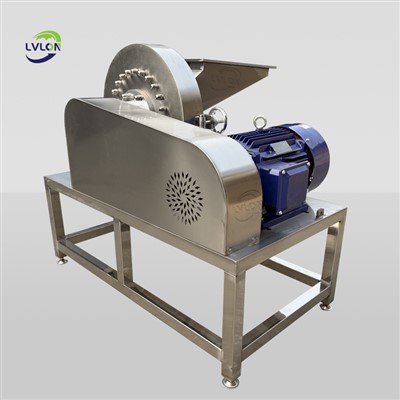
So, if you’re interested in learning more about how we can help you boost your screening speed and improve your business efficiency, just get in touch. We’re here to answer your questions, provide a free consultation, and help you make the best decision for your operation.
Incubators References:
- "Vibration Technology Handbook"
- "Industrial Screening Equipment: Principles and Applications"
Henan Lvlon Industrial Co., Ltd.
Address: Unit 5, 5th Floor, Building 11, No. 18 Dongfeng Road, Jinshui District, Zhengzhou City, Henan Province.
E-mail: lvlonxu@gmail.com
WebSite: https://www.lvlonmachinery.com/
