If you’re running a business that relies on refrigeration units—whether that’s for a delivery fleet, a commercial walk-in cooler, or an industrial cold storage warehouse—you know how much stops when a refrigeration accessory fails. As a supplier of these parts, I’ve heard it all from mechanics, fleet managers, and plant supervisors: “I installed this safety valve on the line and it blew, but that saved the compressor” or “I put the pressure relief switch too close to the compressor and it kept triggering for no reason.” The truth is, where you mount a refrigeration unit safety accessory isn’t just a “set it and forget it” choice—getting it wrong can cost you thousands in downtime, ruin perishable goods, or even become a safety hazard for your team. Refrigeration Units Accessories
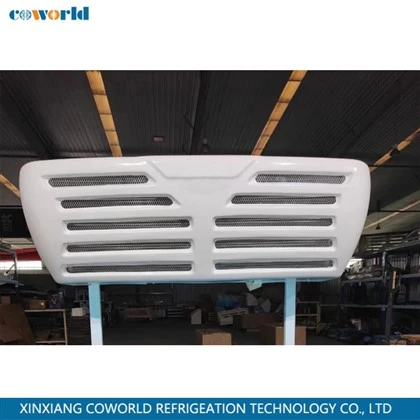
First, let’s get clear on what we’re actually talking about here. Safety accessories aren’t the flashy parts that make a fridge cool (though those matter too). They’re the unsung heroes: pressure relief valves, high/low pressure cutouts, temperature limit switches, and refrigerant leak detectors. Each does a specific job, but their mounting location is what determines if they do that job right. A lot of people think “just put it near the unit’s main controls” but that’s a mistake—let’s break down the best spots for each, based on what I’ve seen working (and not working) for my customers over the years.
Let’s start with the big one: pressure relief valves. These are the parts that vent excess refrigerant when pressures get too high—they’re your first line of defense against a ruptured line or a compressor exploding (yes, that’s a real risk if you ignore overpressure). I’ve seen guys mount these right on the compressor discharge port because it’s easy. But hold on: the compressor discharge line has rapid pressure spikes during startup and shutdown. If your relief valve’s there, it might trigger unnecessarily, wasting refrigerant and messing with your unit’s cooling efficiency. That’s a headache no one needs. The best spot? On the receiver tank, after the condenser, before the liquid line enters the evaporator. Why? The receiver tank holds condensed liquid refrigerant, so pressure there is a steady, consistent reading—not the spikey mess at the compressor. It’s also far enough from the heat of the condenser that the pressure reading is accurate, not skewed by high ambient temps around the condenser. I had a customer a few months back who swore his relief valve was faulty because it was tripping every time it got warm—turns out he’d mounted it on the condenser inlet, where temps were 20 degrees higher than the receiver. We swapped its spot, and it hasn’t triggered accidentally since.
Next up: high and low pressure cutout switches. These are the parts that shut the unit down before pressure gets dangerously high, or keep it from running if pressure’s too low (which usually means there’s a refrigerant leak). Again, mounting is make-or-break. Some folks plop these right on the compressor itself, but here’s the thing: the compressor’s pressure is dynamic—constant changes from load, temperature, and cycling. If you mount the high-pressure cutout there, it might shut the unit down mid-delivery because a hot day made the pressure jump a little higher than normal. That means your ice cream truck’s inventory melts while you’re resetting the switch. The low-pressure cutout? If it’s on the suction line right after the evaporator, a slight drop in pressure when the fridge door’s left open a crack will trigger it, even if there’s no actual leak. The sweet spot for both? On the suction line (for low-pressure cutout) and discharge line (for high-pressure cutout) three to five feet away from the compressor, but before any bends or connections that can cause pressure fluctuations. Wait, but why not right on the lines straight out of the compressor? Because lines near the compressor have “transient” pressure—those quick blips that don’t reflect the actual system pressure. Mounting a few feet away gives you a stable, accurate pressure reading. I’ve seen fleets cut their shutdowns by 40% just by moving these switches, no other changes to their units.
Then there are temperature limit switches. These keep your refrigeration from getting too cold (which can damage food, or freeze lines) or too warm (which lets perishables spoil). Common mistake here: mounting them on the evaporator coil fins. Yeah, the coil is cold, but if there’s a layer of ice building up on the fins, the sensor will read that as lower temp than the actual air in the fridge, making the unit run way longer than it needs to. That wastes energy and wears out the compressor faster. The right spot is in the return air duct, where the fridge pulls in air to cool. That air is a mix of the cold evaporator output and the warm air from inside the cooler, so it gives you a true average of the temp your goods are sitting in. I work with a grocery chain that used to throw out $1,500 worth of produce a month because their temp switches were calibrated wrong—we had them move the sensors to the return duct, and food waste dropped by 70% in two months. They even texted me a photo of their new sensor mounts, which is way better than the old spot where a fork had been left in the fridge and was jostling the sensor. (No, that’s not a joke—someone actually did that.)
Now, let’s talk about a newer safety accessory that’s blowing up lately: refrigerant leak detectors. These don’t just alert you to leaks—they’re required in a lot of places now to comply with environmental laws (leaking refrigerant is bad for the ozone, and you get fined if you don’t catch it fast). Where to mount these? A lot of people put them near the compressor, but wait: most refrigerants are heavier than air, right? So if there’s a leak, it’s going to sink to the floor, not hang around the compressor waist-high. Oh, and if you’re using a low-global-warming-potential (GWP) refrigerant, some of those are actually lighter than air—so they’ll rise to the ceiling. The rule of thumb here: mount detectors within 12 inches of the floor if you’re using R-22 or R-404A (the old standard refrigerants, heavier than air), and within 12 inches of the ceiling if you’re using R-32 or R-1234yf (the newer, low-GWP ones). I had a customer in a cold storage warehouse who kept getting false leak alerts—turns out his detector was at 6 feet high, where the air is dry and there’s more dust, so it was picking up dust as a leak. We moved it to 6 inches off the concrete floor, and the false alarms stopped. He also found a small leak under a line that he would’ve missed otherwise, saving him from a $2,000 fine from the EPA.
Wait, let’s address a common myth I hear all the time: “Mounting it closer to the part it’s protecting makes it more effective.” No, not when it comes to safety accessories. Let’s use an example: if your compressor is the part you’re trying to protect from overpressure, mounting a relief valve right on it means the valve is next to the compressor, but it’s reacting to that fast pressure spike at the compressor, not the steady pressure in the rest of the system. If the spike is just a blip, the valve vents, and you lose refrigerant for no reason. If the spike is a real overpressure that will blow the compressor, the valve still works, but you wasted a little refrigerant. But if you mount it on the receiver tank, it only vents when the system pressure is actually unsafe, not when the compressor is just cycling. That’s a win-win: no wasted refrigerant, and the safety accessory does its job when it matters.
Another thing to keep in mind: accessibility. A safety accessory that’s mounted behind a giant condenser, or on the top of a 20-foot industrial unit, is useless. You can’t check it, you can’t calibrate it, and you can’t replace it fast when it breaks. That’s why, even if the technical “perfect” spot is tucked away, you need to balance accuracy with ease of access. I once had a customer who installed a pressure cutout on his industrial fridge’s discharge line, but mounted it so high on the frame that his techs had to use a ladder every time they checked it. They stopped checking it regularly, and it failed, costing them a $10,000 batch of frozen shrimp. Now, when we sell these accessories, I always tell my customers: first, pick a spot that’s accurate for the part’s job, then make sure a technician can reach it without climbing or taking apart half the unit. If you can’t get to it, it might as well not exist.
Let’s wrap this up with a quick, real-world example of what happens when you get the mounting right. Last winter, a food delivery company came to me after a month of having their trucks break down 10 times a week, melting hundreds of dollars’ worth of frozen meals. Their issue? They had high-pressure cutouts mounted right on their compressors, so every time the outside temp dropped at night, the compressor pressure spiked and shut the unit down. We moved the cutouts three feet down the discharge line, added a small pressure filter to smooth out the spikes, and suddenly their shutdowns dropped to less than one a week. They saved over $8,000 in a month, and their drivers didn’t have to cancel routes anymore. That’s the kind of win that comes from knowing where to put your safety accessories—not just slapping them on wherever is easiest.
If you’re still not sure where to mount your specific safety accessory—whether it’s a valve, a switch, a detector, or something else—don’t guess. Reach out to me. I’ve been supplying refrigeration accessories for years, and I can help you figure out the right spot for your unit, your refrigerant, and your operations. I’ve seen every mistake, from a leak detector mounted 10 feet high to a relief valve on the wrong line, and I’ll help you avoid them so your units run safe, efficient, and without costly downtime. Don’t wait until your next breakdown to fix it—get it right the first time.
Refrigerated Truck References
ASHRAE Handbook: Refrigeration Systems and Equipment, 2021
OSHA Safety Guidelines for Commercial Refrigeration Systems, 2022
EPA Regulations for Refrigerant Leak Detection, 2023
Refrigeration Service Engineers Society (RSES) Best Practices for Safety Accessory Installation, 2020
Xinxiang Coworld Refrigeration Technology Co., Ltd.
As one of the most professional refrigeration units accessories manufacturers and suppliers in China, our products have good reputation in the market. We warmly welcome you to buy cheap refrigeration units accessories for sale here from our factory. If you have any enquiry about cooperation, please feel free to email us.
Address: B103 ROOM, GT CITY, NO.199 ZHENGZHONG ROAD, HIGH TECH ZONE, XINXIANG CITY, HENAN PROVINCE, CHINA
E-mail: coworldfrio@hotmail.com
WebSite: https://www.coworldthermo.com/
