If you’ve ever walked into a trade show booth, picked up a vibrant outdoor poster, or glanced at a custom storefront sign, chances are the PVC board it’s mounted on ran through a digital printer. As a supplier that’s specialized in PVC boards for digital printing for over a decade, I get dozens of questions every week from customers—new print shops, small business owners, and even seasoned sign makers—asking the same thing: does this need a laminate? It’s not a trivial question, either. I’ve seen a $5,000 custom trade show display get ruined in three months because the team skipped laminating, and I’ve watched a local café’s vinyl menu board last eight years without a single scratch because they followed the right steps. The answer isn’t a straight yes or no, though. It depends on what you’re printing on, where you’re putting it, and what you want it to stand up to. Let me break this down the way I do for my clients, with the kind of real-world context you won’t find in a generic print manual. PVC Board For Digital Printing

First, let’s get on the same page about what we’re working with here. The PVC boards I supply for digital printing aren’t just basic plumbing-grade PVC—they’re rigid, foam-cored PVC (often called forex, but I stick to “rigid PVC substrate” to avoid brand confusion) designed specifically for ink adhesion. Most of these boards have a smooth, matte or semi-gloss surface that accepts latex, UV-curable, or solvent-based inks really well, which is why they’re so popular for displays. But that ink layer? It’s fragile. Even if you use a top-of-the-line UV printer, the ink sits on the surface of the board, not bonded chemically in a way that can hold up to daily wear, UV light, or moisture. That’s where the confusion starts.
Let’s start with the simplest scenario: indoor use, low-traffic areas, short lifespan. If you’re printing a temporary event sign for a wedding, a small in-store promotional banner that’s only going to be up for a month, or a wall graphic in a quiet office that no one will touch, laminating isn’t strictly necessary. I’ve had a customer print 50 bridal party signs on our standard indoor-grade PVC, mount them to foam core, and they looked perfect all wedding weekend—no fading, no smudging, no scratches. The same goes for a temporary menu board in a café that’s only there for a pop-up campaign. But wait, before you write off laminating entirely for indoor jobs, let’s qualify that. If that wedding sign is going to be left out on the porch for a week, or if that pop-up menu is going to be touched by customers running their fingers over it every 10 minutes, that’s a different story. Even indoor dust and constant contact can wear away unprotected ink over time. I learned this the hard way early on—my first big client was a local real estate agency that ordered 20 “For Sale” signs on our standard PVC, no laminate, and half of them had noticeable scratch marks within two months from agents hauling them in and out of their cars. That’s when I started advising even indoor clients to at least consider a light laminate for high-touch jobs.
Now, the big one: outdoor use. If your print is going outside, whether it’s a storefront sign, a trade show banner that gets set up in all weather, or a directional sign for a construction site, laminating isn’t just a nice-to-have—it’s almost non-negotiable. Let’s talk about what outdoor elements do to unprotected ink first. UV radiation from the sun is the biggest culprit here. Over weeks and months, UV rays break down the molecular structure of ink, causing it to fade, turn chalky, or crack. I’ve seen solvent-based ink on unlaminated PVC go from bright red to pale pink in just six weeks of summer sun in Texas, even on a sign that was facing north, away from direct sunlight. Moisture is another issue. Rain, snow, high humidity—water can seep into the ink layer, or cause the ink to lift off the PVC surface if it’s not protected. Then there’s physical damage: wind whipping debris, people knocking into signs, extreme temperatures making materials expand and contract, leading to scratches or tears in the ink.
Laminating solves most of these problems, but not all laminates are created equal. As a supplier, I recommend two main types of laminates for PVC digital prints: cast laminate and pressure-sensitive (calendered) laminate. Cast laminates are thinner, more flexible, and have a better finish—they lie flatter over the print, which is perfect for signs that need a smooth, professional look. They also provide better UV protection and resistance to chemicals than calendered laminates. Calendered laminates are thicker, more durable for heavy physical abuse, but they can sometimes have a slight texture or wrinkles if not applied correctly, so they’re better for construction signs or temporary outdoor displays where appearance isn’t the top priority. I always tell customers: if you want your print to look crisp and last for years, go with cast. If it’s going to be in a harsh environment and only needs to hold up for a few months, calendered works just fine.
But wait—there’s a caveat here that I don’t see mentioned enough in print tutorials: not all PVC boards are suitable for laminating, and not all printers will give you the same results with laminated prints. The PVC boards I supply for digital printing have a surface treatment (usually a corona discharge treatment, for those who want the science) that makes ink stick, but that same treatment helps laminates adhere evenly. If you buy a cheap, uncoated PVC board from a hardware store that’s not made for digital printing, your laminate might bubble, peel, or pull ink off the board within weeks. I’ve had customers come to me with horror stories: they bought a cheap PVC board, laminated it themselves, and within a month the laminate had peeled completely because the board’s surface wasn’t designed for that kind of adhesion. That’s a mistake I work hard to help clients avoid.
Another factor to consider is the type of ink you’re using. UV-curable inks, which are super popular for digital printing on PVC, form a much harder, more durable layer than solvent or latex inks. So a UV print on PVC might hold up a little better unlaminated than a latex print, but not by much. I had a client who printed trade show booth graphics using UV ink, skipped laminating, and the graphics held up for six months of being folded and unfolded for shows. But when we laminated the exact same design for another show, it looked brand new a year later. The trade show example is perfect because it shows that even if you think you won’t need laminating, it adds a level of protection that’s worth the extra cost in the long run.
Let’s talk about cost, because that’s a big part of the decision for most small businesses. Laminating adds anywhere from 10% to 30% to the total cost of a print job, depending on the size of the board and the type of laminate. For a small 12×18 inch sign, that’s an extra $5 or $10. For a large trade show display that’s 10 feet wide, that’s a few hundred dollars. When I talk to a café owner who’s printing a $200 menu board, I don’t push laminating if it’s only going to be up for a few months. But if they’re printing a $1,000 storefront sign that they want to last three years, I make sure they understand that the $200 extra for laminating is an investment, not an expense. I show them examples of other customers’ signs: one client’s storefront sign that’s been up for seven years, unblemished, because we recommended cast laminate. Another client’s temporary event sign that was laminated with calendered laminate and held up through three rainstorms, while their unlaminated signs for the same event faded in two days.
There are also cases where laminating isn’t a good idea, even for outdoor use. If you’re printing something that needs to be repositioned, like a temporary floor graphic that you’re going to take down after a week, laminating adds unnecessary thickness and makes it harder to peel off without damaging the PVC board. I also tell customers not to laminate prints that have a matte finish if they want to keep that matte look—laminates come in glossy or matte finishes, but even matte laminates can add a slight sheen, so if you’re going for a super low-key, unbranded look, you might skip it. Another edge case: if you’re printing a very thin design with limited colors, laminating doesn’t add much value, but if it’s a high-detail, vibrant design that you want to pop, the laminate can enhance the colors a little, making them look richer and more saturated.
Let me address a common myth that I hear all the time: “I can just spray a clear coat instead of laminating, right?” No, that’s not the same thing. Clear spray finishes often don’t adhere as well to PVC as laminates, they can yellow over time, and they don’t provide the same level of protection against scratches or UV rays. I’ve tested dozens of clear coats over the years, and even the best ones don’t hold a candle to a proper roll laminate applied by a professional. If you’re printing something small and you’re tempted to spray it, that’s fine for a short-term indoor job, but for anything that’s going to see wear or weather, laminate is the way to go.
As someone who’s been in the PVC board for digital printing business for years, I’ve seen too many customers make mistakes because they go by old advice they found online, or assume that all PVC is the same. The short answer to “Does digital printing on PVC board require laminating?” is this: it depends on three things: where the print is going, how long you want it to last, and how much abuse it will take. For temporary indoor jobs (less than a month, low traffic), you can probably skip it. For anything outdoor, high-touch, or lasting more than a month, laminating is almost always worth it. For medium-term indoor jobs (like 6 months to a year, in a busy retail space), I strongly recommend it to keep the ink from scratching or fading.
The key is to work with a supplier who understands both the PVC board and the printing process, not just selling materials. I always take the time to ask customers questions: Where is this print going to be used? How long do you want it to last? Will it be touched by people, exposed to sun or rain, or moved around a lot? Then I make a recommendation based on their specific needs, not a one-size-fits-all sales pitch. I’d much rather a customer save a little money on a temporary job than overspend, but I also don’t want them to regret skipping laminating and have to reprint a sign six months early because it faded.
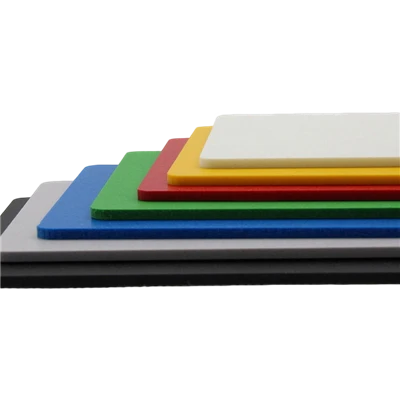
Colored PVC Advertising Board If you’re working on a print project right now and you’re not sure whether you need to laminate your PVC digital print, don’t guess. Reach out, tell me about your project, and I’ll help you figure out the best solution for your needs. We can talk about different PVC boards, laminate options, and what will work for your specific use case, no pressure, just honest advice.
References
- “PVC Substrates for Digital Printing: Material Science and Application,” Printwear & Production, 2022.
- “UV and Laminant Degradation of Latex and Solvent-Based Inks on Rigid PVC,” Journal of Digital Printing Technology, vol. 18, no. 3, 2021, pp. 145-152.
- “Outdoor Sign Durability: Laminating Best Practices for Rigid Substrates,” Sign Industry Association, 2023.
- “Surface Treatment of PVC for Ink Adhesion and Laminant Bonding,” Polymer Engineering & Science, vol. 59, no. 7, 2019, pp. 1389-1396.
Jameson Performance Plastics Co., Ltd.
With abundant experience, we are one of the most professional pvc board for digital printing manufacturers in China. We warmly welcome you to wholesale customized pvc board for digital printing at competitive price from our factory. If you have any enquiry about free sample, please feel free to email us.
Address: No.97 Liuquan Road, Zibo city, Shandong, China.
E-mail: info@jamesonplastics.com
WebSite: https://www.jamesonplastics.com/
