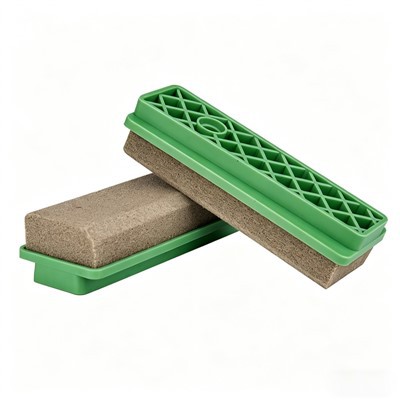
If you’ve ever worked in stone fabrication, tile finishing, or surface restoration, chances are you’ve used a Fickert brush. These dense, abrasive tools are designed to cut and polish hard natural surfaces like granite, marble, and quartz, delivering a smooth, uniform finish that’s hard to achieve with other abrasives. As a supplier that’s worked with fabricators large and small over the past 12 years, I’ve seen my share of both high-performing Fickert brushes and tools that fall short of expectations. What’s often surprising is that many common problems with Fickert brushes aren’t due to the tool’s design itself—they stem from user error, improper maintenance, or even mismatching the brush to the job. Today, I want to break down the most frequent issues we hear from clients, explain why they happen, and share practical fixes to get the most out of your Fickert brushes. Fickert Brush
Let’s start with one of the most frustrating problems: premature wear. I’ve had a client come to me last year with a batch of Fickert brushes that were only half-way through their expected lifespan after 100 hours of use on a medium-density granite. When we looked into it, it turned out they’d been running the brushes at a speed 20% higher than recommended for their polishing machine, and they’d been applying far too much downward pressure to speed up the process. Fickert brushes rely on controlled abrasion to cut evenly; cranking up speed or pressure might seem like a time-saver, but it causes the diamond grains (the abrasive core of most quality Fickert brushes) to dislodge too quickly, rather than wearing down slowly. Another common culprit here is using the wrong bond grade. A hard bond is meant for soft surfaces like limestone, while a soft bond works best on dense granite. Matching the bond to the surface keeps wear consistent. We recently had a marble fabricator who’d been using hard-bond Fickerts for months, and their brushes wore out three times faster than they should have—swapping to soft-bond brushes for marble doubled their lifespan. Premature wear doesn’t just waste money; it also leads to uneven polishing, which forces workers to rework sections of a project, adding hours of labor.
Next, inconsistent surface finish. Nothing kills a project timeline faster than a polish that looks smooth in one section and rough in another. We hear this complaint all the time, and again, it’s usually a preventable issue. One of the biggest causes is uneven loading of the Fickert brush on the polishing head. If a brush isn’t seated properly, or if the polishing head has uneven spring tension, one side of the brush will make more contact with the stone than the other. Over time, that uneven contact causes the abrasive grains to wear down at different rates, leading to a patchy finish. We had a countertop fabricator in Ohio last year who was finishing a custom quartz countertop and noticed a few faint, rough spots along the edge. When we inspected their setup, we found that the polishing head’s springs had weakened on one side, so the Fickert brush was tilting during use. Replacing the springs and re-seating the brushes evenly fixed the issue immediately. Another often-overlooked factor is the condition of the brush itself. Even the best Fickert brushes will develop glazing if they’re not properly conditioned. Glazing happens when the surface of the brush becomes clogged with stone dust, creating a smooth layer that can’t abrade the surface anymore. Some workers try to fix this by pushing harder, which only makes the glaze worse. Instead, a quick pass with a conditioning stone (a small, abrasive block designed to clear Fickert brush pores) every 20 minutes of use prevents glazing and keeps the finish consistent.
Clogging is closely linked to glazing, but it’s a problem that affects both the tool and the quality of work. When Fickert brushes get clogged, stone dust and micro-particles build up between the diamond segments, reducing the brush’s ability to cut. I once visited a job site in Chicago where a large tile installation crew was using Fickert brushes to polish terrazzo, and their brushes were so clogged they were leaving scratch marks instead of a smooth finish. They’d never cleaned the brushes during their 8-hour shift, so dust had packed into every gap. The fix was simple: after each hour of use, they stopped and ran the brush over a wet sponge for 30 seconds to dislodge dust, and the scratch marks disappeared. For outdoor projects, like restoring a marble patio, clogging can be even worse because of loose debris like dirt and small stones. Using a brush that’s too dense for the job is another cause of clogging. Extra-dense Fickert brushes work well for fine polishing, but for rough stone removal (like taking down a high spot on a granite countertop), a less dense brush allows debris to escape more easily. We always advise clients to match the brush’s density to the stage of the job: lower density for initial grinding, higher density for final polishing.
Uneven wear of the brush’s segments is a less talked-about problem, but it’s one that leads to costly downtime. If one or two segments on a Fickert brush wear down faster than the rest, the brush becomes unbalanced, which can damage the polishing machine’s head over time. What causes uneven segment wear? Most often, it’s not rotating the brush frequently enough during use. Polishing machines are designed to rotate brushes, but if a brush is only spinning in one spot or not rotating at all, the segments that make contact with the stone will wear unevenly. Some fabricators will rotate their brushes only at the start of a project, but we recommend rotating them every 15 to 20 minutes, or whenever you switch to a new area of a job. Another cause is using damaged brushes—if a segment is cracked or loose before you even use the brush, that segment will wear faster and throw off the balance. That’s why we always recommend inspecting Fickert brushes upon delivery, checking for cracks in the segments or loose bond, and returning any defective tools immediately. Last year, a small fabricator in Michigan tried to use a brush with a loose segment, and it tore during use, leaving a large scratch on a $10,000 custom countertop. Replacing the defective brush would have cost a fraction of the repair bill, but they’d tried to save money by using a tool that wasn’t ready for use.
Heat buildup is another common issue, especially when working on large, thick stone slabs. Fickert brushes generate a lot of friction during use, and if that heat isn’t dissipated, it can damage both the brush and the stone. Excess heat causes the diamond grains to break down too quickly, leading to premature wear, and it can also cause some soft stones (like limestone or sandstone) to discolor or crack. We’ve seen clients run Fickert brushes without adequate water cooling for entire shifts, and their brushes would become so hot they could barely touch the surface. The fix is straightforward: use a steady flow of cool water (or a water-mist system) to keep the brush and stone lubricated. For dry polishing jobs, which are popular in some indoor settings where water is messy, it’s even more important to choose a heat-resistant Fickert brush. Standard Fickert brushes aren’t designed for dry use, so investing in a dry-polish Fickert brush (with a high-temperature bond) prevents heat-related damage. A few years ago, a large-scale renovation company switched to dry Fickert brushes for a historic building project, and they reported a 30% reduction in heat-related defects compared to their old set of standard brushes.
Now, let’s talk about mistakes that happen during storage. Even if your Fickert brushes are in perfect condition when you take them out of the box, improper storage can lead to problems before you even use them. We’ve had clients bring in brushes that arrived dull and deformed, only to find out they’d been stored leaning against a wall in a humid warehouse for six months. Humidity can break down the bond that holds the diamond segments in place, causing them to loosen or shift. Leaning brushes on their edge instead of storing them flat can also warp the base of the brush, leading to uneven contact when you put it on the polishing head. The best way to store Fickert brushes is flat, in a cool, dry area, and standing them upright (on their base) instead of leaning. If you have limited space, we recommend investing in a brush rack that keeps them separated and flat, preventing contact between abrasive segments that could cause wear.

I want to be clear: Fickert brushes are still one of the most reliable tools for stone finishing, but like any tool, they work best when paired with the right setup, usage, and care. As a supplier, our job isn’t just to sell you brushes—it’s to make sure you get the best performance from them. That’s why we work closely with every client, from small one-person shops to large national fabricators, to match them with the right brush for their project, and share tips for maintenance that save them time and money. If you’re dealing with any of these common Fickert brush problems, or if you’re looking to upgrade your tools to reduce defects and increase efficiency, feel free to reach out for a no-obligation consultation. We’ve helped hundreds of clients troubleshoot issues and find the right tools for their specific needs, and we’re here to help you too.
Resin Frankfurt Abrasive References
Stone Fabrication Tools: Selection, Use, and Maintenance
Journal of Surface Finishing for Natural Stone, 2021
Industrial Abrasive Technology: Fickert Brush Design and Performance, 2019
Quanzhou Cheefung New Materials Co., Ltd.
As one of the most experienced fickert brush enterprises in China, we are able to meet the needs of the majority of our customers. Please feel free to wholesale advanced fickert brush made in China here from our factory. For price consultation, contact us.
Address: Jinshan Community, Licheng District, Quanzhou City, Fujian, China
E-mail: info@prostonetools.com
WebSite: https://www.prostonetools.com/
