If you’re running an EV DC fuse business (I’ve been doing this for 7 years, so I know how easy it is to fixate on the fuse itself and forget the stuff that goes with it), you already know that a standalone DC fuse won’t keep an EV’s high-voltage system safe. Every component we supply—DC fuses—relies on a handful of accessory products to work as a complete, reliable safety circuit. I’ve spent hours troubleshooting field issues with clients who installed a fuse without the right add-ons, and 9 times out of 10, that’s where their problem started. Let’s break down exactly what those accessories are, why they matter, and how we supply them alongside our DC fuses. EV DC Fuse
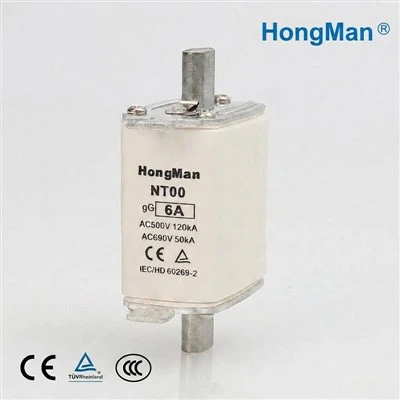
First up: fuse holders. You can’t just drop a DC fuse into a bare wire and call it a day. A DC fuse holder is the protective, mounting base that secures the fuse in the circuit, isolates it from other components, and gives you a way to replace it without tearing apart an entire harness. I’ve seen clients cut corners here, like using a generic AC fuse holder because it’s cheaper, and that’s a disaster. EV DC circuits run at 400V or 800V, with huge amperage spikes during fast charging, and AC holders aren’t rated for that voltage. We supply both panel-mount fuse holders (for easy access in vehicle engine bays or charging stations) and in-line holders, which are perfect for tight, confined spaces. A big selling point here: all our holders are IP67-rated, meaning they’re dust and water-resistant—critical for EVs that deal with rain, road spray, and off-road use. Without the right holder, even the best DC fuse is just a useless chunk of metal and glass.
Next, fuse terminals and connectors. These are the unsung heroes that link the DC fuse to the rest of the high-voltage circuit. A lot of new EV techs (and even some veteran ones) overlook this, but mismatched terminals are a common cause of overheating and fuse failure. For example, if you use a small, thin terminal for a 500A DC fuse, the connection will have high resistance, generate excess heat, and blow the fuse prematurely—way before the actual fault current hits. We supply crimp terminals, bolt-down terminals, and busbar adapters specifically sized to match our DC fuses, so you don’t have to guess. We also offer insulated terminals for low-voltage control circuits and uninsulated heavy-duty ones for power paths. Pro tip from the field: always use terminals with tin plating for corrosion resistance, especially for EVs used in coastal or snowy areas where road salt is a factor. That’s a detail we build into all our accessory packages.
Then there’s the fuse test socket. This is super important for maintenance and troubleshooting, especially in commercial EV fleets where downtime costs thousands of dollars per hour. A test socket lets you pull a fuse temporarily to check if a fault is on the load side or the circuit itself, without disconnecting the entire assembly. For our DC fuses, we offer test sockets that are compatible with standard multimeter probes, so fleet technicians don’t need specialized tools. We’ve had clients who didn’t use test sockets end up swapping out perfectly good fuses because they couldn’t tell if the problem was the fuse or the inverter—wasting parts and labor. Our test sockets also lock in place, so they don’t accidentally disconnect when the vehicle is vibrating on the road or a charging station is cycling power. That’s a small thing, but it reduces maintenance headaches a lot.
Another key accessory: fuse covers and enclosures. Wait, I know I mentioned holders, but fuse covers are different. Holders are the base that holds the fuse; covers are the protective lids that go on top, right? No one wants to accidentally touch a live high-voltage fuse while replacing it—EV circuits can easily kill you if you’re not careful. Our fuse covers are made of flame-retardant thermoplastic, meet strict electrical safety standards, and have a tactile latch so you can open them with one hand, even when wearing work gloves. For charging station installations, we also supply larger enclosures that hold multiple DC fuses, circuit breakers, and monitoring components all in one weatherproof box. These enclosures have pre-drilled mounting holes, so they’re easy to install, and they come with locking mechanisms to prevent tampering. A lot of our commercial clients ask for these because they need to comply with local electrical codes for public charging infrastructure.
Don’t forget surge protection devices (SPDs). EV DC circuits face a lot of unexpected voltage spikes—from fast charging, from regenerative braking, or even lightning strikes on public charging stations. A DC fuse is designed to blow when there’s a sustained fault, but it can’t stop a temporary surge that might damage the fuse or connected components before it acts. That’s where SPDs come in. We supply low-voltage DC surge protectors that work in parallel with our DC fuses, diverting sudden voltage spikes to the ground before they reach the fuse or the battery/inverter. I’ve seen so many clients skip SPDs and end up blowing multiple fuses in a short time, because the surge fried each one before the main fuse could activate. Pairing our DC fuses with our SPDs gives clients an extra layer of protection that extends the life of both the fuses and the EV’s high-voltage components. It’s a combo we heavily recommend for anything from passenger EVs to heavy-duty electric trucks and commercial charging stations.
Then there’s fuse monitoring sensors. This is a newer accessory, but it’s game-changing for fleets and remote charging stations. These tiny sensors clip onto the DC fuse and track its current, temperature, and voltage in real time. You can get alerts on your phone or fleet management software if a fuse is starting to overheat, if it’s carrying inconsistent current, or if it’s nearing its end of life. For example, an electric delivery fleet can use these sensors to catch a faulty fuse before it fails mid-route, avoiding costly breakdowns. We supply sensors that work with most standard telematics systems, so clients don’t have to invest in brand new infrastructure. A lot of our older clients used to rely on manual checks every week, but now they use these sensors to monitor 100+ vehicles at once, cutting maintenance time by 70%. It’s an accessory that fits right in with our DC fuses, turning a passive safety component into an active monitoring tool.
Wait, let’s talk about mounting hardware too. I know it sounds trivial, but if you can’t mount the fuse assembly securely, it doesn’t matter how good the fuse is. We offer stainless steel bolts, washers, and brackets that are rated for high-vibration environments—perfect for off-road EVs, heavy-duty trucks, and electric buses. A lot of generic mounting hardware rusts or loosens over time, leading to bad connections and fuse failure. Our hardware is corrosion-resistant, meets SAE standards, and is sized to fit all our fuse holders and enclosures. We even supply cable ties and heat shrink tubing for securing the circuit harnesses around the fuse assembly, preventing them from rubbing and causing shorts. These are small, low-cost accessories, but they’re essential for a long-lasting installation.
Now, why is this all tied to what we do as a DC fuse supplier? A lot of suppliers will sell you a fuse and call it a day, but that’s not enough for our clients. We know that 80% of EV high-voltage issues are not from the fuse itself, but from the accessories around it. That’s why we don’t just stock DC fuses—we stock all these complementary products, all tested to work together, so our clients don’t have to source 5 different parts from 5 different vendors. For example, if you’re building a custom fast-charging station, you can order a 1000A DC fuse, the right holder, terminals, SPD, enclosure, and mounting hardware all from us. No compatibility headaches, no waiting for shipments from multiple companies.
I’ve had clients come to me before saying they had a fuse blow in their electric truck, and they didn’t know if the fault was the fuse, a bad terminal, or a missing SPD. By the end of our conversation, we’d send them a replacement fuse, a matching terminal set, and a small SPD to test, and 9 times out of 10, that fixed the issue fast. That’s the value we bring, not just selling parts, but knowing how all these accessories work together.
If you’re an EV OEM, a fleet manager, a charging station installer, or a distributor, you don’t have to figure out all this stuff on your own. We’ve been in the game long enough to know what works, what doesn’t, and what each accessory needs to pair with our DC fuses to keep systems safe and reliable. Whether you need a single accessory to replace a bad part on a vehicle, or a full kit to build a 50-station charging depot, we’ve got you covered. Don’t cut corners on these add-ons—skipping them will only lead to more downtime, more repair costs, and more safety risks.

If you’re looking to source high-quality DC fuses and all the essential accessory products to go with them, or want to chat about custom kits for your specific application, reach out to our team to connect for procurement discussions. We’re here to make sure your EV safety systems work as they should, every single time.
Solar PV Fuse Base References
- International Electrotechnical Commission (IEC) 60269-6: Fuses for low-voltage power systems, Part 6: Fuses for direct current applications
- Society of Automotive Engineers (SAE) J1772: Electric vehicle conductive charging system standards
- National Fire Protection Association (NFPA) 70: National Electrical Code for electric vehicle charging and high-voltage components
- International Organization for Standardization (ISO) 12100: Safety of machinery, risk assessment for high-voltage electrical systems in EVs
- EV Safety Standards Alliance (EVSA): Best practices for high-voltage circuit accessory compatibility
Zhejiang Hongman Electric Technology Co., Ltd.
Zhejiang Hongman Electric Technology Co., Ltd. is one of the most professional ev dc fuse manufacturers and suppliers in China. We have world-leading production equipment and strong manufacturing capabilities. Please feel free to wholesale bulk cheap ev dc fuse from our factory. All customized products are with high quality and competitive price.
Address: No.115 Xinguang Avenue, Xinguang Industrial Zone, Liushi Town, Wenzhou City, Zhejiang Province
E-mail: yzm@chinahongman.com
WebSite: http://www.cnfuse.com/
