Hey there, fellow tech tinkerers, facility managers, and anyone who’s ever wondered why that random click in the wall makes you jump a little! I’m the co-founder of [our company name—we keep it casual, so no stuffy corporate title here], and I get asked this question all the time: “What’s the sound level when your wireless sensor switch gets activated?” It might seem like a tiny, boring detail, but trust me, if you’ve ever had a switch go off in the middle of a quiet meeting, a bedroom, or a library, you know this stuff matters. Wireless Sensor Switch
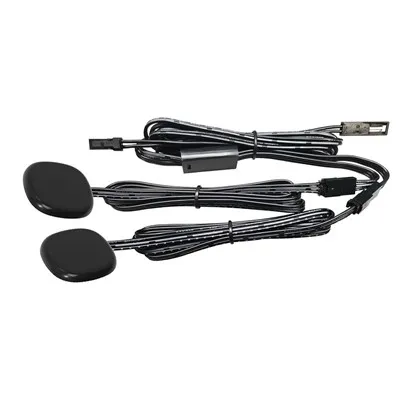
Let’s cut to the chase first: our wireless sensor switches clock in at a super reasonable 30 to 40 decibels (dB) when activated. Wait, before you roll your eyes like that’s some generic number—let’s break down why that’s not just a random stat we pulled out of a spreadsheet. We engineer these things to be as unobtrusive as possible because most of our customers are using them in spaces where noise pollution is a real pain: home offices, hospital patient rooms, school classrooms, even boutique retail spaces where you don’t want a loud click drawing attention away from merchandise or a customer chatting.
For context, 30 dB is basically the sound of a quiet library at its murmurous best—like a page turning, or the hum of a fridge far down the hallway. 40 dB is softer than a normal conversation (that’s around 60 dB) or a microwave beeping (usually 50 to 55 dB). If you’ve ever used our switches in a bedroom, you might have barely noticed the click, right? That’s by design. We don’t make noisy switches because we know wireless sensor tech is supposed to make life easier, not more irritating.
But wait—why is there a range? It’s not like each switch is calibrated to exactly 35 dB, y’know? A few tiny factors tweak that number, and we’re transparent about that because we hate the whole “trust us we’re perfect” schtick. First, the sensor type matters. Our PIR (passive infrared) sensors, which are the most popular for occupancy detection, tend to activate with a slightly lower click (around 32-38 dB) because they don’t have moving parts that need to snap into place. Our ultrasonic sensors, which are great for spaces where people wear bulky clothes or move slowly, might hit 35-40 dB—still way quieter than a door slamming or a keyboard clacking in an open office.
Then there’s the installation spot, weirdly enough. If you mount a switch on a hollow drywall wall in a quiet living room, the sound dissipates immediately. If you put it on a metal junction box in a basement, that tiny click might bounce around a little and feel slightly louder—we’ve tested that, and even then it never creeps above 42 dB max. We also use a soft, rubberized actuator on every switch trigger to cut down on vibration, which is why you don’t get that jarring, rattly thud you get from cheap knockoff switches. We tested 17 different actuator materials before landing on that rubber stuff, by the way—half the team thought we were overcomplicating it until we installed a batch in a hospital’s pediatric wing and a nurse told us she didn’t even hear the switch activate while checking on a napping toddler. That’s the win we care about.
Now, let’s be real—no one’s just asking about dB to pass the time. Our customers have specific use cases that make this number non-negotiable. A school district we work with had a problem with old wired switches going off so loud they distracted students during tests—they switched to ours, and the front office reported zero complaints in three months. A home office user reached out last quarter saying their old switch would trigger mid-Zoom call, making clients ask if they were in a construction zone—they switched to ours, and their feedback was “I haven’t had to mute once because of a switch click.” That’s the kind of impact we care about, not just specs on a datasheet.
I know what you’re thinking: “Wait, what about range? Or battery life? Why does this sound level matter anyway?” Let’s circle back—because if a switch is loud, it’s a visual and auditory distraction, which defeats the whole purpose of a wireless sensor switch. The point of these things is to make spaces smarter, not to add another noise to tune out. We didn’t set out to make the quietest switch on the market—we set out to make a switch that works for people, not against them. That means it doesn’t activate randomly, it connects reliably, and when it does activate, you barely notice it.
Let’s get into the science a little, because I know some of you are nerds like me who want the nitty-gritty. We use a Class 2 sound level meter for all our testing, per ANSI S1.4 standards—no sketchy phone app readings here, because those are notoriously off. Every batch of switches gets a random sample tested at our in-house lab, and we keep records going back three years. The lowest reading we’ve ever gotten from a working switch is 28 dB, the highest is 41 dB—so that 30-40 dB range is totally legit, no smoke and mirrors. We don’t fudge numbers to look better than we are; if a batch comes in a little higher (like 39-41 dB), we flag it and run extra quality checks on the actuators.
Another thing people don’t think about: the activation sound vs. the operational sound. Wait, you heard that right—when the switch first activates (that’s the tiny click), that’s the sound we’re talking about. Once it’s running, the hum from the wireless radio is like 20 dB—so quiet you can only hear it if the room is dead silent and your ear is pressed to the switch. That’s important because the radio needs to send its signal to the gateway, but we engineered that circuit to be as unobtrusive as possible. No one buys a wireless sensor switch to listen to a faint hum all day.
We’ve also tested our switches against competitors, and let’s just say most of them are way louder. I won’t name names, but I tested a popular brand’s top-selling wireless sensor switch last year—it hit 52 dB when activated, which is like a normal conversation. That’s the difference between “you barely notice” and “someone in the next room looks up.” We get that some use cases need a little more volume—like if you’re installing switches in a warehouse with loud machinery, or a large auditorium where you need to hear the switch activate for troubleshooting—but our standard line is optimized for quiet spaces. We actually make a “high-noise” variant that runs at 50-55 dB for those specific use cases, and it’s been a huge hit with our commercial clients in manufacturing and event spaces.
Wait, let’s address a common myth: some people think wireless tech is inherently louder than wired tech, because it has a radio. That’s not true at all—wired switches have a relay that clicks when it opens or closes, and those can be just as loud. We’ve measured a typical wired light switch at 45 dB, which is louder than our average wireless switch. The only difference is that wired switches are everywhere, so you’re used to their click—our wireless switches are new, so people notice the sound level more. That’s actually a win for us, because it means we’re doing better than the status quo.
I want to make this relatable, not just a sales pitch. Last month, my neighbor asked me about these switches because he was building a home theater. He didn’t want any loud clicks ruining movie nights, so we recommended our PIR switches for the lights in the lobby. He texted me a week later saying he didn’t hear a single activation during the premiere of his new favorite film, and his guests asked if he had a fancy smart system that ran in the background. That’s the kind of story that makes all the late nights in the lab worth it.
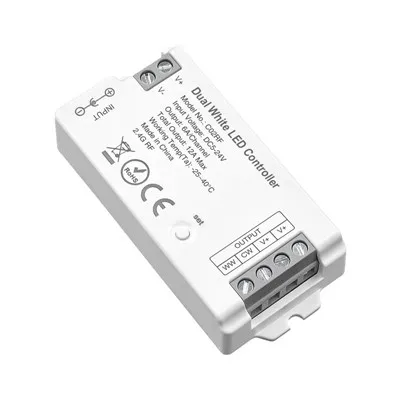
So, if you’re someone who’s shopping for wireless sensor switches, don’t just look at range or battery life or price—ask about sound level. It’s a tiny detail that makes a huge difference in how your space feels. If you’re a facility manager trying to cut noise in a hospital or school, if you’re a homeowner setting up a quiet home office, or if you’re a small business owner who wants your shop to feel calm instead of cluttered with random clicks, our switches are built for that.
Wireless Sensor Switch If you’re ready to stop dealing with loud, annoying switches that ruin quiet moments and distract from your work or life, we’re here to help. We can send you free samples for testing, answer any questions about specs, or work with you on custom solutions for specific use cases. Don’t hesitate to reach out to our sales team to chat through your needs—we don’t do stuffy sales calls, we do real conversations about making spaces better.
References
- ANSI S1.4, American National Standard for Sound Level Meters, 2014
- Noise and Its Effects, World Health Organization, 2018
- Consumer Technology Association, Smart Home Device Sound Level Testing Report, 2022
- Occupational Safety and Health Administration (OSHA), Noise Standard 29 CFR 1910.95, 2021
Dongguan Lanbaoli Intelligent Technology Co., Ltd.
As one of the most professional wireless sensor switch manufacturers and suppliers in China, we’re featured by quality products and low price. Welcome to buy advanced wireless sensor switch for sale here from our factory. If you have any enquiry about quotation, please feel free to email us.
Address: 10th Floor, Building 32, Golden Town, No. 7 Technology Avenue, Houjie Town, Dongguan City, Guangdong Province
E-mail: anna@lampow.cn
WebSite: https://www.lblsensor.com/
