When I first started out as a cryogenic liquid storage tank supplier, I thought my biggest focus would be on durability, cost efficiency, and how our tanks meet customer needs for storing liquefied gases like nitrogen, oxygen, argon, and LNG. It wasn’t until a regular client – a small-scale food processing plant that relies on liquid nitrogen for freezing produce – reached out to me with a question I hadn’t considered deeply: “What’s the real environmental footprint of these tanks we’re installing every year?” That question stuck with me, and over the years, I’ve dug into the science, talked to environmental engineers, and learned that cryogenic tanks aren’t just big metal containers; their environmental impacts are layered, nuanced, and often overlooked until they become a liability. Let’s break this down honestly, from something I see in my shop every day to the larger global picture. Cryogenic Liquid Storage Tank
First, let’s start with the most visible but often misunderstood impact: boil-off. Cryogenic liquids – substances stored at temperatures below -150°C, on average – are inherently volatile, and even the best insulated tanks won’t keep 100% of the cold in. Heat seeps through the insulation over time, turning liquid into gas, and that gas has to go somewhere. For many years, this boil-off was just vented directly into the atmosphere, and I used to hear sales teams frame it as “normal operation” – a small, unavoidable cost of doing business. But that’s not the full story. The gases involved here aren’t all the same. Liquid nitrogen, for example, boils off into nitrogen gas, which makes up 78% of Earth’s atmosphere, so its short-term impact is relatively low – it displaces oxygen in confined spaces, but at scale, it’s not a greenhouse gas. Liquid oxygen, on the other hand, boils into O₂, which actually supports combustion and can make fires more dangerous, but again, it’s not a greenhouse gas. The trouble comes with LNG, which is mostly methane. When LNG boils off, that methane is released directly into the atmosphere. Methane is 28 times more effective at trapping heat than CO₂ over a 100-year period, according to EPA data. For a mid-sized LNG tank, boil-off emissions can add up to thousands of metric tons of methane a year if the tank isn’t properly maintained – that’s the equivalent of hundreds of thousands of tons of CO₂, which is a big deal when we’re all trying to cut down on greenhouse gases.
But boil-off isn’t the only gaseous impact. There’s also the insulation itself. Most modern cryogenic tanks use vacuum insulation, which means the space between the inner and outer vessel is pumped down to near-vacuum to reduce heat transfer. That vacuum can degrade over time – seals can leak, materials can outgas, and suddenly, the insulation becomes far less effective, leading to more boil-off and wasted gas. Some older tanks use foam insulation, and while foam is cheaper upfront, it has its own issues: many foam insulations are made with hydrofluorocarbons (HFCs) or hydrochlorofluorocarbons (HCFCs) as blowing agents, which are extremely potent greenhouse gases. When the foam degrades or is disposed of improperly, those chemicals can leak into the environment. At our shop, we’ve stopped offering foam-insulated tanks for industrial use, but I still see some small operators using them because of lower initial costs, and that’s a problem for the planet.
Then there’s the manufacturing and installation phase, which I see first-hand every time a new order comes in. Making a cryogenic tank isn’t simple. The inner vessel has to be made of high-grade stainless steel or aluminum – materials that require a lot of energy to mine, refine, and shape. For a 10,000-gallon tank, we use around 12,000 pounds of stainless steel, and the manufacturing process alone – welding, testing, machining – uses thousands of kilowatt-hours of electricity, most of which still comes from fossil fuels in many parts of the world. Add in the transportation: these tanks are enormous, heavy, and require specialized trucks or even flatbed trains to move them, burning diesel fuel for hundreds of miles. Installation also has an environmental cost: we have to prepare a level, reinforced foundation, often with concrete, which uses cement – a major source of CO₂ emissions. I won’t sugarcoat it: the upfront footprint of a cryogenic tank is significant, especially compared to smaller storage options, and that’s a factor we have to be transparent about with customers.
Wait, but it’s not all negative. One thing I’ve learned as a supplier is that a well-maintained, properly designed tank can actually have a smaller environmental impact than alternatives over its lifecycle. For example, recovering boil-off gas instead of venting it is a game-changer. We started offering boil-off compressors and reliquefaction systems five years ago, and it’s been a hit with customers in industries like healthcare, where liquid oxygen is critical and waste is unacceptable. If you can capture the boil-off gas, reliquefy it, and send it back to the tank, you eliminate almost all methane or nitrogen emissions from boil-off. That’s a win – not only does it reduce the customer’s carbon footprint, it also saves them money on gas purchases, which makes the investment worth it. Another point: cryogenic tanks are extremely durable. A well-built tank can last 30 to 50 years if maintained properly, which is way longer than many other storage solutions. So the upfront manufacturing impact is spread out over decades, which lowers the annual average footprint.
But there’s a less talked-about impact: end-of-life disposal. When a tank reaches the end of its life – usually due to corrosion, damage, or changing operational needs – what happens to it? The inner and outer vessels are both made of metal, which is recyclable, but the insulation is often not. Vacuum insulation layers have complex materials that can’t be easily separated, and foam insulation is difficult to recycle, so many tanks end up in landfills, where the insulation chemicals can leach into soil and groundwater. Worse, some older tanks with foam insulation have leftover HFCs trapped in the foam, which can escape as the foam breaks down, long after the tank is put out of service. At our company, we’ve started a take-back program for old tanks – we disassemble them, recycle as much metal as possible, and partner with specialized facilities to handle the insulation materials safely. It’s an extra cost for us, but it’s the right thing to do, and many customers appreciate that we don’t just sell a tank and disappear.
I also need to address the operational risks that tie into environmental impact. A broken tank can leak cryogenic liquid, which can have devastating effects. For example, a leak of liquid nitrogen can displace oxygen in an area, leading to harm for workers, but it also doesn’t leave a lasting environmental mark. A leak of LNG is much more dangerous: if it spills, LNG can evaporate quickly, forming a flammable cloud, and if it ignites, it releases CO₂ and other pollutants. Even a small leak over time can add up to significant emissions, which is why regular inspections and maintenance are non-negotiable. We work with all our customers to set up annual inspection schedules, and we’ve started offering digital monitoring systems that track insulation performance, pressure, and boil-off rates in real time – that way, leaks or insulation degradation are caught early, before they turn into big environmental issues.
I’ve also noticed a shift in customer demand over the last few years. More and more, people aren’t just asking for the cheapest tank – they’re asking about its environmental footprint. A few months ago, a customer in the renewable energy sector reached out because they’re building a plant that uses LNG as a transition fuel, and they wanted a tank that could minimize emissions. We worked with them to design a tank with a high-performance vacuum insulation system, a boil-off recovery unit, and a plan for end-of-life recycling. That project was more work than a standard order, but it’s the kind of work that matters – it shows that cryogenic tanks can be part of a low-carbon future, not a barrier.

Now, I want to be honest about the challenges. There’s no perfect cryogenic storage tank. Even the best-designed ones will have some emissions, especially if they’re not maintained. The key is to minimize those emissions through good design, regular maintenance, and responsible end-of-life practices. As a supplier, we’re constantly working to improve: we’re testing new insulation materials that have low global warming potentials, we’re reducing the energy used in manufacturing by switching to solar power in our shop, and we’re making our tanks easier to recycle. It’s not fast, and it’s not cheap, but it’s necessary.
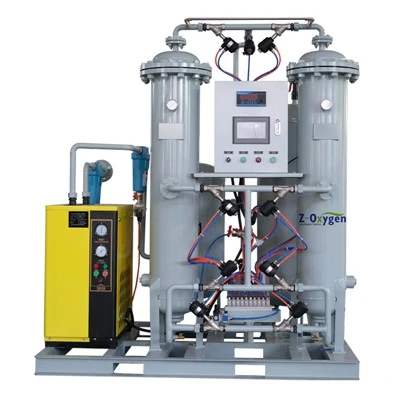
Small Air Separation Unit If you’re considering a cryogenic liquid storage tank for your operation, don’t just focus on the upfront cost or the size. Ask about the insulation type, the boil-off recovery options, the maintenance support, and the end-of-life plan. These are the factors that will make the biggest difference to your environmental footprint over time. We’ve built our business on being a partner to our customers, not just a vendor, so if you have questions about how our tanks can work for your needs, reach out to us to discuss your requirements. We can walk you through the design, the emissions calculations, and the long-term steps to keep your operation as sustainable as possible.
References
- U.S. Environmental Protection Agency (EPA). "Methane Emissions from the Oil and Gas Sector." 2022.
- Cryogenic Society of America. "Design and Operation of Cryogenic Liquid Storage Tanks." 2021.
- International Energy Agency (IEA). "The Role of Cryogenic Storage in Low-Carbon Energy Systems." 2023.
- World Health Organization (WHO). "Environmental Impacts of Industrial Cryogenic Operations." 2020.
- American Society of Mechanical Engineers (ASME). "Pressure Vessel Design Standards for Cryogenic Service." 2022.
Xinxiang Jiale Intelligent Equipment Co., Ltd.
As one of the most professional cryogenic liquid storage tank manufacturers and suppliers in China, we’re featured by quality products and good service. Please rest assured to buy durable cryogenic liquid storage tank for sale here from our factory. We also accept customized orders.
Address: No.3913, 9th Floor, Unit 3, East Commercial and Office Complex, Baolong City Plaza, Hongqi District, Xinxiang City, Henan Province, China
E-mail: cc2397410@gmail.com
WebSite: https://www.jiale-asu.com/
