When was TPV first developed? TPV– Thermoplastic Vulcanizate
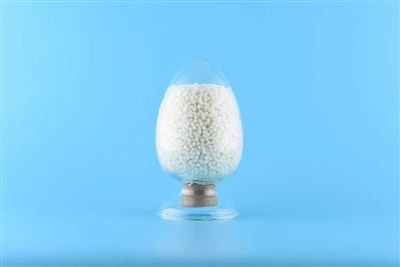
If you’re a manufacturer working with elastomers, gaskets, or molded parts, you’ve almost certainly interacted with TPVs—thermoplastic vulcanizates, the flexible, heat-resistant materials that outperform many traditional rubber compounds without the processing hassles of thermosets. But if you’ve ever paused to wonder when this material first moved from a lab curiosity to a commercial product that changed parts of the automotive, consumer goods, and medical industries, the story isn’t as straightforward as you might think.
I’m the owner of a mid-sized TPV supplier based in the Midwest, and I’ve spent the last 12 years walking customers through everything from material formulations to tolerance testing. I still hear this question at least once a week: “When did TPV actually start?” Most folks assume it’s a 1980s innovation, and that’s not wrong—but it skips the decades of messy, iterative research that made the commercial version possible. Let me break it down, because the origin story of TPV isn’t about a single eureka moment. It’s about two separate lines of polymer science colliding, and a team that refused to give up when their first tests failed.
The first thread of the story starts in the 1950s, right after World War II. Back then, polymer chemistry was booming—scientists were creating all kinds of new plastics and rubbers to meet the demands of post-war manufacturing, from nylon for parachutes to synthetic rubber for truck tires. At that time, rubber for industrial parts fell into two categories: thermoset rubber (think natural or neoprene) and thermoplastics (like polyethylene or polypropylene). The big trade-off was that thermoset rubber was flexible, durable, and resistant to heat and chemicals, but it required curing—an irreversible chemical process that meant once you molded a part, you couldn’t melt it down and reprocess it. Thermoplastics, on the other hand, were easy to mold and reuse, but they were too stiff or not heat-resistant enough for most automotive or industrial uses.
Researchers at a handful of labs, including DuPont’s Central Research Department and Goodyear’s research division, started asking a question: what if we could blend the best of both? Mix a thermoplastic with a small amount of rubber, and get a material that was moldable, recyclable, and as flexible as traditional rubber. That made sense on paper, but in practice, the blends wouldn’t stay mixed. Rubber and plastic molecules are like oil and water—they repel each other, so they’d separate into clumps, leaving the material brittle and inconsistent. Any time someone tried to heat the blend to mold it, the rubber would shrink away from the plastic, ruining the part.
For nearly 20 years, that problem stumped everyone. Then, in 1967, a researcher named Dr. Ahmet G. Akovali at the University of Tennessee published a paper that changed everything. His work focused on vulcanization—the process that gives rubber its flexibility, where you add sulfur and heat to break and re-form chemical bonds in the rubber’s molecular structure. Akovali’s idea was to take that vulcanization process, apply it to a blend of rubber and thermoplastic, and do it in a way that locked the rubber particles into the plastic matrix before they could separate. Instead of mixing the two, vulcanizing the rubber first, and ending up with the same separation problem, what if you vulcanized the rubber while it was already blended with the plastic? That way, the rubber molecules would bond to each other inside the plastic, making tiny, flexible rubber domains scattered evenly through the hard plastic.
Akovali’s lab tested this with a blend of ethylene propylene rubber (EPDM, common for gaskets and seals) and polypropylene, a cheap, easy-to-mold thermoplastic. The initial results were promising—sort of. The material was flexible, could be melted and reprocessed, and could withstand temperatures up to 150°C, which was way higher than any existing thermoplastic blend. But it had a big flaw: the vulcanization process didn’t fully react. About 20% of the rubber stayed uncrosslinked, so the material would sag in high heat, and it wouldn’t hold its shape over long periods. Akovali’s paper laid the groundwork, but it took another 10 years for someone to figure out the missing piece.
That missing piece was dynamic vulcanization. The man who cracked it was Dr. Joseph C. Salamone, a polymer chemist at the University of Akron, and he didn’t work alone. In the mid-1970s, Salamone partnered with the team at Monsanto Chemical, a company that was looking for alternatives to traditional thermoset rubber for automotive parts. Monsanto had just developed a new extrusion machine that could mix materials at extremely high shear rates—so high that it could break down and disperse rubber particles into a plastic matrix in seconds, without letting them clump. The key was that they could do this while adding the vulcanizing agent (sulfur, or a chemical crosslinker) mid-process. As the rubber and plastic blended, the shear forces kept the rubber particles small and evenly dispersed, and the vulcanizer bonded the rubber molecules together right there, so they couldn’t separate.
The first successful dynamic vulcanization test happened in 1975. They mixed EPDM rubber and polypropylene in the high-shear extruder, added the crosslinker, and ran the machine for 12 minutes. When they pulled the material out, it looked and felt like rubber—flexible, stretchy, with a matte finish—but when they heated it to 200°C, it melted into a liquid, just like plastic. No sag, no separation, no brittleness. That was the first true thermoplastic vulcanizate.
But Monsanto didn’t commercialize it right away. The company was focused on other big projects, like agricultural chemicals and synthetic fibers, and TPV was a small side project. It took another five years for them to refine the formulation and launch it commercially, under the brand name Santoprene, in 1981. That’s the date most people point to when they talk about TPV’s origins, and it’s not wrong—but it’s important to remember that the material we use today came from 20 years of prior research, not just a single commercial launch.
By the mid-1980s, TPV was everywhere. Automotive manufacturers loved it because it was lighter than traditional rubber, cheaper to mold, and could be used in under-hood parts that had to withstand heat and oil. Gaskets for door seals, weather stripping, even dashboard trim—all started switching to Santoprene. By the 1990s, the market expanded beyond automotive: consumer goods like toothbrushes, appliance handles, and even footwear soles used TPV because it was soft to the touch, durable, and could be molded into complex shapes. Medical device makers got on board too, since TPV is biocompatible, easy to sterilize, and doesn’t leach chemicals into drugs or bodily fluids.
Now, fast forward to today. I’ve been supplying TPV to manufacturers for over a decade, and I’ve seen the material evolve a lot. The original 1981 TPV could only handle up to 150°C, but today we have formulations that can survive continuous heat up to 180°C, and even low-temperature TPV that stays flexible at -40°C, perfect for parts used in cold climates. We work with clients to tailor the hardness, color, chemical resistance, and flow properties of TPV to their exact needs—whether they’re molding a small seal for a medical device or a large bumper component for a heavy truck.
I get asked all the time if there are newer materials that have replaced TPV, but the short answer is no. Traditional thermoset rubber is still used in some high-stress parts, but TPV’s recyclability and processing flexibility make it hard to beat. For manufacturers that run high-volume molding lines, TPV cuts production time by 30% or more, because you don’t have to wait for parts to cure before moving them to the next step. And since it’s thermoplastic, leftover scrap from molding can be melted down and reused, reducing waste and costs.
But here’s the thing: TPV’s origin story isn’t just about dates and formulas. It’s about how polymer chemists turned a theoretical idea into a material that solved real problems. When my customers ask about the history, I always tell them that TPV didn’t start in 1981—it started with a group of scientists who refused to accept that rubber and plastic could never mix. That’s why, when you’re selecting a TPV for your next part, it’s worth understanding where it came from. The best formulations today still build on that 1967 paper from Dr. Akovali and the 1975 dynamic vulcanization breakthrough.
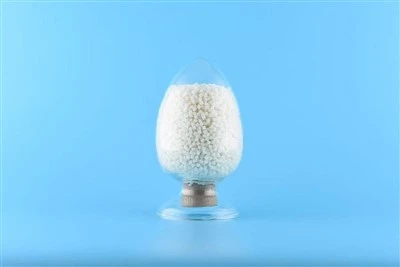
If you’re a manufacturer looking to switch from thermoset rubber or traditional thermoplastics to TPV, or if you have questions about formulations, testing, or sourcing, I’m here to help. We work with clients across industries to customize TPV solutions for every application, from small medical components to large industrial parts. Reach out to discuss your requirements, and we can provide sample materials, technical data, and guidance to make your next project a success.
TPV– Thermoplastic Vulcanizate References:
- Akovali, A. G. (1967). Vulcanization of Elastomer-Thermoplastic Blends. Journal of Applied Polymer Science, 11(10), 1595-1606.
- Coran, A. Y., & Patel, R. P. (1978). Thermoplastic Elastomers Based on dynamically Vulcanized Elastomer-Thermoplastic Blends. Rubber Chemistry and Technology, 51(3), 798-810.
- Salamone, J. C. (1980). The Development of Thermoplastic Vulcanizates. Progress in Polymer Science, 7(2), 155-185.
Kunshan Kesun Polymer Co., Ltd.
Kunshan Kesun Polymer Co., Ltd. is one of the most professional TPV manufacturers and suppliers in China, featured by quality products and low price. Please feel free to wholesale bulk eco-friendly TPV from our factory. Contact us for customized service and free sample.
Address: No.108, Jinmao Road, Zhoushi Town, KunShan, Jiangsu, China
E-mail: melody_yang@kesuntpe.com
WebSite: https://www.kesun-tpe.net/
