If you’ve ever shopped for a roll to roll heat transfer machine, you’ve likely noticed a range of weights listed in product specs—some starting at 800 pounds, others topping 20,000 pounds, and many landing somewhere in between. As a supplier who’s spent the last 12 years helping small apparel shops and large packaging facilities pick machines that fit their space, production goals, and budgets, I get how confusing this number can feel. It’s not just a random stat manufacturers throw on a spec sheet; machine weight ties directly to what your equipment can do, how it fits in your shop, and even how much it will cost to run. Today, I’m breaking down the factors that determine a roll to roll heat transfer machine’s weight, what that weight means for your operation, and how to pick the right one without overspending or wasting space. Roll To Roll Heat Transfer Machine
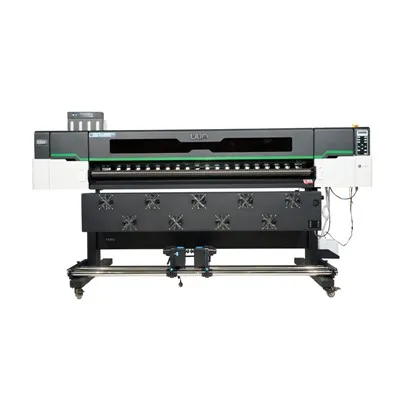
First, let’s get clear on what a roll to roll heat transfer machine (R2R HTM) actually does, because that context makes the weight math click. These machines move continuous rolls of flexible material—think fabric, vinyl, plastic film, or even thin paper—through a heated system that applies designs, patterns, or functional coatings (like water-repellent layers or brand logos) without cutting the material into individual pieces. That’s why they’re so popular: they crank out consistent results at scale, perfect for things like sports uniforms, retail packaging, and automotive trim parts, where thousands of identical small designs are needed. Unlike a flatbed heat press that’s lifted and placed on a table, an R2R HTM is a long, integrated piece of equipment with three core sections: the unwinder (which holds the raw material roll), the processing section (where heat and pressure do the work), and the rewinder (which holds the finished, processed roll). The weight of each section adds up, and design choices for each part drive most of the total weight.
Let’s start with the biggest weight contributor: the processing section. This is the heart of the machine, where you’ll find heating elements, pressure rollers, and temperature controls, and it’s almost always the heaviest part. The core here is the heated roller, or calender roll—this is the cylinder that transfers heat and pressure evenly across the material as it moves. The size and material of this roll make a huge difference in weight. For example, a machine built for light-duty work, like applying small logos to t-shirt labels or thin vinyl for stickers, might use a 12-inch diameter steel roll, only a few feet long. That roll might weigh 300 to 500 pounds on its own. But a machine for heavy-duty industrial work, like laminating thick fabric for outdoor gear or transferring patterns onto 10-foot-wide banner material, needs a much larger roll—sometimes 30 or even 40 inches in diameter, and 10 to 12 feet long. Steel of that size adds up fast; a single large calender roll for industrial use can weigh 2,000 to 3,000 pounds alone, and that’s just one part of the processing section.
Then there’s the frame that holds that roll in place, and the pressure system that presses the roll against the lower feed roller to make sure the design transfers evenly. For light-duty machines, the frame is often made of welded aluminum or thin steel—lighter, easier to move, and cheap enough for small shops. That frame might weigh 500 to 1,000 pounds, bringing the total processing section weight to 800 to 1,500 pounds for entry-level models. But heavy-duty industrial models need a much sturdier frame to handle that large, heavy roller and consistent pressure over 16-hour production runs. These frames are usually thick carbon steel, bolted to a concrete base (yes, some require a poured concrete pad) and reinforced along the sides to prevent warping. That frame alone can weigh 3,000 to 5,000 pounds, pushing the total processing section to 5,000 to 8,000 pounds for industrial-grade machines.
Next, the unwinder and rewinder sections, which hold the raw and finished material rolls, add secondary weight factors. The size of the material rolls you’ll use here matters more than you’d think. A small entry-level machine is built to handle rolls that are 12 to 24 inches in diameter and 100 to 500 feet long, so its unwinder and rewinder are compact—steel arms with simple tension controls, weighing 300 to 500 pounds total. But a mid-sized machine that runs 500 to 1,000 foot rolls, common for apparel production, might have unwinder and rewinder arms that extend to 48 inches in diameter, with motorized tension control and roll changers that let you swap empty rolls for full ones without stopping production. Those motorized components add weight; a mid-range unwinder/rewinder set can weigh 1,000 to 2,500 pounds. Industrial machines go even further, with automated roll handling that can lift rolls weighing 1,000 pounds or more (for 10-foot-wide material rolls used in automotive trim), so their unwinder and rewinder have built-in lift systems, heavy-duty gear motors, and fail-safes to prevent rolls from slipping. Those sections can weigh 3,000 to 5,000 pounds each, and two of them add 6,000 to 10,000 pounds alone.
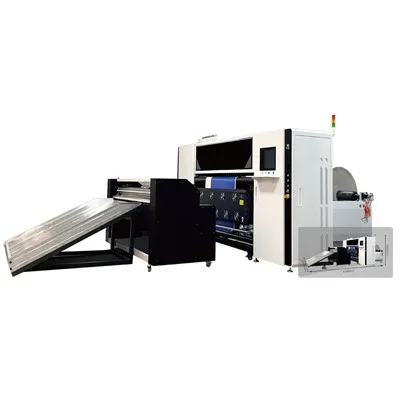
Throw in the control panel, wiring, cooling systems, and safety guards, and you start to get the full total. Entry-level R2R HTMs, built for small shops that run a few hours a day, typically weigh between 800 and 2,500 pounds total. Mid-sized machines, designed for small to mid-sized production facilities running 8 to 12 hour days, clock in between 2,500 and 8,000 pounds. Industrial-grade machines, built for 24/7 production in large facilities, can weigh 10,000 to 25,000 pounds. That range might seem huge, but it lines up perfectly with what each machine is built to handle.
But here’s the part many new buyers miss: machine weight isn’t just a number for the spec sheet. It directly impacts your shop, your costs, and your results. Let’s start with space and installation. If you’re a small business in a retail unit with a 10-by-10 foot workshop, a 10,000-pound industrial machine is never going to work—first, because you can’t fit it, and second, because you’ll need to reinforce your floor to support that weight. A standard commercial shop floor can support about 150 pounds per square foot, so a 10,000-pound machine that takes up 50 square feet would put 200 pounds per square foot on the floor—enough to cause sagging or damage over time, not to mention safety hazards. Light entry-level machines, at 800 pounds, only add about 16 pounds per square foot, so they work on any standard workshop floor without extra reinforcement.
Then there’s accuracy and consistency. A light machine with a flimsy frame will vibrate during high-speed production, even if it’s only 800 pounds. That vibration can cause slight shifts in the material as it moves, leading to misaligned designs or uneven pressure across the calender roll. A heavier, sturdier frame eliminates that vibration, which is why industrial machines use thick steel frames—they keep every part locked in place, so designs are consistent even at 100 feet per minute production speeds. I’ve seen shops save thousands of dollars in rework by upgrading to a mid-weight 5,000-pound machine instead of a cheap 1,200-pound model, just because the results are more consistent.
There are also downsides to heavier machines, though, and that’s where your use case matters most. Heavier machines are harder to move—obviously, but also, they’re more expensive to install. A 10,000-pound machine requires professional installation, rigging, and sometimes that concrete base I mentioned earlier, adding $1,000 to $5,000 to the total cost. A light entry-level machine can often be moved by two people and installed in a couple of hours, with no extra work. Heavier machines also use more power—their large motors, heating elements, and cooling systems draw more electricity, so your monthly utility bills will be 20 to 50% higher than a light model. If you’re only running a machine for a few hours a week, that extra power cost isn’t worth the better consistency.
So how do you pick the right weight for your needs? Let’s walk through the questions I ask every customer when they reach out: First, what’s your average daily production volume? If you’re making custom patches for local teams, 2 hours a week, an 800-pound entry-level machine is perfect. If you’re making 10,000 uniforms a month, 8 hours a day, a 5,000-pound mid-range machine will give you the speed and consistency you need. If you’re supplying parts to a large automotive manufacturer, 24/7 production, you’ll need an industrial machine over 15,000 pounds. Second, what’s your shop’s floor space and floor capacity? Measure your available space, then calculate your floor’s weight limit. If you’re renting a space with no ability to reinforce the floor, skip the industrial model. Third, what material are you working with? Thin vinyl stickers use a completely different setup than thick outdoor fabric, so you don’t need a heavy machine if your material is lightweight and thin.
I’ll also be honest: I’ve had customers come to me after buying a cheap 1,000-pound machine off a discount site, only to call me a month later saying it vibrates too much, breaks down constantly, and can’t handle the volume they need. Those light machines are built for hobbyists, not small businesses. On the flip side, I’ve had a customer who runs a small custom t-shirt shop buy a 12,000-pound industrial machine because he thought “heavier means better”—only to find it doesn’t fit his 8-by-12 workshop, and his power bill went up $300 a month for no reason. The sweet spot is matching the machine’s weight to your exact needs, not the heaviest or cheapest option.
If you’re in the market for a roll to roll heat transfer machine, don’t stop at the “weight” line on the spec sheet. Ask the supplier what the frame is made of, what size the calender roll is, what production speed it’s rated for, and whether it’s built for light, medium, or heavy-duty use. A reputable supplier will walk you through these questions, not just send you a spec sheet with numbers.
If you’re ready to find a machine that fits your production, space, and budget, or have questions about what weight is right for your operation, feel free to reach out. We work with businesses of all sizes, from hobbyists to large manufacturing facilities, to find R2R HTMs that get the job done without overspending or cluttering your shop.
Foil Printer References
Heat Transfer Processes for Flexible Packaging, Journal of Manufacturing Processes, 2019
Roll to Roll Processing: Equipment Design and Operational Considerations, Industrial Press, 2021
Floor Load Capacity Requirements for Industrial Machinery, OSHA Technical Manual, 2022
Hangzhou Yulan Technology Co., Ltd.
Address: Building, No.128 Rihui Road, Linping District, Hangzhou, China.
E-mail: ulinprint@gmail.com
WebSite: https://www.ulinprinter.com/
