Hey everyone, Metallurgical Equipment
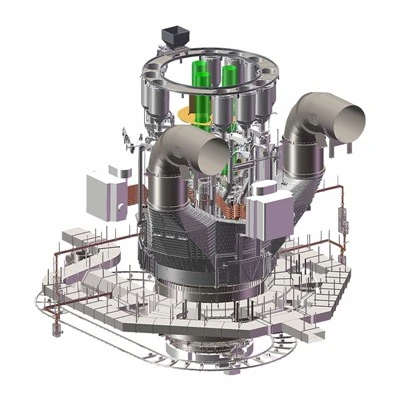
It’s Jake here, and if you’ve ever spent time around a metallurgical equipment floor, you know it’s equal parts high-stakes, high-reward, and high-risk. Whether we’re talking about a giant furnace pulling 10,000 amps, a press that can flatten a car in seconds, or a conveyor belt hauling molten metal—one wrong move isn’t just a oops moment, it’s a trip to the emergency room. As a metallurgical equipment supplier, I don’t just sell gear; I’ve spent 15 years on client floors, troubleshooting, seeing near-misses that should’ve been disasters, and learning what actually works (not just the stuff from a dusty OSHA pamphlet no one reads). Let’s talk about the safety measures that aren’t just checkboxes—they’re non-negotiable if you’re running this stuff.
First, let’s get one thing straight: most people don’t fail on “big” stuff like wearing hard hats. They fail on the tiny, routine things that build up to trouble. Last year, I was at a steel plant where a operator skipped locking out a small pump before repairing a leak—turned out the valve shifted, the pump started, and his hand got crushed. That’s not a faulty machine. That’s skipping LOTO, which I don’t just call “lockout/tagout”—I call it the single most boring but lifesaving rule in this game, and 80% of the near-misses I’ve seen tie back to cutting corners on it.
Wait, let’s break down LOTO properly, because everyone half-asses it. It’s not just slapping a padlock on a switch and walking away. You need the whole team on it, not just the guy working on the machine. Like, tell the shift supervisor, the guy running the next conveyor, even the guy getting coffee nearby, “Hey, Line 3’s pump is offline—don’t hit that green button.” We supply our clients with custom LOTO kits for every piece of equipment we sell, and I still get pushback that it’s “too much hassle.” But a $5 lock and a minute of communication beats a $200k machine repair and a lifetime of medical bills. Also, make sure the locks are individual—no shared keys, no “I’ll just take yours for five minutes.” I’ve seen a guy grab another operator’s LOTO lock to fix a mixer, and when that mixer restarted, the other guy almost lost a leg. Don’t do that.
Next up, the stuff we call “hazard-specific training”—and I swear, most shops’ training is a 2-hour video on a Friday before a holiday, no one pays attention, and it’s garbage. When you’re working with metallurgical gear, you’re not just dealing with moving parts—you’re dealing with extreme heat, toxic fumes, molten metal, electrical currents that can kill you before you feel them, even heavy materials that drop and crush. Last year, a client of ours had a guy who’d only worked on conveyor belts his whole career, got moved to a furnace repair, and didn’t know that even a small splash of molten slag can burn through a leather glove like it’s tissue paper. He didn’t have the right PPE, and that was it.
Here’s the thing: training can’t be one-and-done. It needs to be refreshers every 90 days, role-specific, not generic. For a crane operator, that means extra training on load limits and not swinging loads over heads. For a furnace operator, that’s training on how to handle a slag pour that goes wrong, or what to do if the temperature gauge is acting up (hint: don’t ignore it). We don’t just sell equipment—we include on-site training for every new piece of gear we deliver, and I refuse to skip a session because I’d rather take an extra day training a crew than get a call about an injury three months later. Also, hands-on drills—like, not just talking about a small molten metal spill, but actually simulating it and having the crew practice grabbing the right fire extinguisher, using the barrier, not panicking.
Then there’s machine guarding, and this is where I see the most pushback from clients. They say, “The guard gets in the way of my work” or “We don’t need it, we’ve been doing this for 20 years.” Wait a minute—guards aren’t there to slow you down. They’re there to keep your hand from getting caught in a rolling mill. Last quarter, we delivered a new rolling mill to a shop that removed the safety guard because they thought it slowed their production. Two weeks later, an operator’s sleeve got caught in the roller, and he had to have his arm amputated. That’s not an accident—that’s a choice.
But not all guards are created equal. Generic bolt-on guards from a hardware store are trash. They need to be custom-fitted to your specific piece of equipment, because metallurgical gear is big, weird, and has weird moving parts. For example, the feed chute on a metal shredder has different angles than a press brake. The right guard should let you do maintenance without taking the whole thing apart, too—so you don’t have to remove it every time you change a part, which means you don’t skip putting it back. We design all our equipment with adjustable, tool-less guarding for that exact reason—because no one’s gonna put a guard back if it takes 10 minutes with a wrench.
Now, let’s talk about the hidden hazards no one mentions: fumes and air quality. When you’re melting metal, you’re releasing all kinds of crud—lead, cadmium, silica dust, even carbon monoxide that can knock you out in 60 seconds. A lot of older metallurgical shops still don’t have proper ventilation, and the operators are just wearing a cheap dust mask they bought at the dollar store. I was at a plant in Ohio a few years back where three operators got lung issues from working near a smelter with a broken exhaust system—they didn’t even know the fumes were toxic at first. And the worst part? The fix wasn’t even that expensive—just updating the exhaust hoods and adding a small air monitoring system.
Here’s my rule for fumes: you shouldn’t be able to smell them near the operation area. If you can smell metal fumes, that means they’re not being vented out, and you’re breathing them in. We partner with air quality specialists to include basic monitoring systems with every new furnace or smelter we sell—they alert the crew (even on their phones, if that’s easier) if fume levels get too high. And for older shops? We can retro-fit their existing equipment with added ventilation without shutting down the whole line for a week. No excuses—if your crew is breathing toxic stuff, that’s a problem that can be fixed.
Molten metal handling is a whole other beast. I’ve seen some of the craziest near-misses here. A few years back, a client had a ladle full of molten steel that was too heavy, and the crane operator didn’t check the load rating before lifting. The ladle tilted, spilled a ton of steel, and almost burned through the concrete floor. The problem? They didn’t have load sensors on their crane—they were just guessing. That’s not guessing. That’s asking for disaster.
So for molten metal, first: load monitoring is non-negotiable. You need sensors on every ladle, crane, and transfer chute that will alert you if the weight is too much. Second, dedicated clear paths for molten metal transfer—no people, no equipment standing where a spill could hit. And third, never, ever add water or wet material to molten metal. I’ve seen this one go so wrong so many times—someone drops a wet piece of scrap metal into a furnace, and it turns the water to steam, which explodes and sends molten metal flying. I once pulled an operator out of the way of that exact thing, and he was shaking for days. It’s not a “rule”—it’s a survival thing.
Let’s not forget emergency preparedness. Every shop has a fire extinguisher and a first-aid kit, but when’s the last time someone checked if they work? I was at a shop last year that had a small slag fire, and all the fire extinguishers near the furnace were expired. The crew had to use water, which made it worse. Also, emergency exits shouldn’t be blocked by pallets of metal or stored equipment. And every operator should know where the emergency stop button is—and not just where it is, but when to use it. I’ve seen a guy hesitate to hit the E-stop because he thought it would cost him his production bonus, and that’s how fingers get cut off.
We also teach all our clients to have a near-miss reporting system that doesn’t punish people. If an operator reports a small leak on a pump that didn’t hurt anyone, don’t yell at them for “wasting time.” Celebrate that they caught it. Because if someone doesn’t report that small thing, next time it’s a disaster. The best shops I work with have a running log of near-misses, and they review it every month to fix the root cause. That’s how you prevent accidents, not just react to them.
And let’s talk about something that’s simple but so often overlooked: daily pre-operation checks. Not the “sign the paper” check that’s done by the shift supervisor at the start of the day, but the actual walkaround by the operator before they turn on the machine. Does the guard look loose? Is the pressure gauge reading right? Is there any frayed wiring? I’ve seen a wire fray cause a short that blew up a control panel, and the operator said he noticed the wire was hanging loose but thought “it was fine.” No, it wasn’t. Those 5 minutes checking the machine before you turn it on are the most important 5 minutes of your shift.
Wait, I know what some of you are thinking: “This all costs too much. We can’t afford new guards, new ventilation, training.” Let me be real with you. The average workers’ comp claim for a metallurgical injury is over $100k, and that’s not counting lost production, downtime, or hiring a temp to replace someone. A new set of guards, some training, a basic air monitoring system—none of that costs $100k. And it saves you way more in the long run. I’ve had clients fight me on adding safety features, then call me a year later to thank me because a near-miss they had made them realize how right I was.
As a metallurgical equipment supplier, my job isn’t just to sell you a machine. It’s to make sure your crew goes home safe every night. That’s why we build every piece of gear with safety at the front of the design—no afterthoughts, no cutting corners. We’re not here to make a quick sale; we’re here to build long-term relationships where you trust that the gear we sell keeps your people safe, and your line running.
If you’re looking to upgrade your equipment, add safety features to your current gear, or just chat about the little things you can do to make your floor safer, hit us up. We’ll come check out your site, walk through your current setup, and give you honest, no-pressure advice that works for your shop—not some generic rulebook. Because at the end of the day, the best safety measure is caring about the people operating your equipment, and we do.
Metallurgical Equipment Now, for the references, since you asked:
- Occupational Safety and Health Administration (OSHA). 29 CFR Part 1910: Occupational Safety and Health Standards for General Industry, specifically Subpart O (Machinery and Machine Guarding) and Subpart Z (Toxic and Hazardous Substances).
- National Institute for Occupational Safety and Health (NIOSH). “Preventing Injuries and Fatalities in Metallurgical Operations,” 2021.
- International Organization for Standardization (ISO). ISO 12100: Safety of Machinery – General Principles for Design – Risk Assessment and Risk Reduction, 2010.
- Steel Manufacturers Association. “Best Practices for Safety in Steelmaking and Metallurgical Processing Facilities,” 2022.
- American National Standards Institute (ANSI). ANSI B11.0: Safety of Machinery – Safety Standards for Machine Tools, 2020.
Sichuan Junchi Metallurgical Complete Equipment Manufacturing Co., Ltd.
With abundant experience, we are one of the most professional metallurgical equipment manufacturers in China. Please feel free to buy advanced metallurgical equipment in stock here from our factory. All customized products are with high quality and competitive price.
Address: Lafaji Avenue, Dujiangyan Economic Development Zone, Dujiangyan, Chengdu, Sichuan Province, China
E-mail: scjc_qps@163.com
WebSite: https://www.sinojunchi.com/
