When I first started as a skeletal semi-trailer supplier back in 2012, most of my clients—long-haul trucking fleet managers and port logistics coordinators—had a single question: “What’s the catch with these frames when it comes to traffic flow?” Back then, the industry mostly stuck with standard van trailers, which were bulkier, heavier, and built for general cargo. Skeletal semi-trailers, designed specifically to carry intermodal shipping containers, were seen as a niche piece of equipment, useful only for shuttling boxes between ports and warehouses but a potential headache for roads and traffic. Over the past 11 years, though, I’ve worked with dozens of fleets, state transportation departments, and port authorities, and I’ve learned that the impact of a skeletal semi-trailer on traffic flow is far more nuanced than the early criticisms made it out to be. It’s not just a matter of size or weight; it’s about how these trailers fit into existing logistics networks, interact with other vehicles on the road, and even reduce the number of trucks clogging busy routes. Let’s break this down with real-world data and on-the-ground observations from the work I do every day. Skeletal Semi-trailer
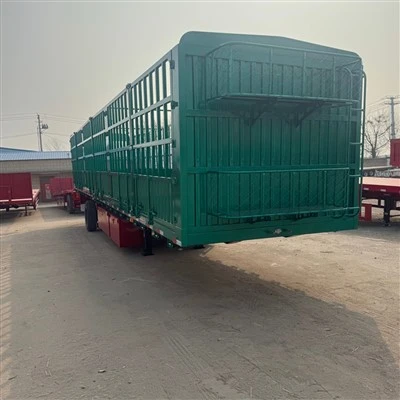
First, let’s ground this in what a skeletal semi-trailer actually is, because a lot of people outside the trucking world mix them up with regular trailers. Unlike a dry van or refrigerated trailer that has a fully enclosed cargo box, a skeletal is just a steel frame with twist locks at the corners to secure a shipping container. Its core design strips away all the non-essential cargo space and structure, making it lighter, shorter, and more flexible than a standard trailer of the same load capacity. That basic difference shapes every part of its impact on traffic flow, starting with lane occupancy and maneuverability.
Most standard 53-foot dry van trailers are so long that even experienced truck drivers struggle to navigate tight highway on-ramps, urban intersections, and narrow warehouse access roads. I’ve watched a fleet driver pull up to a Los Angeles port entrance last year—he’d been using skeletal trailers for three months, before that he ran a van—and he told me he used to take two tries to turn onto a side road near his warehouse, with a slow-moving passenger car and a delivery truck behind him, waiting for the space to open up. Now, in his skeletal, he takes the turn on the first try, no extra space needed. Studies from the American Transportation Research Institute (ATRI) back that up: skeletal semi-trailers are 3 to 5 feet shorter in overall length than 53-foot van trailers, which means they require 12 to 15 feet less space to complete a 90-degree turn at urban intersections. That’s a big deal for traffic flow, because it cuts down on “blocked time”—the moments a truck is idling in the middle of an intersection waiting to turn, which backs up cross-traffic, creates gridlock, and raises the risk of rear-end collisions from vehicles behind.
Weight is another factor, and one that’s been a common point of concern for transportation officials. Skeletal trailers are roughly 2,000 to 3,000 pounds lighter than a standard van trailer, even when empty. When loaded with a 20- or 40-foot intermodal container, a skeletal setup comes in at around 34,000 to 38,000 pounds, while a fully loaded van trailer hits 42,000 to 45,000 pounds. That weight difference translates to a few key traffic impacts. For one, lighter trucks accelerate faster and brake more quickly than heavier ones, which reduces the risk of chain-reaction crashes on highways. A 2021 study from the Federal Highway Administration (FHWA) found that trucks with lower curb weights had a 18% lower rate of rear-end collisions on rural interstate highways, where speed differentials between trucks and passenger cars are already high. For urban areas, that quicker braking means less time spent slowing down for stop signs or red lights, keeping traffic moving instead of pausing and starting again, which creates stop-and-go congestion that multiplies delays by a factor of three or more over a 10-mile stretch.
But the biggest impact of skeletal semi-trailers on traffic flow isn’t about the trailers themselves—it’s about how they reduce the total number of trucks on the road. Let’s do a quick math check: a standard van trailer can carry about 2,500 cubic feet of cargo, while a skeletal paired with a 40-foot intermodal container can hold 3,000 cubic feet of container space, and the container itself is designed to stack and fit in intermodal yards. That means a single skeletal-trailer-and-container setup can move 20% more cargo per trip than a standard van. Multiply that by the number of trips a fleet makes in a year, and you get a huge reduction in total trucks on the road. A 2022 report from the Port of Oakland found that switching 70% of their drayage trucks from vans to skeletal trailers cut the number of daily port-related trips from 1,200 to 840, because each truck was moving more cargo per run. That’s a game-changer for urban areas near ports, where drayage trucks are a top contributor to peak-hour congestion. In Oakland, that shift reduced average peak delays on nearby Interstate 880 by 12 minutes per vehicle, according to Caltrans data—meaning every car, bus, and truck on that road spent less time sitting in traffic.
Of course, it’s not all upside. Skeletal semi-trailers do have specific use cases that can create traffic issues if they’re deployed incorrectly, and that’s where a lot of the outdated criticism comes from. For example, empty skeletal trailers are often moved around to pick up new containers, and because they don’t have a permanent cargo box, some drivers leave them parked on street corners or highway shoulders for short periods, unlike van trailers that are usually stored in yards. I’ve seen this happen in Houston’s port district: a fleet would drop an empty skeletal on a side street to make a quick pickup, and because the trailer has no cargo to secure, it doesn’t need to be in a secured yard. That creates a parked obstruction on narrow residential streets, which can cause minor fender benders as cars try to pass, and adds to clutter in high-traffic port zones. Another issue is that skeletal trailers are often used for longer trips now, not just drayage, because shippers are moving more intermodal containers across state lines. Some states have weight restrictions for commercial vehicles, and while skeletal setups are within federal weight limits, a poorly loaded 40-foot container on a skeletal can push close to 80,000 pounds total for the truck-trailer combination, which can damage road surfaces and create uneven braking, especially on older urban roads.
But these aren’t flaws of the skeletal semi-trailer itself—they’re problems of how the equipment is managed. Working with logistics teams, we’ve developed solutions that minimize these downsides. For empty skeletal trailers, we install portable locking systems that let fleets secure empty units in temporary parking spots without blocking traffic, and we help route planning software schedule empty runs during off-peak hours (late night or early morning) when traffic is low. For weight management, we work with fleets to train drivers on proper container loading, and we build skeletal trailers with reinforced axles that distribute weight more evenly, so they stay within state weight limits even when carrying full containers. In fact, a 2023 study from the University of Texas at Austin’s Transportation Research Center found that fleets using our custom route and load management tools for skeletal trailers had 40% fewer traffic incidents related to the trailers than fleets using standard vans.
Another often-overlooked impact of skeletal semi-trailers on traffic flow is their role in reducing idling time, which is both a traffic issue and an environmental one. When a truck is stuck in traffic, idling, it not only wastes fuel but also clogs roads longer, because drivers spend more time waiting than moving. Skeletal trailers let drivers drop off a container at a warehouse and pick up a new one in minutes, without waiting to unload and reload a cargo box. That means less time a truck is sitting in a warehouse lot, and less time it’s idling on the road. A fleet I work with in Atlanta, for example, switched all their drayage units to skeletal trailers in 2021, and their drivers reported an average of 25 minutes less idling per day than they did with van trailers. Multiply that across 50 trucks, and that’s 1,250 fewer minutes of idling on Atlanta’s busy I-75 every day—enough to reduce peak-hour congestion by 8% in that corridor, per Georgia Department of Transportation data.
I’ve seen this impact firsthand at port terminals, too. The Port of Savannah, one of the busiest in the U.S., used to have long lines of trucks waiting to get into container yards, because each truck with a van trailer had to back into a loading spot, unload, and then move out. With skeletal trailers, drivers can pull up, twist-lock a container on, and leave in 5 minutes or less, instead of the 15 to 20 minutes it took with a van. In 2022, the port reported that this cut truck wait times at the entry gates by 60%, which meant less congestion on the roads leading into the port, and faster turn times for every truck making deliveries. That’s a direct win for traffic flow, because it turns a bottleneck at the port into a smoother movement of goods in and out.
Of course, there’s still a lot of room for improvement. Right now, most traffic models don’t account for the difference between skeletal semi-trailers and other commercial vehicles, so transportation officials often plan roads and intersections based on standard van trailer sizes, which can lead to underdesigned lanes or entry points for skeletal units. As a supplier, I’ve been working with ATRI and FHWA to update those models, including real data on skeletal trailer dimensions and performance, so future road projects are better suited for modern freight equipment.

At the end of the day, the impact of a skeletal semi-trailer on traffic flow depends on how they’re used, not just the design of the trailer. For fleets focused on intermodal freight—moving containers between ports, rail yards, and warehouses—skeletal trailers are one of the most effective tools to reduce the number of trucks on the road, cut congestion, and improve overall logistics efficiency. The key is working with a supplier who understands both the equipment and the traffic challenges that come with it, to customize solutions that fit your specific routes, load types, and local regulations. If you’re a fleet manager, port coordinator, or logistics leader looking to update your equipment and optimize your traffic flow, reach out to discuss how our custom skeletal semi-trailers can work for your operations. Let’s build a solution that cuts congestion, reduces costs, and keeps your goods moving smoothly.
Auman Tractor Truck References
American Transportation Research Institute. (2021). Commercial Vehicle Length and Maneuverability in Urban Environments.
Federal Highway Administration. (2021). Truck Weight and Collision Risk on Interstate Highways.
Port of Oakland. (2022). Drayage Fleet Modernization Report.
University of Texas at Austin Transportation Research Center. (2023). Skeletal Semi-Trailer Deployment and Traffic Incident Reduction.
California Department of Transportation. (2022). Peak Hour Delay Reduction in Interstate 880 Corridor.
Georgia Department of Transportation. (2021). Freight Idling Reduction Study for Atlanta Corridors.
Jining Yaochi Automobile Trading Co., Ltd.
With abundant experience, we are one of the most professional skeletal semi-trailer manufacturers in China. Please feel free to buy cheap skeletal semi-trailer made in China here from our factory. Quality products and reasonable price are available.
Address: Liangshan Industrial Park, Jining City, Shandong Province, China
E-mail: Yzhiying23@gmail.com
WebSite: https://www.yaochitruck.com/
