What is a Coaxial Cable Connector? A Guide from Someone Who Sells These Every Day Coaxial Cable
If you’ve ever hung around technical spaces—whether that’s a home theater setup, a small cell tower, or a local TV repair shop—you’ve probably held a short, cylindrical metal piece that looks like it’s there to plug and hold two wires together. That’s a coaxial cable connector, and for almost two decades, I’ve been the guy who picks, tests, and ships these parts to technicians, installers, and small business owners all over the country. People ask me all the time, “Why does this little piece matter? Can’t I just twist the cables together?” The short answer is: no, and if you’ve ever had a fuzzy TV picture during a big game, or lost your cell signal mid-call, that’s usually why. Let’s break this down simply, no jargon overload, just what I’ve learned working with these parts day in and day out.
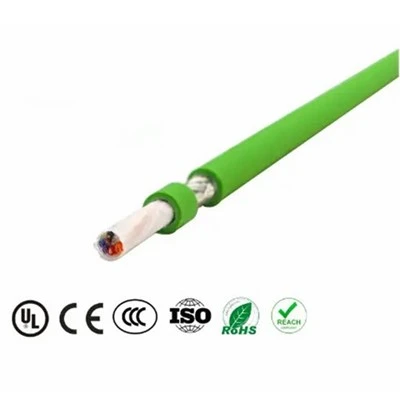
First, let’s start with what makes a coaxial cable different from any other wire. You know those old Ethernet cables or phone cords with pairs of twisted wires inside? They use “unshielded” conductors, so they’re prone to picking up interference from power lines, microwaves, even other cables bundled too close. Coaxial? It’s built like a tiny, metal-wrapped tube. There’s a center conductor (usually copper, sometimes aluminum), a layer of insulation around it, a metal shield (foil, braided wire, or both), and a clear plastic outer jacket. That shield is the whole point—it blocks outside noise so the signal stays clean. A coaxial connector’s job is to keep that shield connected perfectly, and lock the center conductor in place, so none of that shielding fails at the connection point. Mess up the connector, and you’ve got a weak signal, no matter how good the cable itself is.
Let’s talk about the basic parts of a connector, because it’s not just a hunk of metal. I pull apart a few just to show new team members how they fit, and I’ll break them down the same way here. First, the center pin: that’s the small metal stick in the middle, right? It connects directly to the center conductor of the cable. If this is too loose, it won’t make a good connection. If it’s too long, it might push through the insulation and touch the shield, causing a short circuit that kills the signal. That’s why we test every batch before shipping—one wrong center pin, and a whole run of connectors is useless.
Next, the body and the coupling mechanism. Most common connectors have a thread (that’s the twist-on part you turn to plug it in) or a snap-on “push-on” design for quick installs. The body is usually made of brass (for strength) or nickel-plated (to resist rust, which is a big deal if a cable’s going outside in the rain). Then there’s the shield connector, which wraps around the cable’s braided metal shield. This is the unsung hero—if the shield doesn’t make full, tight contact all around, outside interference seeps in. I’ve seen installers save a few cents by using a cheap connector that skips a proper shield crimp, only to have a customer call a week later complaining about bad Wi-Fi or TV static. That’s the mistake we see most often.
Now, let’s cover the most common types of connectors, because not all coaxial connectors are the same. I get asked which one is “best” all the time, and the answer is always, “It depends on what you’re using it for.” Let’s go over the ones we sell the most, and what they’re used for.
First, the F-type connector. This is the one you see on every cable TV box, satellite dish, and basic home Wi-Fi router. It’s the workhorse, cheap, easy to twist on, and it doesn’t have any extra parts—just a threaded body that screws into your device. We sell thousands of these every month for residential installs. The downside? It’s not super durable for heavy use, so we don’t recommend it for commercial cell towers or industrial equipment where cables get moved around a lot.
Then there’s the BNC connector, short for Bayonet Neill-Concelman. This is the snap-on, twist-locking type you see on security cameras, old analog TVs, and some radio equipment. Instead of twisting threads, you push it in and twist a quarter turn to lock it in place. That makes it way more secure for settings where cables might get knocked loose—like a job site where workers are moving ladders around, or a security camera hanging high on a wall. I always tell customers doing commercial security to opt for BNCs over F-types for that reason.
Next up, the N-type connector. This is the heavy-duty, industrial-grade option. It’s bigger, has a threaded coupling, and is built to handle high frequencies (think 5G cell towers, industrial Wi-Fi, or satellite communication). We ship a lot of N-type connectors to telecom companies building small cell networks, because they can handle the strong, steady signals those need. They’re more expensive than F-types, but if you’re dealing with high-stakes signal stuff, this is the one that doesn’t fail.
We also sell smaller, more specialized ones: SMA connectors for satellite radios and some GPS devices, TNC connectors for outdoor radio equipment, and even waterproof versions for cables that go in marine or outdoor solar setups. The key here is matching the connector to the cable you’re using—different coaxial cables (like RG-6 for home TV, RG-58 for old radios, RG-11 for long runs) need different connectors to fit right. Use a connector made for RG-6 on RG-58, and you’ll have a loose, bad connection, no matter how good the connector itself is.
Now, let’s talk about a question a lot of new installers (and even some DIY people) ask: do I really need to crimp or solder these connectors? Can I just twist them on? Short answer, almost always no. Let’s explain. When you crimp a connector to the cable, you’re using a tool to squeeze a metal sleeve onto the cable’s shield and center conductor. That creates a solid, permanent connection—no gaps, no loose parts. Solder is an option for some connectors, but crimping is faster, and when done right, it’s just as strong. I’ve seen someone try to twist an F-type on, skip the crimp, and have it fall off a satellite dish a week later, leading to a service call. For industrial or outdoor use, crimping is non-negotiable. Soldering works for smaller connectors like SMA, but it’s easy to overheat the center pin and damage the cable’s insulation, so we only recommend it for people with practice.
Another mistake I see all the time: not properly prepping the cable before attaching the connector. Coaxial cables aren’t just a wire and a jacket—there’s a specific way to strip the outer jacket, fold back the shield braid, and trim the insulation so the center conductor sticks out just the right amount. If you cut the jacket too short, the shield might touch the center pin, causing a short. If you cut it too long, the connector won’t lock in. I tell new installers to practice on scrap cables first—one bad prep job is the number one reason a connector fails, more than the connector itself being bad.
Now, why does this matter for someone like me, selling these connectors? A lot of people think “a connector is a connector,” so they’ll order the cheapest one online, but that’s where problems start. Cheap connectors use thin brass that rusts easily, or skimp on the shield, so the connection degrades over time. We test every batch of connectors we sell—we check the center pin length, the shield crimp strength, the thread tightness—because I’d rather have a customer call and say, “These worked perfectly” than have to replace a whole job’s worth of bad parts. Last year, a small security company ordered cheap connectors from another supplier, and half of their cameras had static because the shields weren’t crimped right. They came to us, and we sent them premium BNC connectors, and they haven’t had a problem since. That’s the part of the job that matters to me—helping people do it right, not just moving parts.
Let’s also clear up a common myth: coaxial connectors only work for TV. Yeah, they’re for cable TV and satellite, but they’re everywhere. Your home Wi-Fi router’s 5G antenna uses a coaxial connector. The cable running to your car’s GPS is coaxial with a special connector. Even some medical equipment, like MRI machines, uses coaxial connectors to send clear signal without interference. When you’re talking about 5G small cells popping up on street corners, those cables and connectors are what keep the signal strong enough for your phone. I shipped a batch of N-type connectors last month to a company building a new 5G network in a downtown area, and that’s not a one-off—these parts are the backbone of a lot of technology we use every day, even if we never see them.
Another thing: environmental factors. If a connector is going outdoors, or in a wet area (like a pool’s automation system, or a marine boat’s radio), you need a weather-sealed connector. Regular connectors will rust if they get wet, leading to a bad connection. We sell rubber gaskets that fit on most connectors to seal out water, and for extreme outdoor use, we have fully waterproof connectors that are designed to stand up to rain, snow, and even salt air for boats. I once had a customer call at 2 a.m. because a bad connector on his boat’s radio failed during a fishing tournament—we pulled a waterproof connector off the shelf, shipped it overnight, and he was back up before he finished the tournament. That’s the kind of service I focus on, because this stuff matters when you’re counting on it.
Let’s talk about how to choose the right connector. First, match the connector to your cable type—RG-6 uses F-type, RG-58 uses BNC, RG-11 uses N-type, and so on. Then, think about the environment: indoor residential? F-type is fine. Outdoor or commercial? Go for a weather-sealed, durable option like BNC or N-type. Next, consider your installation: if you’re doing quick, temporary installs, push-on connectors work, but permanent installs need crimped or soldered connectors. Don’t skimp on quality—cheaper connectors might save a few bucks now, but they’ll cost you more in service calls later. I always tell customers: buy once, cry once.
Now, why should you work with someone like me, instead of ordering random connectors online? It’s not just about the parts themselves. I’ve been doing this for 18 years, so I know which connectors work for which jobs. If you’re a DIY homeowner setting up a home theater, I can tell you exactly which F-type connectors you need for your RG-6 cable. If you’re a telecom technician building a small cell network, I can help you pick N-type connectors that handle the high frequencies you need. I stock the most common types, but I can also source specialized ones for niche jobs—like SMA connectors for satellite radios, or TNC connectors for amateur radio. And since we don’t deal with big corporate red tape, we can ship orders fast, even last-minute, when you’re on a job and need parts today.
At the end of the day, a coaxial connector is a small piece of hardware, but it’s the bridge between your cable and your device. A bad connector means static on your TV, dropped calls, security cameras that don’t work, or a 5G signal that’s too slow. For me, this isn’t just selling parts—it’s making sure that connection works, every time. If you’re an installer, a technician, a small business owner, or even a DIY person working on a home project, and you need coaxial connectors that are tested, durable, and fit your specific needs, feel free to reach out to discuss your requirements. We’re here to help you get it right.
PTFE Teflon Wire References:
- The Coaxial Cable Handbook, by the Society of Cable Telecommunications Engineers, 2019.
- “Coaxial Connector Performance for High-Frequency Applications,” White Paper, Telecommunications Industry Association, 2021.
- Residential Cabling Standards, National Electric Code (NEC) Article 820, 2023.
- Outdoor Coaxial Connection Best Practices, Consumer Electronics Association, 2022.
- “The Impact of Connector Quality on Coaxial Signal Integrity,” Journal of Telecommunications Engineering, Vol. 14, No. 3, 2020.
Shanghai Shenyuan Special Cable Co., Ltd.
Shanghai Shenyuan Special Cable Co., Ltd. is one of the most professional coaxial cable manufacturers and suppliers in China, featured by quality products and good service. We warmly welcome you to wholesale bulk customized coaxial cable at competitive price from our factory. If you have any enquiry about quotation and free sample, please feel free to email us.
Address: No.680 Hengguan Road, Jiading District, Shanghai
E-mail: info@shenyuan.com.cn
WebSite: https://www.shenyuancable.com/
