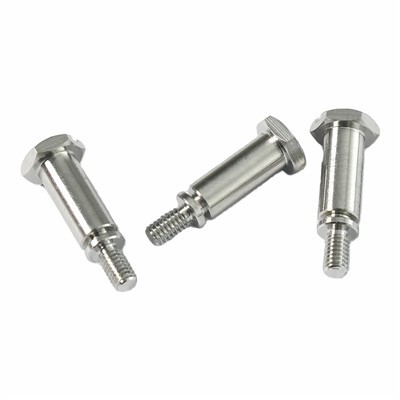
As a supplier of aluminum turned parts, I’ve witnessed firsthand the intricate interplay of various factors that significantly influence the performance of these components. In the manufacturing realm, understanding these key factors is crucial for delivering high – quality products that meet and exceed customer expectations. This blog post aims to delve into the primary elements that affect the performance of aluminum turned parts. Aluminum Turned Parts
Material Quality
The quality of the aluminum material is the cornerstone of well – performing turned parts. Aluminum is a popular choice due to its lightweight, corrosion – resistant, and excellent thermal conductivity properties. However, not all aluminum alloys are created equal. The purity of the aluminum, the presence of alloying elements, and the overall material consistency play vital roles.
For instance, 6061 aluminum alloy is widely used in turned parts due to its good strength, machinability, and weldability. It contains magnesium and silicon as alloying elements, which enhance its mechanical properties. On the other hand, 7075 aluminum alloy is known for its high strength – to – weight ratio, making it suitable for applications where strength is a critical factor. But it is also more difficult to machine compared to 6061.
The material’s grain structure also impacts performance. A fine – grained structure generally results in better surface finish and mechanical properties. During the manufacturing process, proper heat treatment can be used to control the grain size and improve the material’s overall performance. If the aluminum material has inclusions or porosity, it can lead to stress concentrations, reducing the part’s strength and potentially causing premature failure.
Machining Process
The machining process is another critical factor that affects the performance of aluminum turned parts. Turning is a subtractive manufacturing process where a cutting tool removes material from a rotating workpiece to create the desired shape. The choice of cutting tools, cutting parameters, and the machining environment all have significant impacts.
Cutting Tools
The type and quality of cutting tools are essential. High – speed steel (HSS) tools are commonly used for general machining of aluminum. They are relatively inexpensive and can provide good results for less demanding applications. However, for high – precision and high – volume production, carbide cutting tools are often preferred. Carbide tools are harder and more wear – resistant, allowing for higher cutting speeds and longer tool life.
The geometry of the cutting tool also matters. For example, the rake angle, clearance angle, and cutting edge radius all affect the cutting forces, chip formation, and surface finish. A proper rake angle can reduce cutting forces and improve chip flow, while a sharp cutting edge radius can result in a better surface finish.
Cutting Parameters
Cutting parameters such as cutting speed, feed rate, and depth of cut need to be carefully selected. The cutting speed is the speed at which the cutting tool moves relative to the workpiece. A too – low cutting speed can result in built – up edge formation, which can damage the surface of the part. On the other hand, a too – high cutting speed can cause excessive tool wear and heat generation, leading to poor surface finish and reduced tool life.
The feed rate is the distance the cutting tool advances per revolution of the workpiece. A higher feed rate can increase productivity, but it may also result in a rougher surface finish. The depth of cut is the thickness of the material removed in each pass. A larger depth of cut can reduce the number of passes required, but it also increases the cutting forces and the risk of tool breakage.
Machining Environment
The machining environment, including the use of cutting fluids, also affects the performance of aluminum turned parts. Cutting fluids help to cool the cutting tool and the workpiece, reduce friction, and flush away chips. In the case of aluminum, water – based cutting fluids are often used. They can effectively reduce heat and prevent built – up edge formation. However, improper use of cutting fluids, such as using the wrong concentration or not changing the fluid regularly, can lead to corrosion and poor surface finish.
Design and Tolerance
The design of the aluminum turned part and the specified tolerances have a profound impact on its performance. A well – designed part takes into account the intended application, the material properties, and the manufacturing process.
Design
The shape and complexity of the part design can affect its strength, stiffness, and manufacturability. For example, parts with sharp corners or thin walls may be more prone to stress concentrations and deformation during machining. Designers should try to use fillets and radii to reduce stress concentrations and improve the part’s overall strength.
The location and orientation of features on the part also matter. Features that are difficult to access during machining may require special tooling or setups, which can increase the cost and the risk of errors. Additionally, the design should consider the assembly requirements of the part. If the part needs to be assembled with other components, proper alignment features and mating surfaces should be designed.
Tolerance
Tolerances are the allowable variations in the dimensions of a part. Tighter tolerances generally result in higher – quality parts, but they also increase the manufacturing cost and the difficulty of production. When specifying tolerances, it is important to balance the performance requirements of the part with the manufacturing capabilities.
For example, in applications where precise fit is required, such as in aerospace or automotive components, tight tolerances may be necessary. However, for less critical applications, looser tolerances can be used to reduce costs. It is also important to consider the cumulative effect of tolerances in an assembly. If multiple parts are assembled together, the tolerances of each part can add up, potentially affecting the overall performance of the assembly.
Surface Finish
The surface finish of aluminum turned parts is not only important for aesthetic reasons but also for functional performance. A smooth surface finish can reduce friction, improve corrosion resistance, and enhance the part’s ability to seal.
The surface finish is affected by several factors, including the machining process, the cutting tools, and the material properties. As mentioned earlier, proper selection of cutting tools and cutting parameters can result in a better surface finish. Additionally, post – machining processes such as polishing or buffing can be used to further improve the surface quality.
The surface finish can also affect the part’s fatigue life. A rough surface can act as stress raisers, increasing the likelihood of crack initiation and propagation under cyclic loading. Therefore, for applications where fatigue is a concern, a smooth surface finish is often required.
Heat Treatment
Heat treatment can be used to improve the mechanical properties of aluminum turned parts. The most common heat treatment processes for aluminum include annealing, solution heat treatment, and precipitation hardening.
Annealing
Annealing is a process that involves heating the aluminum to a specific temperature and then slowly cooling it. This process is used to relieve internal stresses, improve ductility, and refine the grain structure. Annealed aluminum is easier to machine and can have better formability.
Solution Heat Treatment
Solution heat treatment involves heating the aluminum to a high temperature to dissolve the alloying elements in the solid solution. The part is then rapidly quenched to retain the dissolved elements in the solid solution. This process can improve the strength and hardness of the aluminum.
Precipitation Hardening
Precipitation hardening is a two – step process. After solution heat treatment, the part is aged at a lower temperature for a specific period of time. During aging, the dissolved alloying elements form fine precipitates, which strengthen the material. Precipitation – hardened aluminum can have high strength and good corrosion resistance.
Quality Control
Quality control is an essential part of ensuring the performance of aluminum turned parts. A comprehensive quality control system should be in place throughout the manufacturing process, from material inspection to final product testing.
Material Inspection
Before starting the machining process, the aluminum material should be inspected for its quality. This includes checking the chemical composition, the mechanical properties, and the surface condition. Any defective material should be rejected to prevent the production of sub – standard parts.
In – process Inspection
During the machining process, in – process inspection should be carried out to monitor the quality of the parts. This can include measuring the dimensions, checking the surface finish, and inspecting for any defects such as cracks or porosity. If any issues are detected, the machining process can be adjusted or the part can be reworked.
Final Product Testing
After the parts are machined, final product testing should be conducted to ensure that they meet the specified requirements. This can include mechanical testing, such as tensile testing or hardness testing, and non – destructive testing, such as ultrasonic testing or X – ray testing. Only parts that pass all the tests should be shipped to the customers.
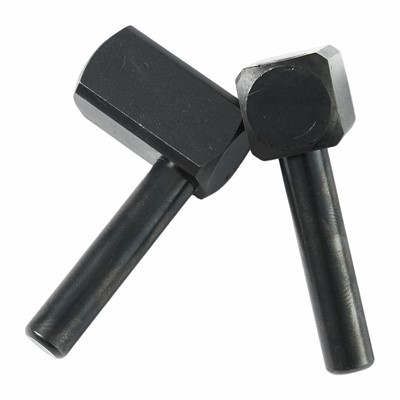
In conclusion, the performance of aluminum turned parts is affected by a multitude of factors, including material quality, machining process, design and tolerance, surface finish, heat treatment, and quality control. As a supplier, it is our responsibility to carefully consider each of these factors to produce high – quality parts that meet the diverse needs of our customers.
Stainless Steel Turned Parts If you are in the market for high – performance aluminum turned parts, we would be delighted to discuss your requirements. Our team of experts is ready to provide you with customized solutions and excellent service. Contact us to start a procurement discussion and discover how our aluminum turned parts can enhance your products.
References
- "Machining of Aluminum Alloys" by John A. Schey
- "Materials Science and Engineering: An Introduction" by William D. Callister, Jr. and David G. Rethwisch
- "Manufacturing Engineering and Technology" by Serope Kalpakjian and Steven R. Schmid
Huizhou Quanyi Precision Hardware Products Co., Ltd.
We’re well-known as one of the leading aluminum turned parts manufacturers and suppliers in China, featured by quality products and good service. Please rest assured to buy customized aluminum turned parts made in China here from our factory. Contact us for more details.
Address: Building A10, 7th Floor, Zhongchuangyingke 5G Industrial Park, Zhonghan Industrial Park, Tonghu Town, Huizhou City
E-mail: info@qycncturning.com
WebSite: https://www.qycncturning.com/
